
Remote Monitoring for Cardiac Devices: Peace of Mind for Heart Patients
Table of Contents
Toggle‘Remote Monitoring for Cardiac Devices: Peace of Mind for Heart Patients’ – A guide by Dr. Kuntal Bhattacharya, Senior Interventional Cardiologist, Narayana Health – RN Tagore Hospital, Kolkata
Being diagnosed with a severe cardiac condition and being told you need a pacemaker or an implantable defibrillator can be an overwhelming experience. It is entirely natural for patients and their families to feel a sense of anxiety. The heart is the engine of the body, and the idea of relying on a medical device to keep it beating correctly often brings up fears about safety, reliability, and lifestyle limitations. However, as an experienced Adult Cardiologist in Kolkata, I want to assure you that living with a cardiac device today is vastly different—and much safer—than it was even a decade ago.
We have entered a remarkable era of digital health and telemedicine. The technological advancements in cardiology have completely bridged the gap between the patient’s home and the doctor’s clinic. One of the most groundbreaking innovations in this space is remote monitoring. In this comprehensive guide, we will explore what remote monitoring is, how it works, and why it provides unprecedented peace of mind for heart patients. With more than 22 years of expertise in treating various heart conditions, my goal is to empower you with knowledge so you can make informed decisions about your cardiovascular health.
The Intricate Electrical System of the Human Heart
Before we discuss the devices and how we monitor them, it is essential to understand why they are needed in the first place. The human heart is a miraculous, tireless pump, but it is controlled by a highly complex electrical system. In a healthy heart, an electrical signal begins in a group of cells called the sinus node (your heart’s natural pacemaker). This signal travels down specific pathways, causing the upper and lower chambers of the heart to squeeze and relax in perfect harmony.
Unfortunately, due to aging, genetics, or conditions that require Coronary Artery Disease treatments in Kolkata, this electrical system can malfunction. When the signals become too slow, too fast, or dangerously irregular, the heart cannot pump blood effectively to the rest of the body. This can lead to extreme fatigue, breathlessness, fainting spells, or even sudden cardiac arrest. When medication is not enough to correct these electrical faults, we turn to Cardiac Implantable Electronic Devices (CIEDs).
Cardiac Implantable Electronic Devices: Your Personal Lifesavers
As an Interventional Cardiologist in Kolkata, I routinely implant various types of cardiac devices tailored to a patient’s specific rhythm disorder. The primary devices used in modern cardiology include:
1. Pacemakers
A pacemaker is a small device placed under the skin of your chest to help control your heartbeat. It is primarily used to treat bradycardia, a condition where the heart beats dangerously slow. When the pacemaker detects that your heart rhythm has dropped below a safe rate, it sends a tiny electrical impulse to stimulate the heart muscle and restore a normal rhythm. Dr. Kuntal Bhattacharya specializes in pacemaker implantation, offering safe and effective solutions for irregular heartbeats.
2. Implantable Cardioverter Defibrillators (ICDs)
While pacemakers treat slow heartbeats, ICDs are designed for patients at high risk of life-threatening, rapid heart rhythms (ventricular tachycardia or ventricular fibrillation). An ICD continuously monitors the heart; if it detects a chaotic, lethal rhythm, it delivers a life-saving electrical shock to restore the normal heartbeat, effectively preventing sudden cardiac death.
3. Cardiac Resynchronization Therapy (CRT) Devices
For patients suffering from severe heart failure, the lower chambers of the heart (ventricles) often beat out of sync, severely reducing the heart’s pumping efficiency. CRT devices (which can be a CRT-P pacemaker or a CRT-D defibrillator) send tiny electrical signals to both lower chambers simultaneously, forcing them to pump together. I am highly skilled in CRT-P/D implantation, helping heart failure patients improve heart function and their overall quality of life.
4. Implantable Loop Recorders (ILRs)
Sometimes, a patient experiences unexplained fainting or palpitations, but standard tests like an ECG or a 24-hour Holter monitor fail to capture the event. An implantable loop recorder is a tiny insertable cardiac monitor placed just under the skin that continuously records the heart’s electrical activity for up to three years, acting as a long-term detective to catch sporadic arrhythmias.
The Technological Leap: What is Remote Monitoring?
Traditionally, once a patient received a cardiac device, they were required to visit the hospital every three to six months. During these visits, a specialized wand was placed over the patient’s chest to download data from the device to ensure it was functioning correctly and to check the battery life. While this in-office check is still important, relying solely on it meant that doctors only saw a “snapshot” of the patient’s heart health a few times a year.
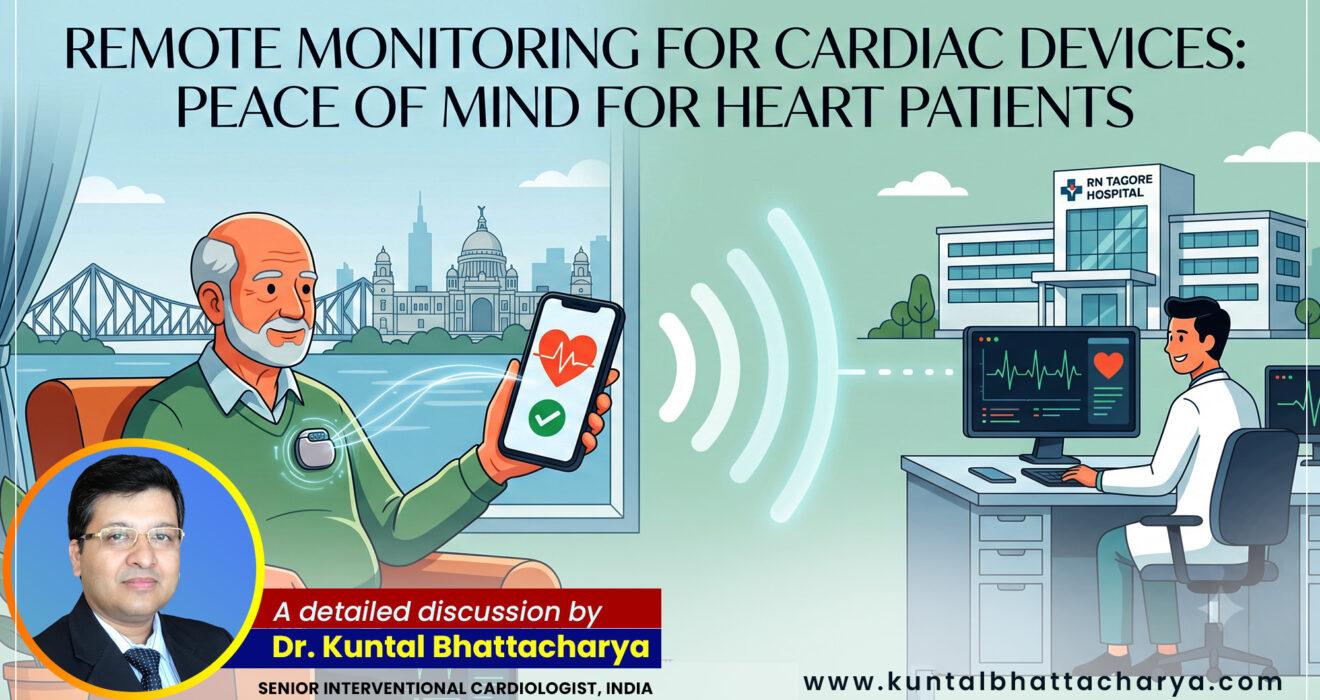
Remote monitoring has completely changed this paradigm. Remote monitoring of arrhythmias is a way to monitor a patient’s heart and implanted devices right from their home. The devices used for remote monitoring include implantable loop recorders, pacemakers, and defibrillators.
How Does It Work?
These modern cardiac devices feature built-in wireless transmitters. They automatically send critical information about the heart and the device itself to a doctor, an arrhythmia nurse, or a cardiac physiologist through a remote monitoring unit.
This home monitoring unit can connect to the internet or a mobile phone. In fact, depending on the manufacturer and the model of your implant, your home monitoring unit can be as large as a box, as small as a mobile phone, or it could even be an application downloaded directly onto your own personal smartphone.
The system is entirely seamless and highly secure. The data collected from your cardiac device is encrypted by your device company to ensure total privacy. It is then sent automatically to your physician’s office according to a schedule set by your doctor.
The Invaluable Benefits: Why Remote Monitoring is Essential
Choosing to utilize remote monitoring offers immense benefits that profoundly impact a patient’s health outcomes and emotional well-being. Here is why it is considered a standard of care by any top Doctor in Heart Disease in Kolkata:
1. Early Detection and Timely Intervention
Because the device connects to the internet or a mobile phone, heart rhythm specialists can monitor a patient’s condition at any time using up-to-date information. Remote monitoring can help detect dangerous cardiac arrhythmias and technical issues with Cardiac Implantable Electronic Devices (CIEDs) very early. Furthermore, for heart failure patients, the system can monitor subtle clinical parameters that may indicate impending heart failure decompensation—allowing doctors to adjust medications days or weeks before a patient ends up in the emergency room.
2. Fewer Unnecessary Hospital Visits
Routine care for your device includes in-office checks, but having the option of remote home monitoring allows for the collection of data at home, which provides improved care between your physical visits. For many patients, this technology safely allows for less frequent in-office device checks. This is incredibly beneficial for elderly patients, those with transient transportation issues, or those struggling with other health issues that make traveling to the hospital difficult.
3. Travel with Confidence
Living with a heart condition should not stop you from exploring the world or visiting family. If you are traveling abroad for extended periods, you can easily consult with your doctor regarding taking your home monitoring unit with you. While it depends on your length of absence and comfort level, the portability of these systems ensures that your doctor can keep an eye on your heart no matter where you are in the world.
4. Absolute Peace of Mind
Perhaps the most significant benefit is psychological. Knowing that your Adult Heart Doctor in Kolkata is digitally connected to your heart provides an immense sense of security. Patients report sleeping better and feeling less anxious about their condition. However, it is crucial to remember a vital safety rule: your home monitoring unit is not an emergency response unit and is not monitored 24/7. If you are experiencing severe symptoms, you must seek immediate medical attention or call emergency services.
Comprehensive Cardiac Care: Beyond Just Devices
While cardiac devices and remote monitoring are vital, they are often just one piece of the puzzle. Heart disease is multifaceted. A patient requiring a pacemaker might also be suffering from severely narrowed heart valves or blocked arteries.
As a Senior Consultant, I ensure that every patient receives a holistic evaluation. For instance, if a patient has a severely calcified aortic valve alongside their rhythm issues, we provide the latest TAVI Treatment in Kolkata. TAVI (Transcatheter Aortic Valve Implantation) is a minimally invasive procedure that allows for faster recovery without the need for open-heart surgery.
Special Considerations for Women’s Heart Health
It is also vital to address that cardiovascular disease often presents differently in women. Women frequently experience atypical symptoms—such as profound fatigue, jaw pain, or shortness of breath—rather than the classic crushing chest pain. Because these symptoms are easily misinterpreted, diagnosing arrhythmias and coronary issues in women requires a high degree of clinical suspicion and expertise. If you or a female family member are experiencing unexplained cardiac symptoms, it is critical to seek out the best doctor for Women Heart Disease Treatment in Kolkata to ensure an accurate diagnosis and an appropriately tailored intervention strategy.
Navigating Your Healthcare Journey: Finding an Interventional Cardiologist in Kolkata
When you or a loved one receives a cardiac diagnosis, the healthcare system can feel overwhelming. Many patients and families ask: What should we do when we need an Interventional Cardiologist for Treatment for Heart Disease in Kolkata, and where should we go?
Here is a step-by-step guide to navigating this critical journey:
Step 1: Recognize the Urgency
Do not ignore symptoms like persistent palpitations, dizzy spells, unexplained fainting, or severe breathlessness. If your primary care physician detects an irregular pulse or an abnormal ECG, it is time to escalate your care to a specialist.
Step 2: Choose the Right Specialist
You need to look for a specialized Doctor in Heart Disease in Kolkata with a proven track record. Look for a cardiologist who has advanced qualifications (such as a DM in Cardiology) and extensive experience in the Cath Lab. For instance, I have dedicated over 22 years to treating various heart conditions and specialize in personalized treatment options with cutting-edge technologies and interventional tools. You want a doctor who provides a balanced opinion, giving equal importance to evidence-based non-invasive medical management and interventional procedures in selective cases.
Step 3: Select a Premier Healthcare Facility
Complex cardiac interventions, device implantations, and advanced therapies like TAVI require world-class infrastructure. You should seek treatment at a highly equipped tertiary care hospital. I am currently a consultant at the NH Rabindranath Tagore International Institute of Cardiac Sciences (RN Tagore Hospital) in Mukundapur, Kolkata. This facility is renowned for its advanced cardiac sciences department, specialized Cath Labs, and exceptional critical care units. Additionally, outpatient consultations can be booked at RxVital Healthcare located on Purbachal Main Road, Kolkata.
Step 4: Prepare for Your Consultation
When visiting the best doctor for Heart Disease Treatment in Kolkata, come prepared. Bring all your previous medical records, physical copies of ECGs, Holter monitor reports, Echocardiograms, and a complete list of your current medications. Be transparent about your symptoms and lifestyle goals so your cardiologist can tailor the best device and remote monitoring plan for you.
Frequently Asked Questions (FAQs) – Cardiac Devices
To help you better understand your options when seeking cardiac care, here are detailed answers to some of the most common questions searched by patients online:
1. Where can I find the best Doctor in Heart Disease in Kolkata?
When searching for the right cardiac specialist, I always advise patients to carefully consider a doctor’s medical qualifications, years of hands-on clinical experience, and the quality of their hospital affiliations. As a dedicated Heart Specialist Doctor in Kolkata, I bring over 22 years of expertise in delivering advanced, life-saving heart treatments to my patients. Earning your trust and ensuring your comfort is my highest priority. My team and I at both NH RN Tagore Hospital and RxVital Healthcare are here to provide you with world-class, compassionate cardiac care when you need it most.
2. What types of Treatment for Heart Disease in Kolkata are available alongside device implantation?
A comprehensive cardiac center will offer a full spectrum of treatments. Beyond implanting pacemakers, ICDs, and CRT devices, experienced cardiologists perform complex Coronary Angiograms and Angioplasty treatments to address blocked arteries. For patients with structural heart issues, minimally invasive valve replacements, such as TAVI Treatment in Kolkata, are also readily available.
3. How do I know who the best doctor for Women Heart Disease Treatment in Kolkata is?
The ideal doctor for female patients is one who understands that women often present with atypical heart disease symptoms that are easily missed. A thorough specialist will use advanced non-invasive imaging and continuous monitoring (like implantable loop recorders) to accurately diagnose the root cause of symptoms like unexplained fatigue or dizziness in women, ensuring they receive timely and precise interventions.
4. Do I need an Adult Cardiologist in Kolkata or an Interventional Cardiologist?
An Adult Cardiologist primarily focuses on diagnosing and treating heart conditions using medications and non-invasive tests (like Echocardiograms and TMTs). An Interventional Cardiologist in Kolkata, like Dr. Kuntal Bhattacharya, possesses the advanced surgical skills required to perform catheter-based treatments inside the heart, such as angioplasty, stent placement, TAVI, and the implantation of all complex cardiac devices.
5. Why is finding the best doctor for Heart Disease Treatment in Kolkata so important for remote monitoring?
Remote monitoring generates a vast amount of critical digital data about your heart rhythms and device functionality. It is not just about having the technology; it is about having an expert physician who can accurately interpret that continuous data, recognize the early warning signs of heart failure or lethal arrhythmias, and adjust your medical treatment promptly before a major emergency occurs.
Conclusion
Living with a cardiac device is no longer a burden; it is a gateway to a longer, safer, and much more active life. The advent of remote monitoring has revolutionized our approach to patient care, allowing your medical team to stand guard over your heart rhythm 24 hours a day, 365 days a year, no matter where you are.
If you or a loved one are experiencing symptoms of heart rhythm disorders or have been advised to get a pacemaker or defibrillator, do not let fear dictate your choices. Seek expert advice, embrace modern medical technology, and take control of your cardiovascular health.
For expert consultations, device implantations, and advanced cardiac care:
Book an appointment with Dr. Kuntal Bhattacharya at NH RN Tagore Hospital or RxVital Healthcare in Kolkata. Experience the peace of mind that comes with world-class, digitally monitored cardiac care.
Disclaimer: The information provided in this blog post is for educational and informational purposes only and is not intended to be a substitute for professional medical advice, diagnosis, or treatment. Always seek the advice of your physician or other qualified health provider with any questions you may have regarding a medical condition or dietary changes. Never disregard professional medical advice or delay in seeking it because of something you have read on this website.
Follow Dr. Kuntal Bhattacharya on Facebook & Youtube for regular updates.
Read Also:
- Comparing TAVI and SAVR: Which Heart Valve Treatment is Right for You?
- Left Main Angioplasty: A Minimally Invasive Alternative to Bypass in 2026
- Women and Heart Disease: Why Symptoms Often Go Unrecognized
- How CRT-D Improves Quality of Life for Heart Failure Patients in Kolkata
- ECG vs. Echocardiogram: Which Heart Test Do You Actually Need?
- Life with an AICD: Managing Sudden Cardiac Death Risk Effectively
- What is a Calcified Lesion? Advanced Solutions for Hardened Arteries
- Heart-Healthy Diet: Incorporating Bengali Flavors Without the Oil
- Understanding Your Echocardiogram Results: A Simple Guide for Patients
- How 3D Imaging Enhances Precision in TAVI Procedures in Kolkata
- Understanding Bifurcation Stenting: Precision Care for Complex Blockages
- Identifying Asymptomatic Heart Disease in Young Adults in 2026: The Silent Killer
- The Role of FFR in Deciding the Right Treatment for Heart Blockages
- Leadless Pacemakers vs. Traditional Pacemakers: Pros and Cons for 2026
- Managing Complex Coronary Artery Disease in 2026: A Cardiologist’s Guide
- How IVUS and OCT Technology Revolutionized Angioplasty Success in Kolkata
- Choosing the Right Coronary Angioplasty Doctor in Kolkata 2026: A Patient’s Guide