
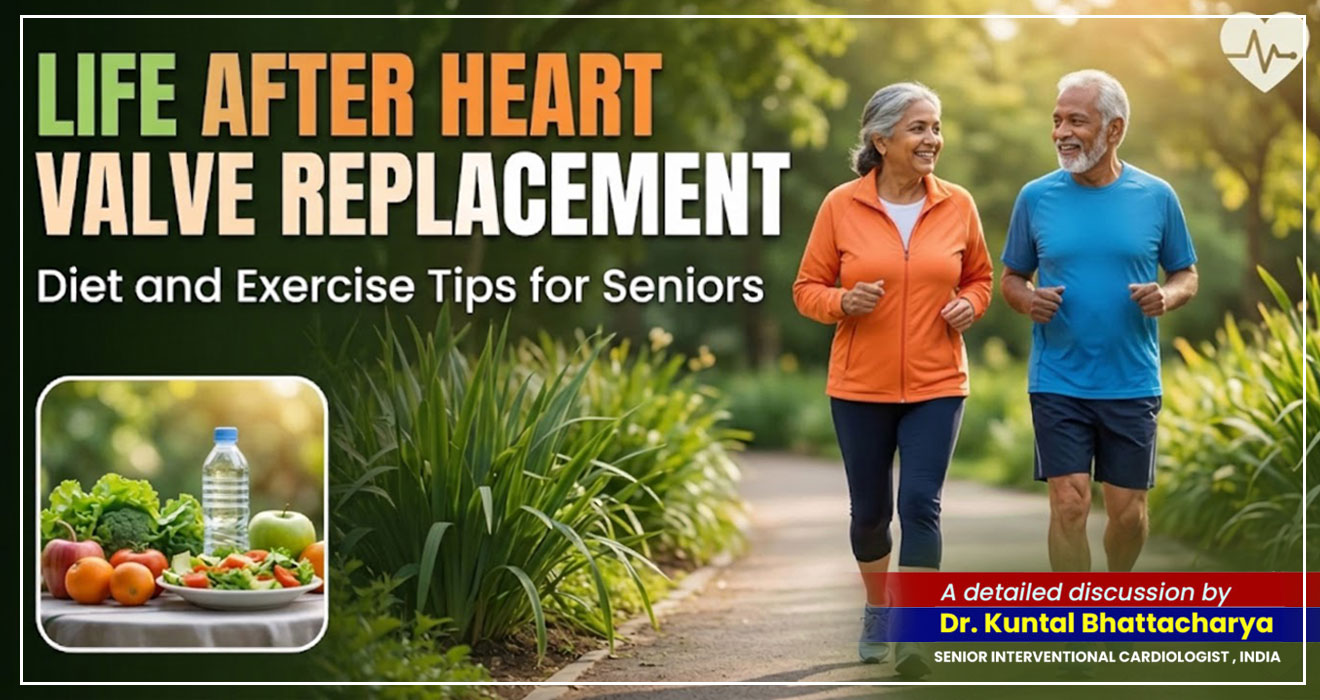
Life After Heart Valve Replacement: Diet and Exercise Tips for Seniors
Table of Contents
Toggle‘Life After Heart Valve Replacement: Diet and Exercise Tips for Seniors’ – From the desk of Dr. Kuntal Bhattacharya (Senior), Senior Consultant Interventional Cardiologist, Narayana Hospital (RN Tagore Hospital), Mukundapur, Kolkata
Welcome to a new chapter of your life. If you or an elderly loved one has recently undergone a heart valve replacement, you have already crossed the most challenging hurdle. As a senior interventional cardiologist practicing for over two decades, I often tell my patients at RN Tagore Hospital that surviving the surgery is only the first step. The true success of a valve replacement—whether it was a traditional open-heart surgery (SAVR) or a minimally invasive Transcatheter Aortic Valve Replacement (TAVR)—lies in how well you manage your recovery.
In Kolkata, we are seeing a significant rise in elderly patients opting for valve replacements to treat conditions like severe aortic stenosis or mitral regurgitation. The aging heart requires specialized care, and a successful recovery hinges on two vital pillars: customized nutrition and structured physical activity. This comprehensive guide is designed to empower senior cardiac patients across Eastern India with the knowledge they need to heal properly, regain their strength, and enjoy a high quality of life.
Comprehensive Heart Valve Replacement Diet and Exercise Tips Seniors Kolkata
Recovering from major cardiac surgery in your 60s, 70s, or 80s is fundamentally different from recovering in your younger years. The body’s metabolism slows down, tissue healing takes slightly longer, and there is often a loss of muscle mass that needs to be actively rebuilt. Furthermore, elderly patients frequently have co-existing conditions such as diabetes, hypertension, or arthritis, which must be factored into any recovery plan.
Understanding the Physiological Changes Post-Surgery
When a diseased heart valve is replaced with a new one (either a mechanical valve or a bioprosthetic tissue valve), your heart muscle suddenly experiences a massive shift in blood flow dynamics. For years, your heart may have been working overtime, struggling to pump blood through a narrowed or leaky valve. Now, with a new, smoothly functioning valve, the heart needs time to adapt to this “new normal.” During this adaptation phase, following targeted heart valve replacement diet and exercise tips seniors Kolkata is absolutely non-negotiable.
Proper nutrition provides the biological building blocks required for surgical wounds to close and internal tissues to heal. Simultaneously, a scientifically structured exercise regimen ensures that the heart muscle regains its pumping efficiency without being overwhelmed. Skipping either of these components can lead to complications such as severe fatigue, fluid retention, or delayed wound healing.
The Ultimate Post Valve Replacement Diet Seniors Kolkata
What you put on your plate after a heart surgery acts as your secondary medication. The right foods can reduce internal inflammation, prevent dangerous blood clots, and give you the sustainable energy needed for physical therapy. A highly optimized post valve replacement diet seniors Kolkata must be tailored to local eating habits while strictly adhering to cardiac guidelines.
Key Nutrients for Healing and Immunity
For a senior patient recovering at home, the diet must be rich in specific macro and micronutrients:
High-Quality Protein: Protein is the primary building block for tissue repair. Seniors often consume too little protein, leading to muscle wasting. Include easily digestible proteins such as boiled egg whites, lean chicken stew, and locally sourced small fishes (like Parshe or Bata). Vegetarians should focus on varied dals (lentils), soybean chunks, and low-fat paneer.
Complex Carbohydrates: Your body needs energy to heal, but you must avoid sudden sugar spikes, especially if you have diabetes. Replace refined white rice with brown rice, broken wheat (daliya), or oats.
Healthy Fats: Avoid all trans fats, vanaspati, and excessive butter. Instead, use moderate amounts of heart-healthy oils like mustard oil (used sparingly), rice bran oil, or olive oil.
Managing Blood Thinners: The Vitamin K Balance
If you have received a mechanical heart valve, you will be prescribed lifelong blood-thinning medications (anticoagulants) like Warfarin or Acitrom to prevent clots from forming on the metal valve. These medications interact directly with Vitamin K, a nutrient found heavily in green leafy vegetables. Many patients mistakenly believe they must stop eating all greens. This is false. The secret is consistency. If you eat a small bowl of spinach (palak) or cabbage (badhakopi) twice a week, keep doing exactly that. Do not suddenly increase or decrease your green vegetable intake, as drastic changes will fluctuate your INR (International Normalized Ratio) levels, making your blood either too thick (risking clots) or too thin (risking internal bleeding).
Crafting a Senior Heart Health Diet Plan Kolkata
Adapting a cardiac diet to the traditional Bengali palate requires some smart substitutions. Here is how you can build a sustainable senior heart health diet plan Kolkata:
The Salt Restriction: Sodium causes your body to retain water, which forces your newly repaired heart to work harder. Restrict your salt intake to less than 2,000 mg (about one teaspoon) per day. Completely ban table salt during meals. When making macher jhol (fish curry), use minimal salt and enhance the flavor with lemon juice, coriander leaves, ginger, and garlic.
Avoid Processed and Packaged Foods: Hidden sodium is the biggest enemy of a recovering heart patient. Strictly avoid chanachur, packaged bhujia, instant noodles, papad, and store-bought pickles (achar).
Fluid Management: Depending on your heart’s pumping capacity (Ejection Fraction), your cardiologist might restrict your daily water intake (often to 1.2 to 1.5 liters a day). This includes all fluids: water, tea, dal, and soup. Measure your water strictly in a dedicated bottle to avoid overloading your heart.
Managing the Sweet Tooth: The traditional love for Bengali sweets (mishti) must be controlled. Refined sugar increases inflammation. Opt for a small slice of fresh seasonal fruit like papaya, apple, or guava instead of high-calorie, syrup-soaked sweets.
Safe Heart Valve Surgery Recovery Exercise Kolkata
Rest is important immediately after surgery, but prolonged bed rest is dangerous. It can lead to pneumonia, muscle atrophy, and deep vein thrombosis (blood clots in the legs). A structured approach to heart valve surgery recovery exercise Kolkata is the cornerstone of regaining your independence.
Sternal Precautions and Early Mobility
If you had a traditional open-heart surgery, your sternum (breastbone) was divided to access your heart. It takes about 6 to 8 weeks for this bone to heal completely. During this time, you must follow strict “sternal precautions.”
Do not lift anything heavier than 2 to 3 kilograms (avoid lifting heavy water buckets or grocery bags).
Do not push or pull forcefully (e.g., opening a heavy door or pushing yourself out of a deep chair using only your arms).
Avoid raising both arms high above your head simultaneously.
For patients who underwent TAVR (a minimally invasive procedure usually done through the groin), sternal precautions do not apply, and physical recovery is much faster. However, the heart muscle itself still needs gradual conditioning.
Gradual Progression of Physical Activity
Exercise should be introduced in slow, methodical phases:
Weeks 1 to 2 (At Home): Focus on frequent, very short walks inside the house. Walk for 3 to 5 minutes, 4 to 5 times a day. Do not climb stairs unless absolutely necessary, and if you must, take them one step at a time while breathing deeply. Continue using your incentive spirometer (the breathing exercise device given at the hospital) every hour to keep your lungs clear.
Weeks 3 to 4: Slowly increase your walking time to 10 to 15 minutes, twice a day. You can start walking on a flat, even surface outdoors. In Kolkata, due to the high humidity and heat, it is best to walk very early in the morning or late in the evening. Avoid walking in the glaring afternoon sun.
Weeks 5 to 6 and Beyond: Aim for 30 minutes of continuous walking at a moderate, comfortable pace. You should be able to hold a conversation while walking; if you are gasping for breath, you are pushing too hard.
Warning Signs to Stop Exercising Immediately: Stop your activity and contact your doctor if you experience sudden chest pain, severe shortness of breath, dizziness, irregular heartbeats (palpitations), or extreme, unexplainable fatigue.
The Importance of Cardiac Rehabilitation for Valve Replacement Kolkata
While walking at home is excellent, elderly patients often benefit immensely from a formalized rehabilitation program. Engaging in cardiac rehabilitation for valve replacement Kolkata provides a safe, medically supervised environment where seniors can rebuild their cardiovascular endurance with confidence.
Why Monitored Therapy is Crucial for Seniors
Cardiac rehab is a customized, outpatient program that combines supervised exercise, nutritional counseling, and psychological support. For elderly patients, the fear of “doing something wrong” or “damaging the new valve” can cause severe anxiety and depression, making them hesitant to move. In a rehab setting, you are attached to a telemetry monitor that tracks your heart rate and rhythm in real-time while you exercise on a treadmill or stationary bike. A team of cardiac physiotherapists and specialized nurses continuously monitors your vital signs, ensuring you exercise within your safe target heart rate zone. This supervised environment completely eliminates the fear of overexertion. Furthermore, it provides incredible emotional support, as you interact with other patients who are going through the exact same recovery journey.
Finding Top Cardiac Rehab Centers in Kolkata
Kolkata is home to several advanced medical facilities that offer comprehensive postoperative care. When looking for the right cardiac rehab centers in Kolkata, ensure the facility has a multi-disciplinary team. At RN Tagore Hospital, our dedicated cardiac rehabilitation wing focuses on holistic recovery. We combine physical conditioning with dietary workshops and psychological counseling, addressing the specific mobility challenges that seniors face, such as joint pain or balance issues, which might interfere with standard exercises.
Consulting the Best Cardiologists for Valve Replacement Recovery Kolkata
The surgical team repairs your heart, but your clinical cardiologist manages your long-term survival and quality of life. The journey does not end when you are discharged from the hospital. To ensure your new valve functions perfectly for decades, you must partner with the best cardiologists for valve replacement recovery Kolkata.
The Importance of Continuous Medical Monitoring
Your post-operative care requires meticulous medical management. A highly experienced interventional cardiologist will monitor several critical parameters during your follow-up visits:
Echocardiogram Evaluations: Regular ultrasound scans of your heart (Echocardiography) are required to check how well the new valve is opening and closing, and to ensure there are no leaks (paravalvular leaks) or abnormal pressure gradients across the valve.
Medication Optimization: The medications you take at discharge will likely change as your heart heals. Your cardiologist will adjust your blood pressure medications, beta-blockers, and diuretics (water pills) based on how your heart muscle recovers its pumping strength.
Managing Anticoagulation: If you are on blood thinners, your INR levels must be checked frequently. Your cardiologist will guide you on the exact dosage of Warfarin or Acitrom based on these blood tests. Too much medication can cause bleeding, while too little can lead to valve thrombosis.
Do not miss your scheduled appointments. Usually, a follow-up is required one week after discharge, then at one month, three months, six months, and annually thereafter. A proactive, communicative relationship with your cardiologist is your strongest safety net against any future cardiac complications.
Frequently Asked Questions (FAQs) on 'Life After Heart Valve Replacement'
To further assist our elderly patients and their families, I have compiled and answered some of the most common queries searched on the internet regarding life after valve surgery in our city.
What are the best heart valve replacement diet and exercise tips seniors Kolkata?
The best approach involves a low-sodium, low-saturated-fat diet combined with a phased, supervised walking program. Seniors in Kolkata should focus on consuming locally available lean proteins (like small fishes and dals), strictly avoid added salt and traditional deep-fried snacks, and begin walking indoors during the first two weeks post-surgery. Avoid outdoor walks during the humid, peak afternoon hours. Consistency in diet and gradual progression in movement are the golden rules.
Why is cardiac rehabilitation for valve replacement Kolkata highly recommended?
Cardiac rehabilitation is highly recommended because it provides a medically supervised environment where seniors can exercise without the fear of triggering a cardiac event. Heart rate and blood pressure are monitored continuously via telemetry. Additionally, it offers professional dietary counseling and psychological support, helping elderly patients combat post-operative depression and safely rebuild their physical independence.
What should a post valve replacement diet seniors Kolkata strictly exclude?
Seniors must strictly exclude foods with high hidden sodium content, such as packaged snacks (chanachur, bhujia), pickles (achar), papad, and canned soups. Additionally, they should avoid trans fats found in vanaspati and reused cooking oils. If the patient has a mechanical valve and is on blood thinners like Warfarin, they must not make sudden, drastic changes to their intake of green leafy vegetables to maintain stable Vitamin K levels.
When can I start my heart valve surgery recovery exercise Kolkata?
Basic mobility starts immediately in the hospital, usually the day after surgery, with sitting up and taking a few steps. Once discharged, you should start a structured walking program at home on week one. You can typically start walking outside on flat surfaces by weeks 3 to 4. However, if you had open-heart surgery, you must avoid lifting any weights or doing upper-body exercises for 6 to 8 weeks until the breastbone is fully healed.
How do I choose the best cardiac rehab centers in Kolkata?
When selecting a rehab center, look for a facility that is attached to a reputed tertiary care hospital and has a multi-disciplinary team comprising cardiologists, specialized cardiac physiotherapists, dietitians, and clinical psychologists. Ensure the center uses real-time ECG telemetry monitoring during exercise sessions, which is crucial for the safety of senior patients recovering from major cardiac procedures.
What is an ideal senior heart health diet plan Kolkata?
An ideal plan includes a balanced mix of complex carbohydrates (brown rice, oats), high-quality proteins (egg whites, boiled chicken, fresh local fish like Rohu or Katla cooked in light stews), and healthy fats (moderate use of rice bran or mustard oil). It restricts total daily salt to under one teaspoon and limits daily fluid intake exactly as prescribed by the treating cardiologist. It replaces sugary Bengali sweets with small portions of fresh, seasonal fruits.
How do I consult the best cardiologists for valve replacement recovery Kolkata?
You can consult top cardiologists by seeking appointments at premier cardiac institutes like Narayana Hospital (RN Tagore Hospital) in Mukundapur, Kolkata. Look for doctors who specialize in clinical and interventional cardiology with extensive experience in managing post-operative valvular heart disease. You can usually book appointments through the hospital’s official website, direct helpline numbers, or verified healthcare portals. Ensure you bring all your surgical discharge summaries and recent blood reports to your first consultation.
About the Author: Dr. Kuntal Bhattacharya is a highly esteemed, Gold Medalist, and Senior Consultant Interventional Cardiologist at NH Rabindranath Tagore International Institute of Cardiac Sciences, Kolkata. With over 22 years of dedicated clinical experience, he is deeply committed to bringing the most advanced, compassionate, ethical, and personalized cardiovascular care to his patients across Eastern India, specializing in complex coronary interventions and the management of high-risk diabetic heart disease.
Follow Dr. Kuntal Bhattacharya on Facebook & Youtube for regular updates.
Read Also:
- Rotational Atherectomy (Rotablator): Clearing Heavily Calcified Arteries
- Living with a Permanent Pacemaker: Myth vs. Reality for Active Seniors
- The Connection Between Diabetes and Heart Disease: How to Protect Yourself
- Pacemaker Battery Replacement: What to Expect During the Procedure
- Preventing Stroke Risk During TAVI: The Role of Cerebral Protection Devices
- Why a Stress Test (TMT) is Crucial for Early Heart Disease Detection
- Left Main Angioplasty: A Minimally Invasive Alternative to Bypass in 2026
- Life with an AICD: Managing Sudden Cardiac Death Risk Effectively
- TAVI for High-Risk Patients: Why Age is No Longer a Barrier to Heart Care
- Understanding Your Echocardiogram Results: A Simple Guide for Patients
- How 3D Imaging Enhances Precision in TAVI Procedures in Kolkata
- Identifying Asymptomatic Heart Disease in Young Adults in 2026: The Silent Killer
- The Role of FFR in Deciding the Right Treatment for Heart Blockages
- Leadless Pacemakers vs. Traditional Pacemakers: Pros and Cons for 2026
- Managing Complex Coronary Artery Disease in 2026: A Cardiologist’s Guide
- How IVUS and OCT Technology Revolutionized Angioplasty Success in Kolkata
- Choosing the Right Coronary Angioplasty Doctor in Kolkata 2026: A Patient’s Guide
- Life After TAVI/TAVR Treatment: Patient Advice from a Cardiologist in Kolkata
- Why Choose TAVI/TAVR Over Open Heart Surgery in 2025?
Stay Healthy. Stay Informed.
Disclaimer: This article is for general education only. It is not a substitute for professional medical advice, diagnosis or treatment, and reading it does not create a doctor–patient relationship. Every patient is different, and outcomes cannot be guaranteed. Always consult a qualified doctor about your own condition.