
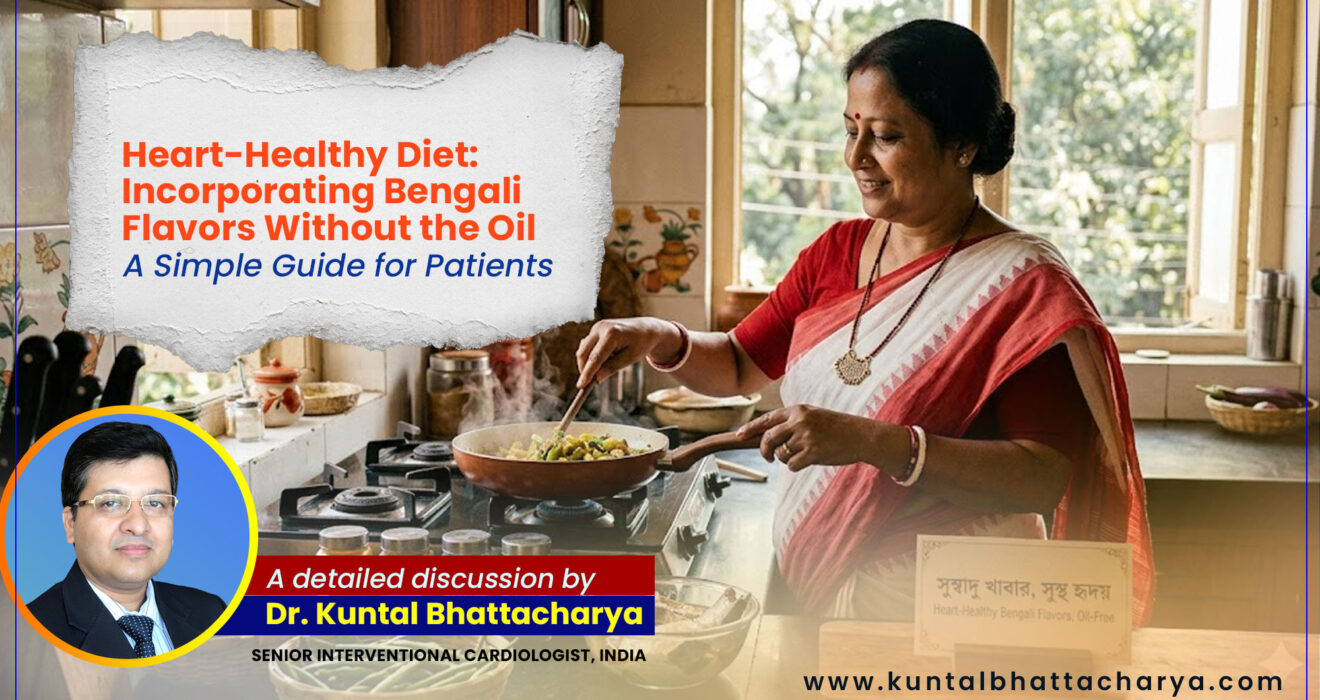
Heart-Healthy Diet: Incorporating Bengali Flavors Without the Oil
‘Heart-Healthy Diet: Incorporating Bengali Flavors Without the Oil’ – a detailed guide by Dr. Kuntal Bhattacharya, Senior Interventional Cardiologist, Narayana Health – RN Tagore Hospital, Kolkata
Food is the ultimate love language of Bengal. From the aromatic sizzle of phoron (tempering) hitting hot mustard oil to the slow, loving process of making a deep, rich kosha mangsho (mutton curry) on a lazy Sunday afternoon, our culinary traditions are deeply woven into our culture, memories, and daily lives. However, traditional cooking methods often rely heavily on generous amounts of oil, ghee, and deep-frying. While these methods create undeniable magic on the palate, they can sometimes spell trouble for your heart over time.
Does this mean you have to give up your favorite comfort foods to protect your heart? Absolutely not. Adopting a Heart-Healthy Diet does not require you to eat boiled, bland food for the rest of your life. It simply requires a shift in how we approach our ingredients and cooking techniques.
In this comprehensive guide, we will explore how you can retain the vibrant, soul-satisfying flavors of Bengali cuisine while drastically reducing the oil content. Guided by the insights of Dr. Kuntal Bhattacharya (Senior), the Best Interventional Cardiologist in Kolkata, we will walk you through a step-by-step journey to transform your kitchen into a hub of heart wellness, without losing your cultural roots.
Understanding the Connection Between Oil, Bengali Food, and Heart Health
Before we dive into the “how-to,” it is crucial to understand the “why.” Why is modifying our traditional cooking style so important for a Heart-Healthy Diet?
The Role of Fats and Oils in the Body
Your body needs fat to survive. Fats provide energy, help absorb essential vitamins (like A, D, E, and K), and build cell membranes. However, the type and amount of fat you consume make all the difference.
When we consume excess saturated fats (found in fatty meats, full-fat dairy, and ghee) or trans fats (often found in repeatedly heated oils and commercial baked goods), our liver produces extra LDL (low-density lipoprotein) cholesterol. Often referred to as “bad cholesterol,” high levels of LDL can lead to the buildup of plaque in your arteries. This condition, known as atherosclerosis, narrows the arteries and makes it harder for blood to flow, forcing the heart to work much harder. Over time, this can lead to high blood pressure, angina (chest pain), heart attacks, or strokes.
The Bengali Culinary Challenge
Traditional Bengali cooking relies heavily on mustard oil (shorsher tel). While pure, cold-pressed mustard oil actually has a relatively good profile of monounsaturated and polyunsaturated fats compared to refined oils, the quantity used is often the culprit.
Consider the everyday staples:
-
Bhaja (Fries): Begun bhaja (eggplant fry), aloo bhaja (potato fry), and machh bhaja (fish fry) are daily fixtures. Eggplant, in particular, acts like a sponge, soaking up massive amounts of oil during the frying process.
-
Kosha (Slow Braising): The beloved koshano technique involves cooking spices, onions, and meat or vegetables over medium heat for a long time until the oil separates and floats to the top. This “oil separation” is traditionally seen as the marker of a well-cooked dish, but it means you are consuming highly heated fats.
-
Sweets (Mishti): While not oil, the high sugar content in standard Bengali sweets rapidly converts to triglycerides (a type of fat in your blood) when consumed in excess, further complicating heart health.
The goal of a Heart-Healthy Diet is to keep the spices, the vegetables, the fish, and the joy of the meal, but alter the vehicle—the oil—that delivers them.
The Core Principles of a Heart-Healthy Diet
To build a foundation for healthy eating, we must look at what a heart-healthy lifestyle truly entails. Dr. Kuntal Bhattacharya (Senior) often emphasizes that heart health is a marathon, not a sprint. It requires sustainable, daily habits.
1. Prioritize Fiber
Dietary fiber acts like a broom for your blood vessels. Soluble fiber, found in oats, lentils (dal), beans, and certain fruits, binds to cholesterol in the digestive system and drags it out of the body before it can be absorbed into the bloodstream. A Bengali diet is naturally rich in fiber through vegetables (shobji) and lentils, provided they aren’t drowned in oil.
2. Choose the Right Proteins
Proteins are the building blocks of life. For a healthy heart, lean towards plant-based proteins (like chholar dal, musur dal, and chana) and lean animal proteins (like chicken breast and small fish). Bengal’s love for fish is actually a massive advantage! Small, local fish and fatty fish like Hilsa (Ilish) or Rohu (Rui) contain Omega-3 fatty acids, which actively reduce inflammation and lower triglycerides.
3. Manage Sodium (Salt) Intake
High salt intake is a leading cause of hypertension (high blood pressure). Bengali cooking often uses generous amounts of salt to balance the sharpness of mustard paste or tamarind. Gradually reducing salt and relying more on herbs, spices, and citrus (like gondhoraj lebu) can dramatically improve your cardiovascular profile.
4. Practice Portion Control
Even healthy food can lead to weight gain if consumed in massive quantities. Carrying excess body weight places unnecessary strain on your heart muscles. Eating smaller, balanced portions throughout the day keeps your metabolism steady and your heart functioning optimally.
Step-by-Step Guide: Cooking Bengali Flavors Without the Oil
Transitioning to a low-oil or zero-oil kitchen might sound intimidating, but it is purely about learning a few simple, scientifically-backed cooking mechanics. Here is your step-by-step guide to mastering the art of the heart-healthy Bengali kitchen.
Step 1: Redefining the “Phoron” (Tempering)
The soul of a Bengali dish lies in its phoron—the tempering of whole spices like panch phoron (five-spice blend), dried red chilies, bay leaves (tej patta), and cumin seeds. Traditionally, this is done by cracking the spices in smoking hot oil.
The Heart-Healthy Fix: Dry Roasting You can extract the exact same aromatic oils from the spices without adding external cooking oil.
-
Heat a thick-bottomed non-stick pan or a well-seasoned cast-iron skillet on medium heat.
-
Drop your whole spices into the dry pan.
-
Stir continuously for 30 to 60 seconds. You will see the spices slightly change color and immediately smell the rich, nutty aroma filling your kitchen.
-
Once roasted, you can add your onions, ginger-garlic paste, or chopped vegetables directly into the pan.
Step 2: The Art of “Water Sautéing” (Bhuna without Oil)
The most common complaint about oil-free cooking is that onions and spices stick to the pan and burn. The solution is water sautéing.
The Heart-Healthy Fix:
-
After dry roasting your spices, add finely chopped onions.
-
As soon as the onions begin to stick to the bottom of the pan, add a single tablespoon of water or vegetable broth.
-
Stir vigorously. The liquid will deglaze the pan, lifting the caramelized flavors from the bottom and coating the onions.
-
As the water evaporates and the onions stick again, add another tablespoon of water.
-
Repeat this process until the onions are soft, translucent, and golden brown. You will achieve the exact same texture as oil-fried onions, but with zero fat.
Step 3: Rethinking the “Kosha” Technique
Koshano requires slow cooking spices to remove their raw smell. Without oil, spices can taste chalky if not handled correctly.
The Heart-Healthy Fix: The Paste Method Instead of adding dry powdered spices (turmeric, cumin, coriander) directly to the hot pan, create a thick paste. Mix your spice powders in a small bowl with a little water, creating a slurry. Pour this wet mixture into your water-sautéed onions. The water in the paste protects the spices from burning while allowing the heat to cook out the raw flavor. Simmer this mixture on low heat with the lid on, letting the steam do the work that oil usually does.
Step 4: Embracing “Bhapa” (Steaming)
Steaming is one of the healthiest cooking methods on the planet, and thankfully, it is deeply embedded in Bengali cuisine. Bhapa dishes rely on the moisture of the food and the steam to lock in flavors.
The Heart-Healthy Fix: Dishes like Bhapa Ilish (Steamed Hilsa) or Bhapa Bhetki are already heart-healthy champions if you make one small tweak: reduce or eliminate the added mustard oil on top. The natural Omega-3 fats inside the fish are more than enough to keep the dish moist, flavorful, and incredibly good for your arteries. Wrap your marinated fish in banana leaves and steam it. The leaf imparts a subtle, earthy flavor that elevates the dish without a single drop of added fat.
Step 5: Baking and Air-Frying for the “Bhaja” Fix
Giving up machh bhaja (fried fish) or aloo bhaja (fried potatoes) is often the hardest part of adopting a Heart-Healthy Diet.
The Heart-Healthy Fix: Invest in an air fryer or use your oven.
-
For Fish: Marinate your fish with turmeric, salt, a little lemon juice, and a few drops of mustard oil (just for the aroma, not for frying). Place it on parchment paper in a preheated oven (200°C) for 15-20 minutes. You will get a beautifully crusted, flaky piece of fish with a fraction of the calories.
-
For Eggplant (Begun): Instead of deep-frying, slice the eggplant, marinate it, and dry-roast it on a non-stick tawa (griddle) on low heat, covering it with a lid. The steam trapped inside will cook the eggplant until it is buttery soft, while the direct heat will give it a charred, smoky exterior.
Iconic Bengali Dishes: Heart-Healthy Makeovers
Let us put theory into practice. Here is how you can transform heavy, everyday Bengali classics into heart-protective meals that your whole family will love.
Makeover 1: Everyday Machher Jhol (Light Fish Stew)
A staple in every household, machher jhol is inherently healthy, but we often ruin it by deep-frying the fish before adding it to the curry.
-
The Traditional Way: Deep frying pieces of Rohu or Katla, then making a gravy with oil, potatoes, and spices.
-
The Heart-Healthy Way: Do not fry the fish! Marinate the raw fish lightly in turmeric and salt. In a pan, dry roast kalonji (nigella seeds) and green chilies. Water-sauté tomatoes, ginger paste, and your spice slurry. Add water to create the broth. Once the broth is at a rolling boil, gently slide the raw, marinated fish pieces in. Add your vegetables (papaya, green bananas, and carrots are excellent for the heart). Cover and simmer until the fish is cooked through.
-
The Result: The fish remains incredibly tender, the broth absorbs the natural, healthy oils of the fish, and you have a zero-added-oil stew that is deeply comforting.
Makeover 2: Shukto (The Bitter Starter)
Shukto is a brilliant medley of vegetables—bitter gourd, raw banana, sweet potato, drumsticks, and radish. It is a nutritional powerhouse, but the traditional recipe often calls for frying each vegetable separately and finishing with milk and ghee.
-
The Traditional Way: Heavy frying, milk/cream base, ghee finish.
-
The Heart-Healthy Way: Steam or parboil all your vegetables together until they are half-cooked. In a pan, dry roast the radhuni (wild celery seeds) and ginger. Add the parboiled vegetables and a paste made from mustard seeds and a tiny bit of poppy seeds (posto). Instead of full-fat milk, use a splash of double-toned milk or skimmed milk just to bring the gravy together. Skip the ghee at the end.
-
The Result: You get all the digestive and blood-sugar-regulating benefits of the bitter gourd and vegetables without the arterial plaque buildup.
Makeover 3: Chicken Kosha (Spicy Dry Chicken)
Sundays are for chicken or mutton. Red meat (mutton) should be strictly limited in a Heart-Healthy Diet due to its high saturated fat content, but chicken is a great lean alternative.
-
The Traditional Way: Copious amounts of mustard oil, slow-fried onions, and heavy spices.
-
The Heart-Healthy Way: Use skinless chicken breast or thigh pieces. Marinate the chicken overnight in low-fat yogurt (tok doi), ginger, garlic, turmeric, red chili powder, and coriander powder. The acid in the yogurt breaks down the meat fibers, making it tender without needing fat. Water-sauté your onions until dark brown. Add the marinated chicken. The chicken will release its own water and natural juices. Cook it on low heat, covered, stirring occasionally. The yogurt will thicken and coat the chicken, creating a rich, velvety gravy.
Makeover 4: Aloo Posto (Potatoes in Poppy Seed Paste)
A quintessential comfort food. While poppy seeds are reasonably healthy, the dish is usually swimming in mustard oil.
-
The Traditional Way: Frying potatoes in oil, adding rich posto paste, finishing with raw mustard oil.
-
The Heart-Healthy Way: Dice the potatoes and steam them until just tender. In a non-stick pan, dry roast a dried red chili and some nigella seeds. Add the steamed potatoes and the ground poppy seed paste (ground with green chilies and water, not oil). Stir well to coat the potatoes. Let the moisture evaporate until it reaches your desired consistency. You retain the nutty, earthy flavor of the posto without the greasy residue.
The Unsung Heroes: Bengali Spices and Your Heart
One of the greatest advantages of eating Bengali food is our reliance on whole spices. When we strip away the excess oil, these spices get the chance to shine—not just in flavor, but in their immense medicinal properties. As the Best Interventional Cardiologist in Kolkata, Dr. Kuntal Bhattacharya (Senior) strongly advocates for the anti-inflammatory power of an Indian spice rack.
Turmeric (Holud)
The golden spice of Bengal. Turmeric contains curcumin, a scientifically proven, incredibly potent anti-inflammatory and antioxidant compound. Inflammation is a major driver of heart disease. Regular consumption of turmeric helps protect the inner lining of your blood vessels (the endothelium).
Garlic (Roshun)
Used extensively in our non-vegetarian cooking, garlic is a heart-health superstar. Allicin, the active compound in garlic, has been shown to modestly lower blood pressure and help prevent the hardening of the arteries.
Ginger (Ada)
Ginger helps improve blood circulation and has mild blood-thinning properties, which can help prevent the formation of dangerous clots in the arteries.
Cumin (Jeere) and Coriander (Dhone)
These daily staples are excellent for digestion. A healthy gut microbiome is increasingly being linked to better cardiovascular outcomes, as it helps regulate cholesterol metabolism and systemic inflammation.
Mustard Seeds (Shorshe)
While we are reducing mustard oil, the whole mustard seeds used in phoron or ground into a paste are excellent sources of selenium, magnesium, and omega-3 fatty acids, all of which support heart muscle function.
Navigating the Sweet Tooth: Heart-Healthy Mishti
Let’s address the elephant in the room. You cannot talk about Bengali food without talking about Mishti (sweets). Rosogolla, Sandesh, Mishti Doi, and Pantua are culturally ingrained in us. However, refined sugar is a major enemy of a Heart-Healthy Diet. Excess sugar consumption causes spikes in insulin, leading to insulin resistance, weight gain, and elevated triglyceride levels—a direct pathway to heart disease.
How to manage the sweet cravings:
-
Fruit-Based Desserts: Bengal produces some of the finest fruits. Mangoes (Aam), Lychees, and Jackfruit ( কাঁঠাল – Kathal) are naturally sweet and packed with fiber and vitamins. Swap out a post-dinner Sandesh for a slice of fresh fruit.
-
Date Palm Jaggery (Nolen Gur): During winter, opt for sweets made with Nolen Gur instead of refined white sugar. While it is still a sugar and must be consumed in moderation, it has a lower glycemic index and contains trace minerals like iron and magnesium that white sugar entirely lacks.
-
Homemade Sandesh with Stevia: If you make chhana (cottage cheese) at home using skimmed milk, you can knead it with natural, plant-based sweeteners like Stevia or Monk Fruit to create a virtually zero-sugar, low-fat Sandesh.
-
Portion Control: If you must have a sweet at a wedding or festival, share it. Having a small bite satisfies the mental craving without overloading your system with glucose.
Crafting a Daily Heart-Healthy Bengali Meal Plan
Putting it all together, what does a full day of heart-healthy eating look like in a Bengali household? It is colorful, flavorful, and incredibly satisfying.
Morning (Breakfast / Shokal)
-
Hydration: Start the day with a glass of lukewarm water, perhaps with a squeeze of fresh lemon.
-
The Meal: Instead of Luchi (deep-fried bread) and Aloor Dom, opt for a hearty bowl of oats cooked with a touch of milk, or a savory bowl of vegetable Daliya (broken wheat) or Chira (poha/flattened rice) loaded with carrots, peas, and peanuts. Chira is a traditional Bengali staple that provides excellent complex carbohydrates for sustained energy.
Mid-Morning Snack
-
A handful of unsalted almonds or walnuts.
-
A piece of seasonal fruit (like an apple, guava, or a few slices of papaya).
Lunch (Dupur)
This is typically the heaviest meal of the day.
-
The Base: Replace refined white rice with brown rice, red rice, or at least practice portion control (no more than 1 cup of cooked white rice).
-
The Dal: A thick bowl of Musur Dal (red lentils) or Mung Dal cooked with tomatoes, coriander leaves, and tempered with dry-roasted cumin.
-
The Sabzi: A large portion of mixed vegetable Chorchori (cooked with zero oil, using the natural moisture of the vegetables and mustard paste) or a leafy green dish like Palong Shak (spinach).
-
The Protein: 1-2 pieces of Machher Jhol (light fish stew cooked using the water-sauté method).
-
The Finish: A slice of Gondhoraj lebu (lemon) squeezed over the dal for vitamin C, which helps iron absorption.
Evening Snack (Bikel)
-
Avoid the temptation of street-side Telebhaja (deep-fried snacks) or Singara (samosa).
-
Instead, enjoy a cup of green tea or liquor tea (without sugar).
-
Pair it with dry-roasted Muri (puffed rice) mixed with chopped onions, green chilies, cucumber, and a squeeze of lemon (an oil-free Jhal Muri). Another great option is roasted Makhana (fox nuts) or dry-roasted Chhola (chickpeas).
Dinner (Raat)
Dinner should be lighter than lunch to allow your body to digest properly before sleep.
-
The Base: 2-3 thin, whole-wheat Roti (chapatis) without butter or ghee.
-
The Sabzi: A light paneer curry (using low-fat milk paneer) or soya chunk curry, cooked with an onion-tomato base using the water-sauté method.
-
The Protein: If you didn’t have fish or chicken for lunch, a light chicken stew loaded with vegetables like carrots, beans, and papaya is an excellent, comforting dinner choice.
Beyond the Plate: The Holistic Approach to Heart Health
While transitioning to a Heart-Healthy Diet by tweaking your Bengali cooking is a massive and necessary step, true cardiovascular wellness is multidimensional. Diet is one pillar; lifestyle is the other.
Movement is Non-Negotiable
You cannot out-eat a sedentary lifestyle. The heart is a muscle, and like any muscle, it needs exercise to stay strong and efficient. Aim for at least 150 minutes of moderate-intensity aerobic exercise per week. This could be a brisk 30-minute walk every morning, cycling, swimming, or even active yoga. Find an activity you enjoy so that it becomes a habit, not a chore.
Manage Stress and Mental Health
Chronic stress keeps your body in a constant state of “fight or flight,” elevating cortisol levels, increasing blood pressure, and promoting inflammation. Whether it is through meditation, deep breathing exercises (pranayama), spending time in nature, or engaging in hobbies, finding healthy outlets for stress is a critical component of cardiovascular care.
Sleep Hygiene
Poor sleep is directly linked to an increased risk of heart disease. Aim for 7-8 hours of high-quality, uninterrupted sleep per night. Sleep is when your body repairs its blood vessels and regulates the hormones that control appetite and metabolism.
Regular Medical Screenings
Heart disease is often referred to as a “silent killer” because conditions like high blood pressure and high cholesterol usually have no noticeable symptoms until a major cardiac event occurs. Regular health check-ups are your best defense. Knowing your numbers—your blood pressure, fasting blood sugar, HDL, LDL, and triglyceride levels—empowers you to make informed decisions about your health.
If you have a family history of heart disease, or if you are over the age of 40, consulting with a specialist is paramount. Under the expert guidance of Dr. Kuntal Bhattacharya (Senior), recognized as the Best Interventional Cardiologist in Kolkata, you can receive a personalized risk assessment and a comprehensive, customized care plan. A specialized cardiologist can help you bridge the gap between lifestyle changes and medical management, ensuring your heart is protected for the long haul.
Conclusion: A Flavorful, Healthy Future
Changing how we cook the food we grew up with can feel like an emotional hurdle. Food is tied to our identity. But protecting your heart doesn’t mean losing your culture; it means evolving it so that you can stick around longer to enjoy it with your loved ones. By adopting dry roasting, water sautéing, steaming, and smart ingredient substitutions, you can maintain the robust, pungent, and aromatic essence of Bengali cuisine while honoring the principles of a Heart-Healthy Diet.
It is about making small, consistent choices every single day. Choose the roasted spices over the smoking oil. Choose the steamed fish over the fried. Choose the walk over the couch. Your heart works tirelessly for you every second of your life; it is time you return the favor. Start your journey toward a healthier, happier heart today, and let the rich flavors of Bengal nourish you in the truest sense of the word.
It’s from the desk of Dr. Kuntal Bhattacharya (Senior), Best Interventional Cardiologist in Kolkata & Heart Specialist Doctor in Kolkata, associated with Rabindranath Tagore International Institute of Cardiac Sciences, Kolkata.
Disclaimer
The information provided in this blog post is for educational and informational purposes only and is not intended to be a substitute for professional medical advice, diagnosis, or treatment. Always seek the advice of your physician or other qualified health provider with any questions you may have regarding a medical condition or dietary changes. Never disregard professional medical advice or delay in seeking it because of something you have read on this website.
Follow Dr. Kuntal Bhattacharya on Facebook & Youtube for regular updates.
Read Also:
- Life with an AICD: Managing Sudden Cardiac Death Risk Effectively
- What is a Calcified Lesion? Advanced Solutions for Hardened Arteries
- Understanding Your Echocardiogram Results: A Simple Guide for Patients
- How 3D Imaging Enhances Precision in TAVI Procedures in Kolkata
- Identifying Asymptomatic Heart Disease in Young Adults in 2026: The Silent Killer
- The Role of FFR in Deciding the Right Treatment for Heart Blockages
- Leadless Pacemakers vs. Traditional Pacemakers: Pros and Cons for 2026
- Managing Complex Coronary Artery Disease in 2026: A Cardiologist’s Guide
- How IVUS and OCT Technology Revolutionized Angioplasty Success in Kolkata
- Choosing the Right Coronary Angioplasty Doctor in Kolkata 2026: A Patient’s Guide
- Life After TAVI/TAVR Treatment: Patient Advice from a Cardiologist in Kolkata
- Why Choose TAVI/TAVR Over Open Heart Surgery in 2025?
Stay Healthy. Stay Informed.