
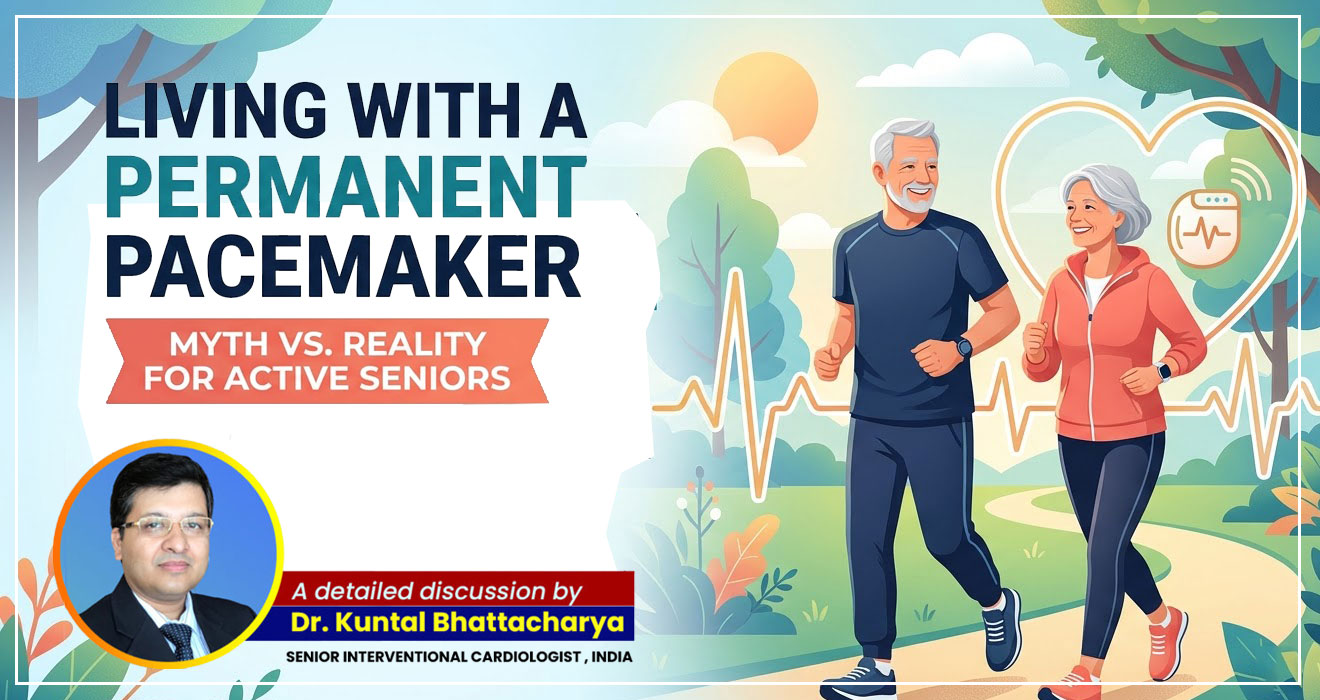
Living with a Permanent Pacemaker: Myth vs. Reality for Active Seniors
Table of Contents
Toggle‘Living with a Permanent Pacemaker: Myth vs. Reality for Active Seniors’ – From the desk of Dr. Kuntal Bhattacharya (Senior), Senior Consultant Interventional Cardiologist, Narayana Hospital (RN Tagore Hospital), Mukundapur, Kolkata
Welcome to a new phase of heart health and vitality. As a senior interventional cardiologist with over two decades of clinical experience in Kolkata, I have walked alongside thousands of elderly patients through the journey of complex cardiac treatments. When a senior undergoes a heart valve replacement, it is a life-saving structural repair. However, because the heart’s electrical wiring runs right alongside its valves, it is incredibly common for seniors to also require a pacemaker either during or shortly after their valve surgery—especially following procedures like Transcatheter Aortic Valve Replacement (TAVR).
This comprehensive guide is designed specifically for our elderly patients in Eastern India. We will bridge the gap between structural recovery (from your valve replacement) and electrical therapy (managing your new pacemaker). My goal is to empower you and your family with the knowledge required to heal safely, eat right, exercise confidently, and embrace this second chance at life to the absolute fullest.
Permanent Pacemaker Implantation Kolkata: The Connection to Valve Surgery
To understand your recovery, you must understand what your heart has just been through. A heart valve replacement fixes the “plumbing” of the heart, ensuring blood flows in the correct direction without leaking or facing obstruction. But why do so many valve patients suddenly hear about pacemakers?
Understanding the Heart’s Electrical Wiring
The heart has a natural electrical system that dictates your heart rate. The primary electrical pathway (the bundle of His) runs just millimeters away from the aortic and mitral valves. When an elderly patient undergoes a valve replacement—whether through traditional open-heart surgery or a minimally invasive catheter procedure—the surrounding tissues can become inflamed, swollen, or slightly bruised.
This inflammation can interrupt the heart’s electrical signals, causing the heart to beat too slowly, a condition known as a “heart block.” To protect you, we perform a permanent pacemaker implantation Kolkata. This is a small, life-saving device placed under the skin near your collarbone. It constantly monitors your heart rhythm and sends tiny, painless electrical impulses to keep your heart beating at a safe, normal pace. It acts as your heart’s ultimate safety net, ensuring that your newly replaced valve has the perfect rhythmic engine to pump blood throughout your body.
Permanent Pacemaker Myth vs Reality
When seniors are told they need a pacemaker, it often triggers immense anxiety. Much of this fear comes from outdated information. Let us clarify the truth by exploring the most common permanent pacemaker myth vs reality.
Dispelling Common Fears for Elderly Patients
Myth 1: I will no longer be able to use household appliances.Reality: Modern pacemakers are incredibly sophisticated and well-shielded. You can safely use televisions, radios, toasters, blenders, and microwave ovens. The only rule is to avoid keeping strong magnets directly over the pacemaker site.
Myth 2: I cannot use a mobile phone ever again.Reality: You can absolutely use a smartphone. We simply advise that you hold the mobile phone to the ear opposite the side where your pacemaker was implanted (usually the right ear, as pacemakers are often placed on the left side) and avoid keeping the phone in your left breast pocket.
Myth 3: A pacemaker means I am an invalid and cannot travel.Reality: A pacemaker does exactly the opposite—it restores your energy and allows you to travel freely! You can travel by car, train, and airplane. While airport metal detectors will not harm the device, the metal casing might set off the alarm. You will be provided with a universal Pacemaker Identification Card. Simply show this card to airport security, and they will perform a manual pat-down search instead.
Myth 4: The pacemaker will shock me, and it will hurt.Reality: A standard pacemaker is not a defibrillator (ICD). It does not deliver painful shocks. It delivers microscopic electrical impulses that you cannot feel at all. Most patients completely forget it is even there within a few weeks of the procedure.
Embracing an Active Seniors Pacemaker Lifestyle
The ultimate goal of combining a valve replacement with a pacemaker is to get you back on your feet. Transitioning into an active seniors pacemaker lifestyle requires a balanced approach to what you eat and how you move.
Essential Diet Tips for Seniors Post-Surgery
Your post-surgery diet acts as a natural medicine. In Kolkata, our traditional diet is rich and flavorful, but it needs specific modifications to support a healing heart and a new valve.
Drastically Reduce Sodium (Salt): Salt is the enemy of a recovering heart. It causes your body to retain fluid, making your heart work harder to pump blood. Avoid adding raw salt to your meals. Strictly eliminate processed foods like chanachur, papad, store-bought pickles (achar), and packaged namkeen. Use lemon, coriander, cumin, and garlic to flavor your fish and vegetable curries.
Embrace Lean Proteins: Healing surgical incisions requires protein. Incorporate easily digestible proteins into your daily meals. Boiled egg whites, light chicken stew, and local Bengali sweet-water fishes (like parse, bata, and moderate amounts of rohu or katla) cooked with minimal oil are excellent choices.
Manage Vitamin K Carefully: If your valve replacement involved a mechanical metal valve, you are likely on blood-thinning medications (like Warfarin or Acitrom). These medications interact with Vitamin K, which is found in green leafy vegetables (like spinach/palak, cabbage, and broccoli). You do not have to stop eating greens, but you must keep your intake consistent. Do not eat a huge portion of greens one day and none the next, as this will dangerously fluctuate your blood thickness.
Control Blood Sugar and Cholesterol: Seniors with diabetes or high cholesterol must maintain strict dietary control. Choose complex carbohydrates like brown rice, oats, or whole-wheat rotis over polished white rice. Avoid deep-fried foods (like telebhaja) and sweet treats (mishti), as these increase inflammation around your new valve and pacemaker leads.
Structured Exercise and Cardiac Rehabilitation
An active lifestyle is crucial, but you must respect the healing process of both your chest (from the valve surgery) and your collarbone pocket (from the pacemaker).
The First 4 to 6 Weeks: During this critical phase, the wires (leads) of your pacemaker are taking root inside your heart muscle. You must avoid raising the arm on the side of your pacemaker above shoulder level. Do not lift heavy objects, push heavy doors, or carry heavy grocery bags. Your exercise should consist solely of slow, steady indoor walking.
Gradual Progression: After your cardiologist gives you clearance (usually around week 6), you can begin taking brisk outdoor walks. Walking is the absolute best exercise for senior cardiac patients. Start with 15 minutes a day in the cool morning or late evening, gradually building up to 30 to 45 minutes of continuous, comfortable walking.
Activities to Embrace and Avoid: Once fully healed, you can return to gardening, light yoga, and climbing stairs. However, seniors with pacemakers should avoid contact sports or activities where there is a risk of a hard blow to the chest (which could damage the device).
Senior Citizen Heart Pacemaker Precautions
Living with advanced cardiac devices is entirely safe, provided you follow a few basic, non-negotiable rules. Understanding senior citizen heart pacemaker precautions ensures the longevity of your device and your personal safety.
Navigating Daily Life Safely
Always Carry Your ID Card: Your Pacemaker Identification Card contains vital information, including the make, model, and serial number of your device, as well as your doctor’s emergency contact. Keep this in your wallet at all times, especially when visiting other doctors or dentists.
Inform All Medical Personnel: Before undergoing any medical procedure—be it a dental extraction, physical therapy, or a minor skin surgery—inform the treating doctor that you have a pacemaker. Certain medical equipment, like electrocautery tools or therapeutic diathermy, can interfere with your device.
MRI Scans Require Clearance: While most modern pacemakers implanted today at top centers are “MRI-conditional” (meaning you can have an MRI under specific, controlled settings), you must never walk into an MRI room without your cardiologist’s explicit clearance and supervision.
Avoid Industrial Equipment: Stay away from high-voltage transformers, heavy industrial welding equipment, and large electrical generators, as the strong electromagnetic fields can temporarily disrupt the pacemaker’s function.
Living with Pacemaker Elderly Care: A Guide for Families
When a senior undergoes a dual procedure of a valve replacement and a pacemaker implantation, the role of the family becomes paramount. Living with pacemaker elderly care involves psychological support just as much as physical assistance.
Emotional and Physical Support Strategies
Elderly patients often experience a period of post-operative depression or anxiety. The trauma of surgery, combined with the realization that a machine is controlling their heartbeat, can be overwhelming.
Wound Care: Caregivers must monitor the surgical sites (both the chest and the collarbone area) daily. Look out for any signs of infection, such as excessive redness, swelling, warmth, or discharge. If you notice any of these, contact the hospital immediately.
Medication Management: Seniors are often discharged with a complex list of medications, including blood thinners, beta-blockers, and diuretics. Caregivers should use pill organizers and set alarms to ensure medications are taken exactly on time, every single day.
Routine Pulse Checks: While the pacemaker guarantees the heart will not drop below a certain rate (usually set at 60 beats per minute), caregivers should learn to manually check the patient’s radial pulse (at the wrist) once a week. If the pulse is ever significantly lower than the pacemaker’s programmed rate, or if it feels highly irregular, it requires clinical attention.
Encourage Independence: While support is crucial, overprotecting the patient can hinder their recovery. Encourage your elderly parents to do light household chores, take their daily walks, and engage in social activities to boost their mental health.
Understanding Pacemaker Surgery Cost in Kolkata
One of the most pressing concerns for families is the financial aspect of long-term cardiac care. The pacemaker surgery cost in Kolkata varies significantly depending on several medical and technological factors.
Planning for Healthcare Expenses
The cost of the procedure is primarily dictated by the type of device your specific heart condition requires.
Single-Chamber vs. Dual-Chamber: A single-chamber pacemaker uses one wire attached to the lower chamber of the heart. A dual-chamber pacemaker uses two wires (one in the upper and one in the lower chamber) to coordinate a more natural heartbeat. Dual-chamber devices are more common but slightly more expensive.
Biventricular Pacemakers (CRT): If a senior has severe heart failure alongside a valve issue, they may require a specialized device called a Cardiac Resynchronization Therapy (CRT) pacemaker, which uses three leads to force both sides of the heart to pump together. This represents the higher end of the cost spectrum.
MRI Compatibility: Devices equipped with advanced shielding to allow for future MRI scans carry a premium but are highly recommended for seniors who might need neurological or orthopedic MRIs later in life.
At reputable hospitals, the total package cost generally includes the device itself, the Cath Lab charges, the surgeon’s fees, and a standard hospital stay of 2 to 3 days. Families should consult their health insurance providers or check eligibility for state health schemes (like Swasthya Sathi) which often provide substantial coverage for life-saving cardiac implants.
Finding the Best Cardiology Hospitals in Kolkata for Seniors
The success of a complex valve recovery and pacemaker implantation depends heavily on the institution you choose. When evaluating the best cardiology hospitals in Kolkata for seniors, you must look beyond just the surgical theater.
Why Comprehensive Care Matters
For elderly patients, cardiac care cannot be one-dimensional. At Narayana Hospital (RN Tagore Hospital) in Mukundapur, we have built a holistic geriatric cardiac ecosystem. What makes a hospital truly equipped for seniors?
Electrophysiology (EP) Expertise: The hospital must have dedicated Cardiac Electrophysiologists—cardiologists who sub-specialize in the heart’s electrical system—to program, monitor, and troubleshoot pacemakers with absolute precision.
Advanced Cardiac Rehabilitation: Post-operative recovery requires guided, supervised exercise. Top hospitals provide specialized cardiac rehab programs where seniors exercise while attached to ECG monitors, ensuring total safety while they rebuild their stamina.
24/7 Multi-Disciplinary Support: Seniors often have existing kidney issues, diabetes, or lung conditions. A premier hospital provides round-the-clock access to nephrologists, endocrinologists, and critical care specialists who work as a team with the cardiologist to manage the patient’s entire bodily health, not just the heart.
Frequently Asked Questions (FAQs) on 'Living with a Permanent Pacemaker'
To provide further clarity, here are some of the most common questions searched by patients and families regarding cardiac devices and recovery in our city.
What is the truth behind the permanent pacemaker myth vs reality?
The biggest myth is that a pacemaker makes you fragile and restricts your life. The reality is that modern pacemakers are highly durable, life-enhancing devices. They allow seniors who were previously fainting, dizzy, or severely fatigued due to low heart rates to return to a completely normal, active lifestyle, including traveling and exercising, without the fear of sudden cardiac arrest.
How do I maintain an active seniors pacemaker lifestyle after a valve replacement?
Maintaining this lifestyle requires a balance of proper nutrition and safe movement. Once your cardiologist clears you (usually 6 weeks post-surgery to allow the pacemaker leads and chest bone to heal), you should engage in 30 to 45 minutes of brisk walking daily. Pair this with a low-sodium, heart-healthy diet rich in lean proteins and low in saturated fats to protect your new valve and keep your energy levels high.
What are the core aspects of living with pacemaker elderly care?
Elderly care involves strict medication adherence, regular monitoring of the surgical wounds for the first few weeks, and keeping all scheduled appointments for “pacemaker interrogation.” During these painless clinic visits, the cardiologist uses a computer to check the device’s battery life and electrical settings. Caregivers should also provide emotional support to help the senior adjust to the device mentally.
What factors influence pacemaker surgery cost in Kolkata?
The cost is heavily influenced by the technology of the device chosen (single-chamber, dual-chamber, or specialized CRT devices for heart failure). Additional factors include whether the device is MRI-compatible, the brand of the device (such as Medtronic, Abbott, or Boston Scientific), the duration of the hospital stay, and the specific room category chosen by the family.
How can I identify the best cardiology hospitals in Kolkata for seniors?
The best hospitals for seniors are those that offer a complete spectrum of care. Look for institutions like RN Tagore Hospital that boast dedicated Electrophysiology departments, specialized cardiac intensive care units (CCUs), and comprehensive, medically supervised cardiac rehabilitation centers. A multi-disciplinary team approach is crucial for elderly patients who often have multiple overlapping medical conditions.
What are the most important senior citizen heart pacemaker precautions?
The most critical precautions include keeping mobile phones at least 6 inches away from the pacemaker (use the opposite ear), avoiding strong magnetic fields, carrying your Pacemaker ID card at all times, and informing all doctors, dentists, and airport security personnel about your device. Additionally, seniors should avoid lifting heavy weights with the arm on the pacemaker side for the first 6 weeks.
Why is permanent pacemaker implantation Kolkata often required after valve surgery?
The heart’s electrical pathways are located extremely close to the aortic and mitral valves. When an elderly patient undergoes a surgical or transcatheter valve replacement, the localized swelling, calcium removal, or the pressure of the new valve can disrupt these electrical pathways, causing a slow heart rate (heart block). A pacemaker is implanted to safely restore and maintain the heart’s normal, healthy rhythm.
About the Author: Dr. Kuntal Bhattacharya is a highly respected Senior Consultant Interventional Cardiologist at NH Rabindranath Tagore International Institute of Cardiac Sciences, Kolkata. With over 22 years of clinical excellence, he specializes in complex coronary interventions, structural heart diseases, cardiac electrophysiology, and comprehensive post-operative geriatric cardiac care.
About the Author: Dr. Kuntal Bhattacharya is a highly esteemed, Gold Medalist, and Senior Consultant Interventional Cardiologist at NH Rabindranath Tagore International Institute of Cardiac Sciences, Kolkata. With over 22 years of dedicated clinical experience, he is deeply committed to bringing the most advanced, compassionate, ethical, and personalized cardiovascular care to his patients across Eastern India, specializing in complex coronary interventions and the management of high-risk diabetic heart disease.
Follow Dr. Kuntal Bhattacharya on Facebook & Youtube for regular updates.
Read Also:
- The Connection Between Diabetes and Heart Disease: How to Protect Yourself
- Life After Heart Valve Replacement: Diet and Exercise Tips for Seniors
- Rotational Atherectomy (Rotablator): Clearing Heavily Calcified Arteries
- Pacemaker Battery Replacement: What to Expect During the Procedure
- Preventing Stroke Risk During TAVI: The Role of Cerebral Protection Devices
- Why a Stress Test (TMT) is Crucial for Early Heart Disease Detection
- Left Main Angioplasty: A Minimally Invasive Alternative to Bypass in 2026
- Life with an AICD: Managing Sudden Cardiac Death Risk Effectively
- TAVI for High-Risk Patients: Why Age is No Longer a Barrier to Heart Care
- Understanding Your Echocardiogram Results: A Simple Guide for Patients
- How 3D Imaging Enhances Precision in TAVI Procedures in Kolkata
- Identifying Asymptomatic Heart Disease in Young Adults in 2026: The Silent Killer
- The Role of FFR in Deciding the Right Treatment for Heart Blockages
- Leadless Pacemakers vs. Traditional Pacemakers: Pros and Cons for 2026
- Managing Complex Coronary Artery Disease in 2026: A Cardiologist’s Guide
- How IVUS and OCT Technology Revolutionized Angioplasty Success in Kolkata
- Choosing the Right Coronary Angioplasty Doctor in Kolkata 2026: A Patient’s Guide
- Life After TAVI/TAVR Treatment: Patient Advice from a Cardiologist in Kolkata
- Why Choose TAVI/TAVR Over Open Heart Surgery in 2025?
Stay Healthy. Stay Informed.
Disclaimer: This article is for general education only. It is not a substitute for professional medical advice, diagnosis or treatment, and reading it does not create a doctor–patient relationship. Every patient is different, and outcomes cannot be guaranteed. Always consult a qualified doctor about your own condition.