
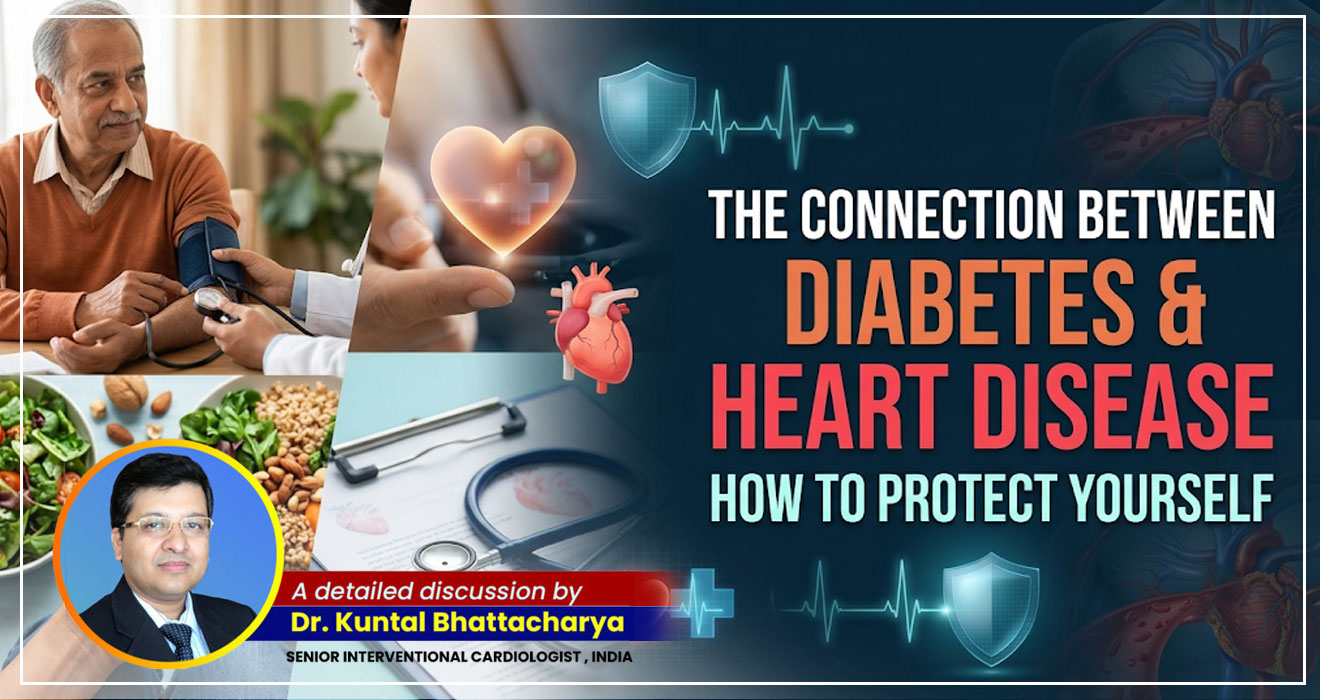
The Connection Between Diabetes and Heart Disease: How to Protect Yourself
Table of Contents
Toggle“The Connection Between Diabetes and Heart Disease: How to Protect Yourself” – From the desk of Dr. Kuntal Bhattacharya (Senior), Senior Consultant Interventional Cardiologist, Narayana Health, RN Tagore Hospital, Kolkata
Welcome to this comprehensive, in-depth guide on cardiovascular health and metabolic management. As a practicing interventional cardiologist with over two decades of clinical experience, I have evaluated, diagnosed, and treated thousands of patients facing the dual, often overwhelming challenge of diabetes and cardiac complications. In India, and particularly in Eastern India and Kolkata, the prevalence of these intertwined conditions is rising at an alarming, unprecedented rate. Recent nationwide medical studies indicate that over a hundred million Indians are currently living with diabetes, while an even larger portion of the population is in the prediabetic stage, unknowingly walking toward a severe health crisis.
These numbers are not just abstract statistics; they represent our family members, our friends, our colleagues, and our neighbors. A very common and dangerous misconception among my patients in Kolkata is that diabetes is an isolated disease that only affects blood sugar levels and the pancreas. In reality, diabetes is a systemic, whole-body condition that does not stop at insulin production. It silently and progressively impacts multiple vital organs, with the human heart and the entire vascular system being the most vulnerable targets.
In this detailed, patient-focused guide, we will explore the deep biological connection between chronic high blood sugar and cardiovascular issues, how to recognize the silent, easily missed symptoms of cardiac distress, and the most advanced medical strategies available today to protect your heart. Whether you have been recently diagnosed or have been managing diabetes for years, understanding this connection is your first and strongest line of defense.
The Silent Threat: Understanding How Diabetes Damages the Heart
To effectively protect your heart, you must first deeply understand the enemy you are fighting. In modern medicine, diabetes and heart disease are so intricately linked that cardiovascular specialists and endocrinologists often treat diabetes as a primary, direct risk factor for cardiovascular disease. In fact, having diabetes is often considered the clinical equivalent of having already had a prior heart attack in terms of future risk. But why exactly does this happen?
The Science Behind “Sweet Blood” and Stiff Arteries
When you suffer from diabetes, your body either does not produce enough insulin (Type 1) or cannot use the insulin it produces efficiently (Type 2, which is far more common). This metabolic failure leads to elevated, uncontrolled levels of glucose (sugar) continuously circulating in your bloodstream. Over time, this “sweet blood” acts almost like microscopic sandpaper on the delicate, smooth inner linings of your blood vessels, a critical layer known as the endothelium.
This constant, daily irritation causes a condition called endothelial dysfunction. Healthy blood vessels expand and contract easily to regulate blood pressure and flow, but damaged vessels become stiff, rigid, and far less elastic. Furthermore, high blood sugar creates a highly inflammatory environment inside the body. This inflammation encourages the accumulation of circulating LDL cholesterol, calcium, and inflammatory white blood cells along the damaged arterial walls.
This toxic buildup forms a sticky, hardened substance called plaque, leading to a dangerous condition known as atherosclerosis. As this plaque slowly grows over the years, it narrows the internal diameter of the arteries, severely restricting the flow of oxygen-rich and nutrient-dense blood to the heart muscle. If a piece of this unstable plaque ruptures or cracks open, the body attempts to heal it by forming a blood clot. This clot can completely and instantly block the artery, causing a myocardial infarction—commonly known as a heart attack.
The Multiplier Effect: Cholesterol, Blood Pressure, and Weight
Diabetes very rarely acts alone. It is a collaborative disease that usually brings along a cluster of dangerous, co-existing companions—chronic high blood pressure (hypertension), elevated levels of triglycerides (fats in the blood), and dangerously low levels of HDL (the “good” cholesterol that helps clear arteries). This specific cluster of conditions is medically classified as Metabolic Syndrome.
When these conditions combine in a single patient, the risk of experiencing a severe, life-threatening cardiac event multiplies exponentially. It is not a matter of simple addition; it is a compounding threat. Patients living with diabetes are not only significantly more likely to develop heart disease than the general population, but they are also much more likely to develop it at a significantly younger age. We are now routinely seeing patients in their 30s and 40s in our emergency rooms with severe coronary artery disease driven entirely by uncontrolled, early-onset diabetes.
The Danger of Silent Ischemia and Diabetic Neuropathy
Perhaps one of the most insidious and frightening ways prolonged diabetes affects the human body is through progressive nerve damage, clinically known as diabetic neuropathy. While many people associate this neuropathy with a loss of sensation, tingling, or burning in the feet and lower extremities, this severe nerve damage can also affect the internal autonomic nerves that control and monitor internal organs, including the heart.
Because the cardiac nerves are damaged and desensitized, a diabetic patient might not feel the classic, crushing, heavy chest pain (angina) or the radiating left arm pain that typically signals a heart attack. Instead, they might experience what we call a “silent heart attack” or silent ischemia. The critical warning signals simply fail to reach the brain due to the damaged neurological pathways. The patient might only feel vague symptoms like sudden extreme fatigue, mild shortness of breath, unexplained sweating, or what they mistake for mild indigestion. This absence of clear warning signs makes routine, proactive cardiac screening not just recommended, but absolutely critical for anyone living with diabetes.
Heart Disease Treatment in Diabetes: The Modern Approach
Managing a complex heart condition when you also have diabetes requires a meticulously balanced, highly specialized, and multi-disciplinary approach. The primary goal of Heart Disease Treatment in Diabetes is twofold: aggressively stabilizing blood sugar levels to halt any further vascular damage, and actively treating the existing cardiac blockages or dangerous rhythm disorders to restore normal heart function.
Evidence-Based Non-Invasive Medical Management
Long before considering any surgical or interventional procedures, we prioritize aggressive, evidence-based medical management. This includes prescribing a strict, highly tailored regimen of medications designed to control both the metabolic and cardiovascular conditions simultaneously. The landscape of diabetic cardiology has evolved dramatically in the last decade.
Advanced Blood Sugar Controllers: Modern anti-diabetic medications, specifically SGLT2 inhibitors and GLP-1 receptor agonists, have revolutionized care. They do not merely lower blood sugar; massive clinical trials have proven they have direct cardiovascular benefits, actively protecting the heart muscle from failing and reducing the risk of cardiovascular death.
Statins and Lipid-Lowering Drugs: Even if your routine cholesterol blood test appears borderline or normal, high-intensity statins are aggressively used in diabetic patients. Their primary job in these cases is not just to lower cholesterol, but to physically stabilize existing arterial plaques, reducing inflammation and preventing them from rupturing and causing a sudden clot.
Anti-Hypertensives for Organ Protection: Medications like ACE inhibitors or Angiotensin II Receptor Blockers (ARBs) are absolutely crucial. They serve a dual purpose: they efficiently lower systemic blood pressure to reduce the workload on the heart, and they actively protect the kidneys—another vital organ highly susceptible to severe diabetic microvascular damage.
Targeted Antiplatelet Therapy: Blood thinners (such as Aspirin, Clopidogrel, or newer agents like Ticagrelor) are frequently prescribed to prevent the clumping of platelets and the subsequent formation of deadly blood clots inside narrowed, plaque-heavy arteries.
Minimally Invasive and Advanced Interventions
When arterial blockages are critically severe, highly calcified, or immediately life-threatening, medications alone are no longer enough. As an interventional cardiologist, my specialty lies in reopening these critically blocked pathways without the need for traditional, traumatic open-heart surgery, ensuring faster recovery and less physiological stress for the diabetic patient.
Coronary Angiogram and Precision Angioplasty: Using a tiny, flexible catheter inserted through the radial artery in the wrist or the femoral artery in the groin, we navigate to the heart to locate the exact blockages. We then deploy a medicated, drug-eluting stent to permanently keep the artery open. For diabetic patients, who often present with highly complex, diffuse, or multi-vessel blockages, we use the latest generation of stents coated with specific drugs that prevent the artery from narrowing again (restenosis).
Advanced Coronary Imaging (IVUS and OCT): Relying solely on standard X-ray angiography is often insufficient for complex diabetic blockages. Techniques like Intravascular Ultrasound (IVUS) and Optical Coherence Tomography (OCT) allow us to pass a microscopic camera or ultrasound probe directly into the blood vessel. This lets us see the artery from the inside out in high-definition, ensuring the stent is perfectly sized, placed, and fully expanded against the vessel wall, which is absolutely vital for the long-term success and survival of diabetic patients.
Intravascular Calcium Removal Techniques: Diabetic patients frequently develop rock-hard, heavily calcified plaques that standard balloons cannot open. In such complex cases, we utilize modern, cutting-edge tools like Rotablation (a microscopic diamond-tipped drill that safely sands away the calcium) and Intravascular Lithotripsy (IVL), which uses sonic pressure waves to safely crack and fracture the calcium from the inside before successfully placing a stent.
Exploring Advanced Treatment for Heart Disease in Kolkata
Kolkata has rapidly emerged as a premier, globally recognized hub for world-class, technologically advanced cardiac care in Eastern India and neighboring regions. Patients no longer need to travel abroad or endure the stress of relocating to other metropolitan cities to access cutting-edge cardiovascular therapies. The standard of Treatment for Heart Disease in Kolkata today is entirely on par with the best medical institutions in the world, offering hope and definitive solutions to the most complex cases.
State-of-the-Art Care at RN Tagore Hospital
At Narayana Hospital (RN Tagore Hospital) located in Mukundapur, Kolkata, we are deeply committed to providing comprehensive, 360-degree cardiac care under one unified roof. Our advanced catheterization laboratories (Cath Labs) are equipped with the latest generation of digital imaging, robotic assistance, and emergency life-support technologies. We routinely and successfully perform highly complex procedures that are particularly beneficial and life-saving for high-risk diabetic patients, such as:
Complex Bifurcation Stenting: Skillfully treating blockages that occur precisely at the junction where a main artery divides into two branches, a common and tricky scenario in diabetic pathology.
Left Main Coronary Angioplasty: Offering a highly effective, minimally invasive alternative to traditional open-heart Coronary Artery Bypass Grafting (CABG) surgery for critical blockages in the heart’s most important artery.
TAVI / TAVR Procedures: Transcatheter Aortic Valve Implantation allows our structural heart team to replace a severely diseased, narrowed aortic heart valve using a catheter, completely bypassing the need for open surgery. This ensures a dramatically faster, safer, and less painful recovery, especially for elderly diabetic patients who may be too frail for traditional surgery.
Advanced Device Therapy: For diabetic patients suffering from severe heart failure or life-threatening irregular heartbeats (arrhythmias), we offer complete electrophysiology services, including advanced Leadless Pacemakers, AICDs (Automated Implantable Cardioverter Defibrillators) to prevent sudden cardiac arrest, and CRT (Cardiac Resynchronization Therapy) devices to help a weakened heart pump more efficiently.
Finding a Reliable Doctor in Heart Disease in Kolkata
Receiving a diagnosis of advanced heart disease can be an incredibly overwhelming and frightening experience, especially when you are already struggling with the daily demands of managing diabetes. Finding the right medical specialist is more than half the battle won. When you are diligently searching for a trusted Doctor in Heart Disease in Kolkata, it is absolutely essential to look for a rare blend of clinical excellence, technological expertise, and deeply compassionate patient care.
What Defines a Trusted Cardiac Specialist?
Extensive Experience and Qualifications: Always look for a cardiologist with top-tier specialized degrees (such as a DM or DNB in Cardiology) and decades of hands-on clinical experience dealing specifically with complex, high-risk diabetic cases.
Technological Proficiency and Adaptability: The chosen doctor should be highly adept at utilizing the latest minimally invasive diagnostic tools, such as Fractional Flow Reserve (FFR) to precisely measure blood flow, and advanced intravascular imaging, to avoid unnecessary stents or surgeries and deliver precision care.
A Balanced, Ethical Approach: The best and most reliable cardiologists do not immediately rush to operate. They carefully and holistically evaluate each individual case, ensuring the perfect balance between non-invasive medical therapies, lifestyle modifications, and interventional procedures.
Affiliation with Premier Tertiary Hospitals: Ensure your doctor operates out of a highly equipped, comprehensive facility like Narayana Health. In cardiac care, infrastructure saves lives. You need a hospital where multi-disciplinary teams—including cardiac surgeons, nephrologists, and intensivists—are available 24/7 to handle any sudden emergencies or complications.
Why Consult a Specialist doctor for Heart Disease Treatment in Kolkata?
Managing a diabetic heart is a highly complex, ongoing medical endeavor. A general physician or family doctor is wonderful for helping control your daily blood sugar, but the intricate structural, vascular, and electrical health of your heart requires a dedicated, focused expert. Consulting a highly specialized doctor for Heart Disease Treatment in Kolkata ensures that every single aspect of your cardiovascular health is meticulously monitored, actively managed, and protected for the long term.
Personalized Care and Long-Term Monitoring
Every patient’s heart is anatomically different, and the specific way diabetes ravages their body is entirely unique. A specialized interventional cardiologist does not just treat the immediate, glaring blockage and send you home; they map out a comprehensive, long-term survival, rehabilitation, and wellness strategy.
This rigorous ongoing care includes supervised post-procedure cardiac rehabilitation, remote digital monitoring for any implanted cardiac devices, and regular, scheduled stress tests (like the Treadmill Test or Stress Echocardiography) to proactively detect any new, silent issues years before they have the chance to become life-threatening emergencies. By building a deep, trusting, and lasting doctor-patient relationship, we can collaboratively adjust medications, tweak diets, and modify lifestyle recommendations in real-time, greatly improving not just your survival rates, but your overall quality of life.
Preventive Cardiology: How to Protect Yourself Today
While modern medical science offers miraculous treatments and interventions, robust prevention remains the ultimate, most effective cure. If you have diabetes, protecting your heart requires a proactive, determined, and daily commitment to your health. It is about making small, consistent choices. Here are the most effective, clinically proven steps you can take starting today to safeguard your heart:
1. Master Your Blood Sugar, Blood Pressure, and Lipid Profile
Your HbA1c (a crucial blood test that measures your average blood sugar over the past three months) should be tested every three to six months without fail. Your numbers must strictly align with the personalized targets set by your endocrinologist. Simultaneously, purchase a reliable digital monitor and check your blood pressure at home regularly. Keep your LDL (bad cholesterol) strictly under the target limits advised by your cardiologist. Keeping all these metabolic numbers tightly controlled significantly slows down the vascular aging and damage to your blood vessels.
2. Adopt a Heart-Defending, Culturally Relevant Diet
What you consciously choose to put on your plate every day directly impacts the health of your coronary arteries. As a resident of Kolkata, it is important to adapt the local Bengali diet for heart health. Focus on an antioxidant-rich, high-fiber, low-glycemic index diet.
Rethink Your Cooking Oils: Move away from excessive use of saturated fats and refined oils. While mustard oil is a staple in Bengali cooking and has a decent fat profile, use it in strict moderation. Consider blending your usage with heart-healthy oils like olive oil or rice bran oil. Always avoid reusing cooking oil, as this creates dangerous trans fats.
Vegetables are Your Best Friend: Incorporate deep-colored vegetables into your daily meals. Tomatoes are rich in lycopene—a powerful antioxidant that protects vascular cells from oxidative damage. Leafy greens, gourds (like lau and jhinge), and cruciferous vegetables provide essential vitamins without spiking blood sugar.
Carbohydrate Management: In a rice-heavy culture, portion control is paramount. Switch from highly polished white rice to brown rice, red rice, or complex grains like oats and millets (bajra, jowar). These have a lower glycemic index, preventing sudden sugar spikes.
Smart Protein Choices: Bengal is famous for its fish, which is excellent news for your heart. Fishes like Rohu, Katla, and smaller varieties are great sources of lean protein. However, the preparation is key—opt for light stews (macher jhol), steaming (bhapa), or grilling rather than deep-frying (macher kalia) in heavy oil.
3. Stay Active, but Safely and Consistently
Regular cardiovascular exercise—such as a brisk 45-minute morning walk at Rabindra Sarobar, cycling, swimming, or light aerobics—trains your heart muscle to pump more efficiently, lowers blood pressure, and dramatically improves your body’s cellular sensitivity to insulin. However, if you are a long-term diabetic or have led a highly sedentary lifestyle, you must undergo a baseline cardiac evaluation (such as an ECG or an Echocardiogram) with your cardiologist before starting any vigorous exercise program to rule out any silent, underlying blockages.
4. Quit Smoking Completely and Avoid Secondhand Smoke
If you have diabetes and you smoke cigarettes or consume any form of tobacco, you are putting your heart in immediate, severe, and compounding danger. The chemicals in tobacco smoke accelerate plaque buildup, drastically reduce the oxygen levels in your blood, and cause the blood vessels to constrict and spasm. Quitting smoking is, without a doubt, the single most effective, immediate action you can take to lower your risk of a massive heart attack. Seek medical help, nicotine replacement therapies, or counseling to break the habit today.
5. Prioritize Daily Foot Care and Mental Well-being
Because of diabetic peripheral neuropathy, you can easily develop a blister, cut, or ulcer on your foot without ever realizing it due to the total lack of pain signals reaching your brain. A seemingly harmless small wound from a poorly fitted shoe can quickly escalate into a severe, limb-threatening infection. Check your feet daily with a mirror, always wear specialized, well-cushioned diabetic footwear, and never walk barefoot, even inside your home. Furthermore, manage your mental stress through yoga, meditation, or hobbies, as chronic stress severely spikes both blood sugar and blood pressure, straining the heart.
Frequently Asked Questions (FAQs)
To help our patients further navigate this complex topic, here are detailed answers to some of the most common questions frequently searched on Google regarding cardiac care and diabetes in our city.
How do I find the best Doctor in Heart Disease in Kolkata for a diabetic patient?
Finding the right specialist involves conducting thorough research into their specific clinical credentials, their track record with complex metabolic cases, and their hospital affiliations. You should seek out trusted referrals from your primary care physician, read verified patient testimonials, and look for specialists who are permanently attached to highly reputed, fully equipped tertiary care centers. Most importantly, look for a doctor who takes the time to listen, communicates clearly, and emphasizes evidence-based, balanced treatment plans rather than rushing immediately into invasive surgeries.
Is the Treatment for Heart Disease in Kolkata effective and safe for advanced diabetic patients?
Absolutely. Kolkata is currently home to world-class, globally competitive cardiac infrastructure. At premier institutions like Narayana RN Tagore Hospital, our dedicated teams routinely and safely perform the most complex, high-risk procedures—such as Intravascular Lithotripsy, Complex Bifurcation Stenting, Left Main Angioplasty, and TAVI—specifically tailored for diabetic patients whose vessels are often heavily calcified, hardened, or diffusely narrowed. Our clinical outcomes and success rates are highly successful, helping severe diabetic patients regain active, healthy, and fulfilling lives.
What exactly does Heart Disease Treatment in Diabetes entail on a day-to-day basis?
It is a comprehensive, dual-focused, lifelong approach. Firstly, it involves the aggressive, continuous management of blood sugar, blood pressure, and cholesterol through highly targeted modern medications, coupled with strict, non-negotiable dietary and lifestyle changes. Secondly, if arterial blockages or structural heart issues are present, it involves utilizing advanced interventional procedures—like precisely placing drug-eluting stents through minimally invasive angioplasty or implanting high-tech cardiac devices (like pacemakers or defibrillators) to correct failing heart rhythms. This ensures the heart functions optimally despite the ongoing metabolic challenges posed by diabetes.
Why should I consult a specialized doctor for Heart Disease Treatment in Kolkata if I only have “mild” or borderline diabetes?
In the medical world, there is no such thing as “mild” diabetes when it comes to cardiovascular risk. Diabetes is a relentlessly progressive condition, and devastating cardiovascular damage often happens silently, over many years, without any visible symptoms (silent ischemia). A specialized interventional cardiologist can run advanced, predictive diagnostics—such as highly detailed Echocardiography, Treadmill Tests, or Holter monitoring—to catch these subtle, hidden cardiac abnormalities years before they manifest as a catastrophic, severe heart attack. Early, aggressive intervention is always exponentially safer, less invasive, and more effective than emergency treatment.
Are there specific, unusual symptoms of heart disease that diabetics should watch out for?
Yes, absolutely. While standard heart attack symptoms include heavy chest pain and left arm numbness, diabetics must be hyper-vigilant about “atypical” or silent symptoms due to nerve damage. These critical warning signs include sudden, unexplained shortness of breath while resting, profound and sudden fatigue, dizzy spells or fainting, breaking out in cold sweats for no reason, or experiencing what feels like severe indigestion or burning discomfort in the upper abdomen or jaw. If you experience any of these unusual symptoms, do not ignore them or attempt to sleep them off—seek emergency cardiac care at a reputed hospital immediately.
About the Author: Dr. Kuntal Bhattacharya is a highly esteemed, Gold Medalist, and Senior Consultant Interventional Cardiologist at NH Rabindranath Tagore International Institute of Cardiac Sciences, Kolkata. With over 22 years of dedicated clinical experience, he is deeply committed to bringing the most advanced, compassionate, ethical, and personalized cardiovascular care to his patients across Eastern India, specializing in complex coronary interventions and the management of high-risk diabetic heart disease.
Follow Dr. Kuntal Bhattacharya on Facebook & Youtube for regular updates.
Read Also:
- Rotational Atherectomy (Rotablator): Clearing Heavily Calcified Arteries
- Living with a Permanent Pacemaker: Myth vs. Reality for Active Seniors
- Life After Heart Valve Replacement: Diet and Exercise Tips for Seniors
- Pacemaker Battery Replacement: What to Expect During the Procedure
- Preventing Stroke Risk During TAVI: The Role of Cerebral Protection Devices
- Why a Stress Test (TMT) is Crucial for Early Heart Disease Detection
- Left Main Angioplasty: A Minimally Invasive Alternative to Bypass in 2026
- Life with an AICD: Managing Sudden Cardiac Death Risk Effectively
- TAVI for High-Risk Patients: Why Age is No Longer a Barrier to Heart Care
- Understanding Your Echocardiogram Results: A Simple Guide for Patients
- How 3D Imaging Enhances Precision in TAVI Procedures in Kolkata
- Identifying Asymptomatic Heart Disease in Young Adults in 2026: The Silent Killer
- The Role of FFR in Deciding the Right Treatment for Heart Blockages
- Leadless Pacemakers vs. Traditional Pacemakers: Pros and Cons for 2026
- Managing Complex Coronary Artery Disease in 2026: A Cardiologist’s Guide
- How IVUS and OCT Technology Revolutionized Angioplasty Success in Kolkata
- Choosing the Right Coronary Angioplasty Doctor in Kolkata 2026: A Patient’s Guide
- Life After TAVI/TAVR Treatment: Patient Advice from a Cardiologist in Kolkata
- Why Choose TAVI/TAVR Over Open Heart Surgery in 2025?
Stay Healthy. Stay Informed.
Disclaimer: This article is for general education only. It is not a substitute for professional medical advice, diagnosis or treatment, and reading it does not create a doctor–patient relationship. Every patient is different, and outcomes cannot be guaranteed. Always consult a