

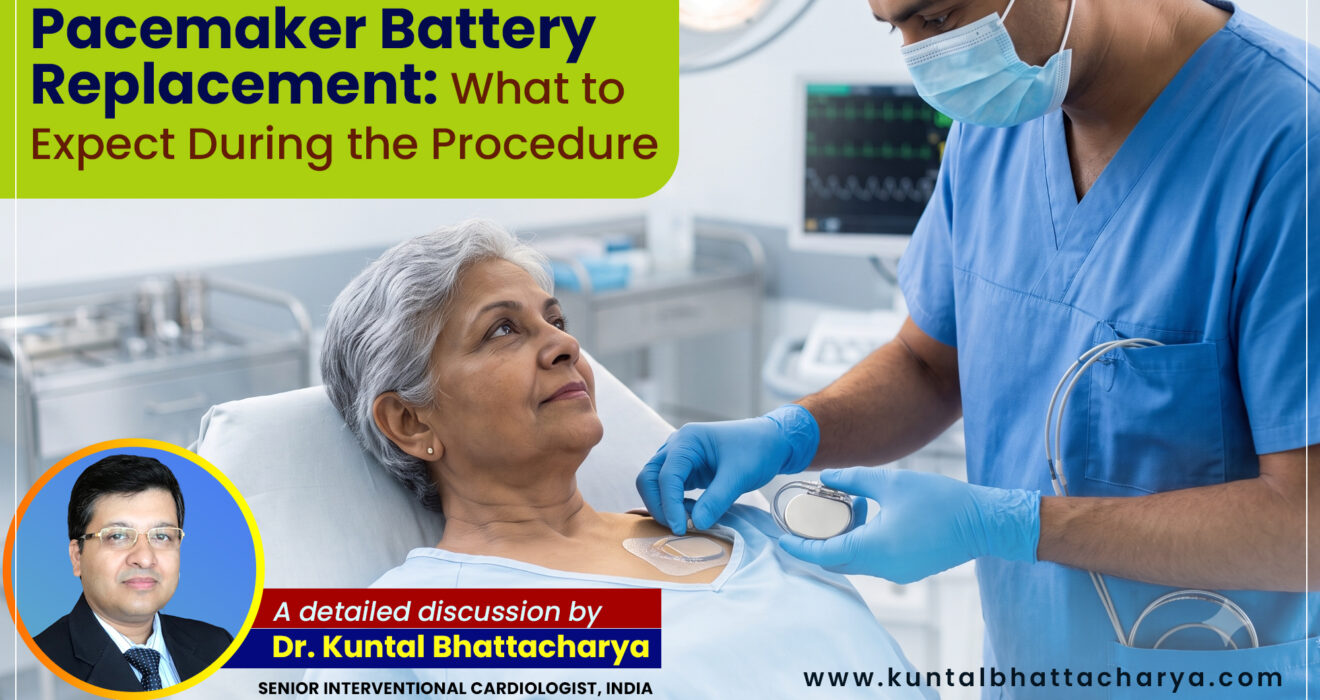
Pacemaker Battery Replacement: What to Expect During the Procedure
An ultimate guide on ‘Pacemaker Battery Replacement: What to Expect During the Procedure’ – by Dr. Kuntal Bhattacharya, Senior Interventional Cardiologist, Narayana Health – RN Tagore Hospital, Kolkata
If you or a loved one is living with a pacemaker, you already know the profound peace of mind this remarkable device brings. A pacemaker works silently in the background, continuously monitoring your heart rhythm and delivering electrical impulses when your heart beats too slowly or pauses unexpectedly. It is a true lifesaver that restores energy, prevents fainting spells, and allows you to lead a normal, active life.
However, much like any electronic device we use daily, a pacemaker relies on a battery to function. Because this battery is sealed inside the device, it cannot be simply recharged or swapped out like a flashlight battery. When the power supply begins to run low, a pacemaker battery replacement becomes necessary.
As a practicing Interventional Cardiologist in Kolkata with over two decades of experience, I meet many patients who feel anxious when told it is time for their battery to be replaced. They often worry that they will have to go through the entire initial implantation surgery all over again. I am writing this comprehensive guide to ease those fears, walk you through the process, and answer the most pressing questions you might have.
Whether you are seeking the best doctor for Heart Disease Treatment in Kolkata or simply looking for reliable medical information regarding your cardiac device, this article will explain exactly what a pacemaker replacement procedure entails, how to prepare, and what the recovery looks like.
Understanding Your Pacemaker System
To understand the replacement process, it is helpful to first understand how your pacemaker is constructed. The system is entirely internal and consists of two primary components.
The Implantable Pulse Generator
The core of your device is the implantable pulse generator. This is the small, metallic case (usually made of titanium) that is implanted just beneath the skin of your chest, typically below the collarbone. Inside this tiny metal housing lies a sophisticated microcomputer that tracks your heart’s electrical activity, along with the specialized lithium-iodine battery that powers the entire system. When doctors talk about a pacemaker battery replacement, they are actually referring to replacing this entire metal unit. Therefore, the procedure is more accurately called a pacemaker generator change.
The Pacemaker Leads
The second crucial component of the system consists of the pacemaker leads. These are thin, flexible, insulated wires that travel from the pulse generator, through your veins, and directly into the chambers of your heart. These leads are the communication bridge—they carry signals from the heart to the generator and deliver electrical impulses from the generator back to the heart muscle. In most cases, the leads are highly durable and can last for decades. During a routine battery change, the existing leads are simply unplugged from the old generator and plugged into the new one.
Understanding Pacemaker Battery Life
One of the most common questions my patients ask in the clinic is: “How long does a pacemaker battery last?“
The answer is highly individualized. On average, pacemaker battery life ranges between 5 to 15 years. The lifespan depends entirely on how often your heart relies on the device. If your pacemaker only acts as a backup and kicks in rarely (standby mode), the battery will last a very long time. Conversely, if your heart requires continuous pacing 100% of the time, the battery will deplete faster. Additionally, advanced devices like dual-chamber pacemakers or cardiac resynchronization therapy (CRT) devices may consume power faster than simpler single-chamber models.
How to Know When It Is Time for a Replacement
You might be wondering if your pacemaker will simply stop working one day without warning. The reassuring answer is no. Modern pacemakers are incredibly smart and are designed to give your healthcare team months of advance notice before the battery is completely exhausted.
The Vital Role of the Device Clinic
Your pacemaker regularly communicates with your medical team. During your scheduled follow-up appointments at the device clinic, a specialized technician or cardiologist uses a programmer (a computer that communicates wirelessly with your pacemaker) to check the battery’s voltage and internal resistance.
Many modern pacemakers also come with remote monitoring capabilities. A small monitor kept by your bedside at home can securely transmit your pacemaker’s data to our hospital servers. Through this technology, your device clinic will receive a notification the moment your battery reaches the Elective Replacement Indicator (ERI) level. At this stage, the pacemaker still has several months of healthy battery life remaining, giving us ample time to schedule the pacemaker replacement procedure comfortably without any emergency.
Signs Your Pacemaker Battery is Failing
While the device clinic usually catches a low battery long before you feel anything, there are rare instances where you might notice physical signs your pacemaker battery is failing. If the battery drops to a critically low level, the pacemaker may enter a “safe mode” to conserve power. In this mode, it might pace your heart at a fixed, slightly lower rate than usual.
If this happens, you might experience symptoms that mirror the issues you had before your original pacemaker was implanted. These can include:
- Unusual fatigue or lethargy
- Shortness of breath during mild physical activity
- Dizziness, lightheadedness, or feeling faint
- A noticeably slower or irregular heartbeat
- A persistent, rhythmic beeping sound or a vibrating sensation coming from your chest (some modern devices use this as an alert system).
If you experience any of these symptoms, you should immediately contact an Adult Cardiologist in Kolkata for an evaluation.
The Pacemaker Replacement Procedure: Step-by-Step
A pacemaker generator change is significantly faster, simpler, and less invasive than your original implantation surgery. Here is exactly what happens during a pacemaker battery replacement.
Preparing for the Procedure
Your cardiologist will provide specific instructions tailored to your health profile. Generally, you will be asked to fast (eat or drink nothing) for about 6 to 8 hours before the procedure. If you take blood thinners, you may be instructed to adjust your dosage or temporarily pause the medication to prevent excessive bleeding during the surgery. Always consult your Adult Heart Doctor in Kolkata before altering any medication routines.
Inside the Operating Room
The procedure is usually performed in a specialized cardiac catheterization lab or a minor operation theater. In most cases, a battery replacement is an outpatient cardiology procedure, meaning you can go home on the very same day.
- Preparation and Comfort: You will be positioned comfortably on the procedure table. Your chest area will be thoroughly cleaned and shaved if necessary, and sterilized to prevent infection.
- Anesthesia: General anesthesia is rarely needed. Instead, we use local anesthesia to completely numb the skin and tissue around your existing pacemaker pocket. We may also administer a mild intravenous sedative to help you feel relaxed and sleepy, though you will remain conscious.
- The Incision: The surgeon will make a small incision, usually directly over the old scar, to access the existing implantable pulse generator.
- Disconnecting and Testing: The doctor will carefully remove the old generator from the tissue pocket. The pacemaker leads are then disconnected. Before attaching the new battery, the surgeon uses computerized equipment to rigorously test the leads. We must ensure they are still fully intact, properly positioned in the heart muscle, and effectively conducting electricity.
- Connecting the New Generator: If the leads are in perfect working order (which is true in the vast majority of cases), they are securely plugged into the new pulse generator.
- Closure: The new generator is tucked back into the existing pocket beneath your skin. The incision is then closed using dissolvable stitches or surgical glue, and a sterile dressing is applied.
The entire process usually takes between 30 to 60 minutes from start to finish.
Pacemaker Generator Change Recovery Time & Aftercare
Because new leads are not being navigated through your veins into your heart, the pacemaker generator change recovery time is remarkably swift.
Immediate Aftercare
After the procedure, you will be monitored in a recovery room for a few hours. We will perform an X-ray to ensure everything is perfectly positioned and check the programming of the new device. Once you are fully awake, comfortable, and stable, you will be discharged. You will need a family member or friend to drive you home due to the sedatives used.
The Weeks Following the Procedure
- Wound Care: Your incision site may be slightly bruised, swollen, or tender for a few days. You can take over-the-counter pain relievers as prescribed. Keep the dressing clean and dry. Avoid taking a full shower until your doctor confirms it is safe to do so.
- Activity Restrictions: While you will feel back to normal very quickly, you must allow the incision to heal. Avoid heavy lifting (anything over 10 pounds) and refrain from raising the arm on the side of the pacemaker above shoulder level for a few weeks to prevent pulling on the healing tissue.
- Follow-Up: You will return to the clinic within a week or two for a wound check. After that, your regular monitoring schedule will resume.
Finding the Right Care: Treatment for Heart Disease in Kolkata
When faced with any cardiac condition—be it a failing device battery, blocked arteries, or a structural heart defect—knowing where to go is half the battle. If you require Treatment for Heart Disease in Kolkata, it is crucial to seek care at an institution equipped with advanced technology and a multidisciplinary team.
At Narayana Hospital RN Tagore Hospital (RTIICS) in Mukundapur, Kolkata, we offer comprehensive, state-of-the-art cardiac care. If you are searching for a highly qualified Doctor in Heart Disease in Kolkata, our team provides everything from preventive cardiology to the most complex interventional procedures.
Comprehensive Interventional Services
As an Interventional Cardiologist in Kolkata, my focus extends beyond cardiac devices. Heart disease often requires a multifaceted approach. For patients suffering from angina or heart attacks, we provide world-class Coronary Artery Disease treatments in Kolkata, including complex angioplasties using advanced imaging techniques like OCT and IVUS to ensure pinpoint accuracy.
For elderly patients or those with severe aortic valve stenosis who are at high risk for traditional open-heart surgery, we offer advanced, minimally invasive solutions such as TAVI Treatment in Kolkata (Transcatheter Aortic Valve Implantation). TAVI allows us to replace a diseased heart valve through a small puncture in the groin, leading to faster recovery and excellent long-term outcomes.
Specialized Care for Women
It is a well-documented medical fact that women experience heart disease differently than men. Their symptoms can be subtle—such as extreme fatigue, nausea, or back pain—rather than the classic crushing chest pain. This often leads to delayed diagnoses. If you or a female relative are experiencing unexplained discomfort, it is vital to consult the best doctor for Women Heart Disease Treatment in Kolkata. Our specialized diagnostic protocols ensure that women’s heart health is assessed accurately and treated promptly, acknowledging their unique physiological needs.
Your Path to Better Heart Health
If you need an Adult Cardiologist in Kolkata, do not delay. Regular check-ups, early diagnosis, and timely interventions are the cornerstones of a long, healthy life. Whether you need a routine device check, a battery replacement, or a second opinion on complex cardiac symptoms, finding a trusted Adult Heart Doctor in Kolkata is your first step toward peace of mind.
Frequently Asked Questions (FAQs)
To help you further understand your options, I have compiled and answered some of the most common questions searched by patients online.
1. What is the pacemaker generator change recovery time?
Because the procedure does not involve placing new leads into the heart, the recovery is quite fast. Most patients go home the same day. You may experience localized tenderness for 3 to 5 days. You can usually return to light, normal activities within 48 hours, though you must avoid heavy lifting and extreme arm movements for about two to four weeks.
2. How long does a pacemaker battery last?
On average, a pacemaker battery will last between 5 to 15 years. This wide range depends on your specific medical condition, how often your heart requires pacing, and the complexity of the device (e.g., dual-chamber vs. single-chamber pacemakers).
3. How do I find the best doctor for Heart Disease Treatment in Kolkata?
Finding the right doctor requires looking at their qualifications, clinical experience, patient reviews, and hospital affiliations. Look for a specialist who is deeply experienced in your specific condition—whether that is device therapy, angioplasty, or valve replacements. Narayana Hospital RN Tagore Hospital houses some of the most esteemed cardiac specialists in Eastern India.
4. What should I expect when seeking Treatment for Heart Disease in Kolkata?
When you visit a premier cardiac institute like RN Tagore Hospital, you can expect a comprehensive evaluation. This begins with a detailed clinical history, followed by non-invasive tests like ECGs, Echocardiograms, and perhaps a Treadmill Test. Based on these, your cardiologist will formulate a personalized treatment plan ranging from lifestyle modifications and medication to advanced interventional procedures.
5. How can I locate the best doctor for Women Heart Disease Treatment in Kolkata?
Look for cardiologists who actively promote awareness regarding women’s cardiovascular health and have a robust background in treating microvascular angina, coronary spasms, and pregnancy-related cardiac complications. A thorough, empathetic doctor who listens to atypical symptoms is crucial for women’s heart health.
6. How do I choose a Doctor in Heart Disease in Kolkata for my elderly parents?
For elderly patients, look for a cardiologist who specializes in geriatric cardiology and advanced, minimally invasive treatments. For example, older patients with valve issues benefit greatly from doctors proficient in TAVI Treatment in Kolkata, which avoids the heavy toll of open-heart surgery.
7. Is a pacemaker battery replacement an outpatient cardiology procedure?
Yes, in the vast majority of cases. You will typically arrive at the hospital in the morning, undergo the procedure under local anesthesia, recover for a few hours under observation, and be discharged by the afternoon or early evening.
8. What are the signs your pacemaker battery is failing?
Most of the time, there are no physical signs because your device clinic will schedule a replacement long before the battery runs out. However, if the battery reaches a critically low state, you might experience a return of your original symptoms: dizziness, fatigue, shortness of breath, or a noticeably slow heart rate. Some pacemakers will also emit an internal beeping or vibrating alert.
9. Do they replace the pacemaker leads during a battery change?
Usually, no. Unless the computerized testing during the procedure shows that a lead is fractured, damaged, or failing to transmit electrical signals properly, the original pacemaker leads are left in place and simply connected to the new implantable pulse generator.
Conclusion
A pacemaker is designed to let you live your life without limitations, and a battery replacement should not stand in the way of that freedom. A pacemaker generator change is a highly routine, incredibly safe, and quick procedure that gets you back on your feet almost immediately.
At Narayana Hospital RN Tagore Hospital, our dedicated device clinic and interventional cardiology team are here to ensure your transition to a new device is seamless, painless, and completely stress-free. Whether you require device management, comprehensive Coronary Artery Disease treatments in Kolkata, or specialized structural heart interventions, we are committed to providing you with world-class, compassionate care.
Your heart works tirelessly for you every second of the day. Do not hesitate to give it the expert attention it deserves.
From the desk of Dr. Kuntal Bhattacharya (Senior), Best Interventional Cardiologist in Kolkata & Heart Specialist Doctor in Kolkata, associated with Rabindranath Tagore International Institute of Cardiac Sciences, Kolkata.
Disclaimer:
The information provided in this article is intended for general educational and informational purposes only. It does not constitute medical advice, nor is it intended to be a substitute for professional medical diagnosis, treatment, or consultation. Every patient’s medical condition is unique, and treatments like TAVI or Angioplasty carry specific indications and potential risks. Always seek the direct advice of a qualified healthcare provider or a specialized Interventional Cardiologist with any questions you may have regarding a medical condition or before making any decisions about your cardiac treatment plan. Never disregard professional medical advice or delay in seeking it because of something you have read in this article.
Follow Dr. Kuntal Bhattacharya on Facebook & Youtube for regular updates.
Read Also:
- Preventing Stroke Risk During TAVI: The Role of Cerebral Protection Devices
- Why a Stress Test (TMT) is Crucial for Early Heart Disease Detection
- Left Main Angioplasty: A Minimally Invasive Alternative to Bypass in 2026
- Life with an AICD: Managing Sudden Cardiac Death Risk Effectively
- TAVI for High-Risk Patients: Why Age is No Longer a Barrier to Heart Care
- Understanding Your Echocardiogram Results: A Simple Guide for Patients
- How 3D Imaging Enhances Precision in TAVI Procedures in Kolkata
- Identifying Asymptomatic Heart Disease in Young Adults in 2026: The Silent Killer
- The Role of FFR in Deciding the Right Treatment for Heart Blockages
- Leadless Pacemakers vs. Traditional Pacemakers: Pros and Cons for 2026
- Managing Complex Coronary Artery Disease in 2026: A Cardiologist’s Guide
- How IVUS and OCT Technology Revolutionized Angioplasty Success in Kolkata
- Choosing the Right Coronary Angioplasty Doctor in Kolkata 2026: A Patient’s Guide
- Life After TAVI/TAVR Treatment: Patient Advice from a Cardiologist in Kolkata
- Why Choose TAVI/TAVR Over Open Heart Surgery in 2025?
Stay Healthy. Stay Informed.