
How CRT-D Improves Quality of Life for Heart Failure Patients in Kolkata
Table of Contents
ToggleAn ultimate guide on ‘How CRT-D Improves Quality of Life for Heart Failure Patients in Kolkata’ – by Dr. Kuntal Bhattacharya, Senior Interventional Cardiologist, Narayana Health – RN Tagore Hospital, Kolkata
Heart failure is a condition that sounds far more frightening than it often is when appropriately managed. When patients first hear the term “heart failure,” they often assume their heart has stopped working entirely. In reality, heart failure simply means that the heart muscle is not pumping blood as effectively as it should. Over time, this leads to a buildup of fluid in the lungs and legs, causing profound fatigue, breathlessness, and a significant drop in the patient’s overall quality of life. For many individuals battling advanced heart failure, everyday activities like walking up a short flight of stairs, lifting a grocery bag, or even lying flat in bed can become monumental challenges.
However, medical science has made extraordinary strides in the last decade, transforming how we approach and treat this condition. For a specific subset of heart failure patients—those whose heart chambers beat out of sync due to electrical conduction issues—a specialized implantable device known as CRT-D (Cardiac Resynchronization Therapy with Defibrillator) acts as a tremendous beacon of hope.
As a senior cardiologist practicing in Kolkata, I have witnessed firsthand the dramatic transformations that occur when a patient who could barely walk across the room is suddenly given their life back through advanced device therapy. In this comprehensive guide, we will explore how CRT-D devices work, who benefits from them, the profound impact they have on a patient’s daily life, and how to navigate finding the right cardiac care in Kolkata.
Understanding the Mechanics of Heart Failure and Electrical Delays
To truly appreciate the life-changing benefits of a CRT-D device, it is essential to first understand how a normal heart functions and what goes wrong during heart failure. The human heart is a miraculous, tireless pump made of specialized muscle tissue. It relies on a highly sophisticated internal electrical system that dictates the rhythm and coordination of every single heartbeat. In a healthy heart, an electrical signal begins in the upper right chamber (the sinus node) and travels smoothly down to the lower pumping chambers (the right and left ventricles). This electrical wave causes the left and right ventricles to contract at the exact same fraction of a second, ensuring a forceful, efficient ejection of oxygen-rich blood to the rest of the body.
In many patients suffering from advanced heart failure, this electrical system becomes damaged or stretched. Often, this damage is the result of previous heart attacks, long-standing high blood pressure, or underlying coronary artery disease. When the electrical pathways are disrupted, a condition known as a “Bundle Branch Block” (most commonly a Left Bundle Branch Block, or LBBB) can occur.
When a patient has a Left Bundle Branch Block, the electrical signal reaches the right ventricle slightly faster than it reaches the left ventricle. As a result, the two main pumping chambers of the heart no longer beat in perfect unison. Instead, they contract in a disorganized, see-saw manner. The left ventricle, which is responsible for pumping blood to the entire body, becomes highly inefficient. It wastes precious energy and fails to pump out enough blood, worsening the symptoms of heart failure.
This lack of coordination is where specialized treatments become necessary. Over the years, the approach to addressing these issues has evolved drastically, and modern Treatment for Heart Blockages in Kolkata now heavily incorporates advanced device therapies alongside traditional medication and lifestyle modifications.
What is a CRT-D Device and How Does it Work?
You may have heard of standard pacemakers, which are small devices placed under the skin to keep a heart from beating too slowly. You may also be familiar with an ICD (Implantable Cardioverter Defibrillator), which is designed to monitor the heart for dangerously fast, life-threatening rhythms and deliver a life-saving shock if one occurs.
A CRT-D (Cardiac Resynchronization Therapy with Defibrillator) is a remarkable piece of medical technology that combines the functions of a biventricular pacemaker and an ICD into one single, powerful device.
Biventricular Pacing: Restoring Harmony
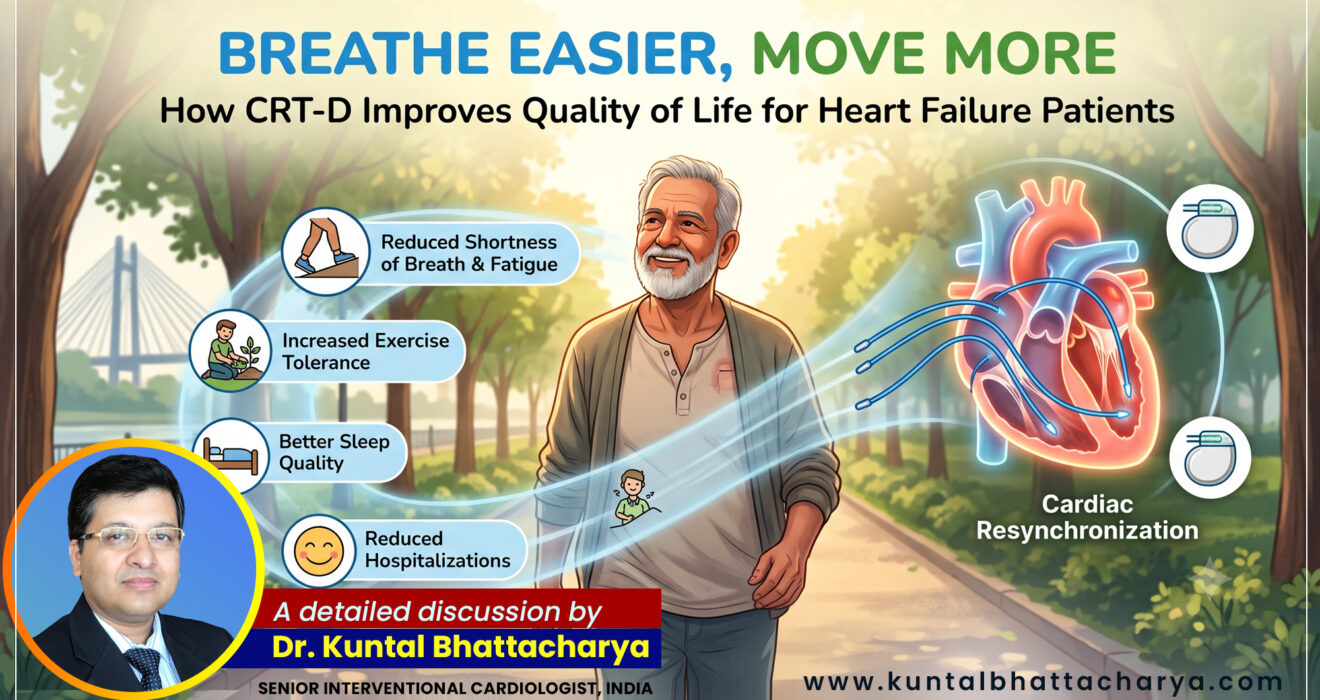
Unlike a traditional pacemaker that usually relies on one or two electrical leads (wires) placed in the right side of the heart, a CRT device uses three leads. One lead goes to the right atrium, one goes to the right ventricle, and a third, highly specialized lead is carefully threaded through a vein to rest against the outer wall of the left ventricle. By delivering tiny, painless electrical impulses to both the right and left ventricles simultaneously, the CRT device forces the heart’s lower chambers to contract together in perfect harmony. This “resynchronization” restores the mechanical efficiency of the heart, allowing it to pump more blood with each beat.
Defibrillation: The Ultimate Safety Net
Patients with weakened heart muscles (a low Ejection Fraction) are at a significantly higher risk of developing sudden, chaotic, and dangerous heart rhythms, such as Ventricular Tachycardia or Ventricular Fibrillation. The “D” in CRT-D stands for Defibrillator. The device constantly acts as a 24/7 internal paramedic. If it detects a sudden, lethal heart rhythm, it instantly delivers an electrical shock to reset the heart to its normal rhythm, effectively preventing sudden cardiac arrest.
How CRT-D Significantly Improves Quality of Life
The primary goal of implanting a CRT-D device is not just to prolong life, but to add quality and vitality to the years ahead. When the heart’s pumping chambers are resynchronized, the physiological benefits translate directly into profound, noticeable improvements in the patient’s daily existence.
1. Dramatic Relief from Debilitating Symptoms
For someone living with severe heart failure, the most oppressive symptoms are shortness of breath (dyspnea) and unrelenting fatigue. Because a heart with a Left Bundle Branch Block is pumping inefficiently, fluid tends to back up into the lungs, making breathing difficult, especially when lying down at night. As the CRT-D restores coordinated pumping, the heart pushes blood forward efficiently, allowing the body to clear this excess fluid. Patients frequently report that their breathing becomes remarkably easier within weeks of the procedure. They no longer need to prop themselves up on multiple pillows to sleep, and the heavy, draining fatigue begins to lift.
2. Increased Exercise Tolerance and Mobility
Heart failure often forces patients to shrink their world. A simple trip to the local market or walking to the bathroom can feel like running a marathon. Following CRT-D implantation, the increased cardiac output means that oxygen-rich blood is effectively reaching the leg muscles and major organs once again. Patients find their stamina returning. They can walk further distances, climb stairs without having to stop midway, engage in light exercise, and actively participate in family gatherings. Returning to these routine activities restores a deep sense of independence and dignity.
3. Reduced Hospitalizations
One of the most emotionally and financially draining aspects of heart failure is the frequent need for emergency room visits and hospital admissions due to fluid overload or sudden symptom worsening. By fundamentally improving the heart’s mechanical function, CRT-D therapy stabilizes the patient’s condition. The heart works more efficiently on a day-to-day basis, which drastically reduces the frequency of acute heart failure flare-ups. Fewer hospital stays mean more time spent at home enjoying life with loved ones.
4. Psychological Comfort and Peace of Mind
Living with severe heart failure often carries a heavy burden of anxiety. Patients and their families live in constant fear of sudden cardiac arrest. The defibrillator component of the CRT-D provides an incredible psychological safety net. Knowing that the device is constantly monitoring the heart rhythm and is capable of instantly stopping a fatal arrhythmia provides immense peace of mind to both the patient and their family members.
Coronary Artery Disease treatments in Kolkata: The Preventive Link
It is crucial to understand that heart failure rarely occurs in a vacuum; it is very often the end result of prolonged, untreated cardiovascular issues. One of the leading causes of the heart muscle damage that eventually necessitates a CRT-D device is Coronary Artery Disease (CAD). When the arteries supplying blood to the heart muscle become narrowed or blocked by cholesterol plaques, the heart muscle is starved of oxygen. Over time, or following a massive heart attack, the muscle weakens, scars form, and the electrical pathways are destroyed.
Therefore, addressing blockages early is paramount. Today, Coronary Artery Disease treatments in Kolkata are at par with the best global standards. From early diagnosis using advanced imaging (like Coronary Angiograms and OCT) to cutting-edge interventions like complex angioplasties using drug-eluting stents and rotablation, addressing CAD early can prevent the onset of severe heart failure altogether. If you are experiencing chest pain, jaw pain, or unusual shortness of breath, seeking immediate evaluation is critical to preserving your heart muscle.
Identifying the Right Candidates: Who Needs a CRT-D?
While CRT-D therapy is a medical marvel, it is not meant for everyone with heart failure. The device is specifically designed for a particular profile of patients who meet strict medical criteria based on international guidelines. You may be a candidate for a CRT-D if you meet the following conditions:
- Moderate to Severe Heart Failure Symptoms: You experience significant fatigue and shortness of breath during mild physical activity or while resting, despite taking optimized, maximum-tolerated heart failure medications prescribed by your cardiologist.
- Reduced Ejection Fraction: Your left ventricular ejection fraction (LVEF)—the percentage of blood pumped out of the left ventricle with each beat—is 35% or lower. (A normal LVEF is usually between 50% to 70%).
- Electrical Desynchrony (Wide QRS Complex): An Electrocardiogram (ECG) shows a specific pattern, typically a Left Bundle Branch Block (LBBB), with a prolonged QRS duration (usually greater than 130 to 150 milliseconds), indicating that the left and right ventricles are not beating together.
A thorough evaluation, which includes a detailed clinical history, an ECG, and a comprehensive Echocardiogram (ultrasound of the heart), is required to determine eligibility. This assessment must be conducted by an experienced Adult Heart Doctor in Kolkata who specializes in advanced cardiac therapies.
The Procedure: What to Expect in Kolkata
Undergoing a cardiac procedure can be intimidating, but understanding the process helps alleviate anxiety. The implantation of a CRT-D device is a minimally invasive procedure performed in a highly specialized Cath Lab, not an open-heart surgery.
Pre-Procedure Evaluation
Before the procedure, your medical team will conduct a series of blood tests, a chest X-ray, and an Echocardiogram to map out the anatomy of your heart. Your medications, particularly blood thinners, may be adjusted.
The Implantation Process
The procedure is typically performed under local anesthesia with conscious sedation, meaning you will be relaxed and sleepy but not completely unconscious. The interventional cardiologist makes a small incision (about 2 to 3 inches) just below the collarbone, usually on the left side of the chest.
Using specialized live X-ray imaging (fluoroscopy) for guidance, the doctor carefully threads the three ultra-thin leads through a large vein under the collarbone down into the heart. Placing the third lead—the one that paces the left ventricle—is the most technically demanding part of the procedure, as it must be navigated into a specific vein (the coronary sinus) on the outside of the heart. This step requires a high degree of skill and experience.
Once the leads are perfectly positioned and tested to ensure they are securely attached and transmitting signals properly, they are connected to the CRT-D pulse generator (the battery and computer unit). The generator is then tucked into a small “pocket” created under the skin, and the incision is closed with sutures. The entire process usually takes between two to four hours.
Recovery and Post-Operative Care
Recovery is generally quite rapid. Patients typically stay in the hospital for 24 to 48 hours for observation. During this time, the device is programmed specifically to the patient’s unique heart rhythm needs. Most patients can return to normal, light activities within a week, though heavy lifting and vigorous upper-body movements must be avoided for four to six weeks to allow the leads to securely heal into the heart tissue.
Actionable Guidance: Navigating Cardiac Care in Kolkata
When faced with complex cardiac conditions, knowing what steps to take is empowering. If you or a loved one are suffering from symptoms of heart failure or suspect heart blockages, the choices you make regarding your healthcare providers are critical.
What should anyone do when they need an Interventional Cardiologist in Kolkata for Treatment for Heart Blockages in Kolkata?
- Do Not Ignore Symptoms: The biggest mistake patients make is attributing profound fatigue or breathlessness to “just getting older.” If your daily physical capacity is declining, seek help immediately.
- Seek a Specialized Center: Complex interventions like CRT-D implantations and advanced angioplasties require a tertiary care setup equipped with state-of-the-art Cath Labs, electrophysiology tools, and round-the-clock emergency support.
- Where to Go: Hospitals with dedicated “Centers of Excellence” in Cardiac Sciences are ideal. Narayana Hospital, RN Tagore Hospital in Mukundapur, Kolkata, is one of the premier institutions in Eastern India, performing thousands of complex cardiac procedures annually with exceptional success rates.
- How to Choose the Right Doctor: Look for a cardiologist who is not only board-certified (DM Cardiology) but has specific, documented expertise in interventional cardiology and cardiac device therapy. Ensure they have a proven track record of implanting complex devices like CRT-P, CRT-D, and AICDs. A good doctor will prioritize a comprehensive diagnosis and offer a balanced opinion, emphasizing medical management where possible and intervention when absolutely necessary.
FAQ's on Heart Failure Treatment in Kolkata
Patients and their families often turn to search engines to find answers during stressful medical episodes. Here, we address some of the most common online queries related to cardiac care in the city.
Where can I find the best doctor for Heart Failure Treatment in Kolkata?
Finding the absolute "best" doctor is subjective, but you should look for a highly experienced Senior Interventional Cardiologist attached to a reputable tertiary care hospital. Doctors who specialize in device therapies (like CRT-P and CRT-D) and advanced structural heart diseases are usually the most equipped to handle complex heart failure cases. Comprehensive evaluation, high procedural volume, and a patient-centric approach are the hallmarks of a top specialist.
What is the standard Treatment for Heart Blockages in Kolkata?
The treatment for blockages depends entirely on the severity, location, and the patient's overall health. Mild blockages are often managed with lifestyle changes and medications (like statins and blood thinners). Moderate to severe blockages typically require a Coronary Angiogram for precise diagnosis, followed by an Angioplasty with stent placement to open the artery. In cases with widespread, severe blockages, Coronary Artery Bypass Grafting (CABG) surgery might be recommended.
How do I choose a Doctor in Heart Blockages in Kolkata?
When looking for a Doctor in Heart Blockages in Kolkata, prioritize qualifications (MD, DM in Cardiology) and the volume of interventional procedures they perform. Look for specialists who utilize advanced imaging techniques like IVUS (Intravascular Ultrasound) or OCT (Optical Coherence Tomography) during angioplasties, as these tools ensure the stents are placed with maximum precision, leading to better long-term outcomes.
Who is considered the best doctor for Heart Block Treatment in Kolkata?
"Heart Block" can refer to electrical conduction blocks (like LBBB) or physical blockages in the arteries (Coronary Artery Disease). For electrical blocks requiring pacemakers or CRT devices, you need an interventional cardiologist skilled in device implantation. For arterial blockages, an interventional cardiologist specializing in complex angioplasties is required. For instance, my practice at Narayana RN Tagore Hospital focuses heavily on both advanced device therapy and complex coronary interventions, ensuring comprehensive care for both types of issues.
Are Interventional Cardiologist in Kolkata equipped to handle emergencies?
Yes. Leading interventional cardiologists attached to major corporate hospitals in Kolkata operate in highly advanced Cath Labs that are operational 24/7. They are fully equipped to handle acute medical emergencies like massive heart attacks (Primary Angioplasty) and life-threatening arrhythmias requiring immediate temporary pacing or defibrillation.
Conclusion
Heart failure is undoubtedly a serious and progressive condition, but a diagnosis is no longer the end of the road. With the advent of Cardiac Resynchronization Therapy (CRT-D), we have a powerful tool that not only extends life by protecting against sudden cardiac arrest but, more importantly, restores the quality of that life. By forcing a damaged, uncoordinated heart to beat in harmony once again, patients are given a second chance to breathe easier, walk further, and actively participate in the joy of everyday living.
If you or a loved one are struggling with debilitating symptoms of heart failure, or if you have been told you require an advanced device, know that world-class care is available right here in our city. Consult an experienced interventional cardiologist, undergo a thorough evaluation, and explore whether advanced device therapy could be the key to reclaiming your life. Your heart works tirelessly for you; with modern medicine, we can help ensure it continues to beat strong and steady for years to come.
It’s from the desk of Dr. Kuntal Bhattacharya (Senior), Best Interventional Cardiologist in Kolkata & Heart Specialist Doctor in Kolkata, associated with Rabindranath Tagore International Institute of Cardiac Sciences, Kolkata.
Disclaimer
The information provided in this blog post is for educational and informational purposes only and is not intended to be a substitute for professional medical advice, diagnosis, or treatment. Always seek the advice of your physician or other qualified health provider with any questions you may have regarding a medical condition or dietary changes. Never disregard professional medical advice or delay in seeking it because of something you have read on this website.
Follow Dr. Kuntal Bhattacharya on Facebook & Youtube for regular updates.
Read Also:
- ECG vs. Echocardiogram: Which Heart Test Do You Actually Need?
- Life with an AICD: Managing Sudden Cardiac Death Risk Effectively
- What is a Calcified Lesion? Advanced Solutions for Hardened Arteries
- Heart-Healthy Diet: Incorporating Bengali Flavors Without the Oil
- Understanding Your Echocardiogram Results: A Simple Guide for Patients
- How 3D Imaging Enhances Precision in TAVI Procedures in Kolkata
- Identifying Asymptomatic Heart Disease in Young Adults in 2026: The Silent Killer
- The Role of FFR in Deciding the Right Treatment for Heart Blockages
- Leadless Pacemakers vs. Traditional Pacemakers: Pros and Cons for 2026