
Why a Stress Test (TMT) is Crucial for Early Heart Disease Detection
An ultimate guide on ‘Why a Stress Test (TMT) is Crucial for Early Heart Disease Detection’ – by Dr. Kuntal Bhattacharya, Senior Interventional Cardiologist, Narayana Health – RN Tagore Hospital, Kolkata
Welcome to this comprehensive guide on cardiovascular health and diagnostic procedures. I am Dr. Kuntal Bhattacharya, a Senior Interventional Cardiologist with over 25 years of experience, currently practicing at Narayana Hospital (RN Tagore Hospital) in Mukundapur, Kolkata. Over the course of my career, I have seen the devastating consequences of heart conditions that went unnoticed until it was almost too late. Heart disease is often called a “silent killer” because it can progress for years without showing any overt signs. By the time a patient experiences severe chest pain or a heart attack, the underlying blockages in their coronary arteries are usually quite advanced.
This is exactly why proactive, preventive cardiology is paramount in modern medicine. Among the various diagnostic tools at our disposal, the TMT test—or treadmill stress test—remains one of the most accessible, reliable, and crucial tests for the proactive screening of coronary blockages.
This detailed blog is dedicated to guiding cardiac patients from Kolkata and beyond. Whether you are experiencing mild discomfort, have a strong family history of cardiac issues, or are simply looking to take charge of your cardiovascular wellness, understanding the mechanics of a cardiac stress test is your first step toward true heart health. We will explore everything from the early symptoms of artery blockages to what your test results mean, and finally, how to navigate the healthcare ecosystem if you need an Interventional Cardiologist in Kolkata.
The Science of the Heart: why do cardiologists order a stress test?
To understand the necessity of a stress test, we first need to understand how the human heart functions under different conditions. The heart is a muscular pump that requires its own constant supply of oxygen-rich blood, which is delivered through a network called the coronary arteries.
When you are resting—sitting on a couch, reading a book, or sleeping—your body’s demand for oxygen is relatively low. Consequently, your heart does not have to pump as hard or as fast. If a patient has a partial blockage in one of their coronary arteries (for instance, a 50% or 60% narrowing due to cholesterol plaque), the restricted blood flow might still be perfectly adequate while they are at rest. This is why a standard, resting Electrocardiogram (ECG) often appears completely normal, even in patients who have significant underlying blockages.
However, the scenario changes dramatically when you exert yourself. When you exercise, climb a flight of stairs, or carry heavy groceries, your muscles demand more oxygen. To meet this demand, your heart rate increases, and the heart muscle itself requires a much higher volume of blood. If there is a substantial blockage in a coronary artery, that narrowed vessel cannot dilate enough to let the extra blood through. The heart muscle becomes temporarily starved of oxygen—a condition known as ischemia.
This is the exact physiological mechanism that answers the question: why do cardiologists order a stress test? We order it to purposefully increase your heart’s workload in a controlled, clinical environment to see if the blood supply can keep up with the increased demand. It is the most effective, non-invasive way to unmask hidden blockages before they cause a sudden, catastrophic heart attack.
Recognizing the Early signs of coronary artery disease and angina symptoms
One of the primary reasons we utilize the TMT for heart health is to investigate specific symptoms that patients report during physical exertion. The Early signs of coronary artery disease are often subtle and easily dismissed. Many patients attribute their symptoms to aging, lack of fitness, or indigestion.
The classic symptom is angina, which is chest pain or discomfort caused by reduced blood flow to the heart muscle. However, angina symptoms do not always present as crushing chest pain. They can manifest as:
-
A feeling of pressure, squeezing, or heaviness in the center of the chest.
-
Discomfort radiating to the left arm, shoulders, neck, jaw, or back.
-
Unexplained shortness of breath that occurs after a short walk or mild exertion.
-
Excessive sweating, nausea, or profound fatigue during physical activity.
If you experience any of these symptoms exclusively during physical effort and find that they disappear when you rest, this is a major red flag for early heart disease detection. In such cases, an ECG stress test is absolutely mandatory to evaluate the integrity of your coronary arteries.
What is a TMT Test? A Deep Dive into the Cardiac Stress Test
A TMT test, which stands for Treadmill Test, is fundamentally an Exercise tolerance test. It is designed to measure how well your heart handles work. As your body works harder during the test, it requires more oxygen, so the heart must pump more blood. The test can show if the blood supply is reduced in the arteries that supply the heart.
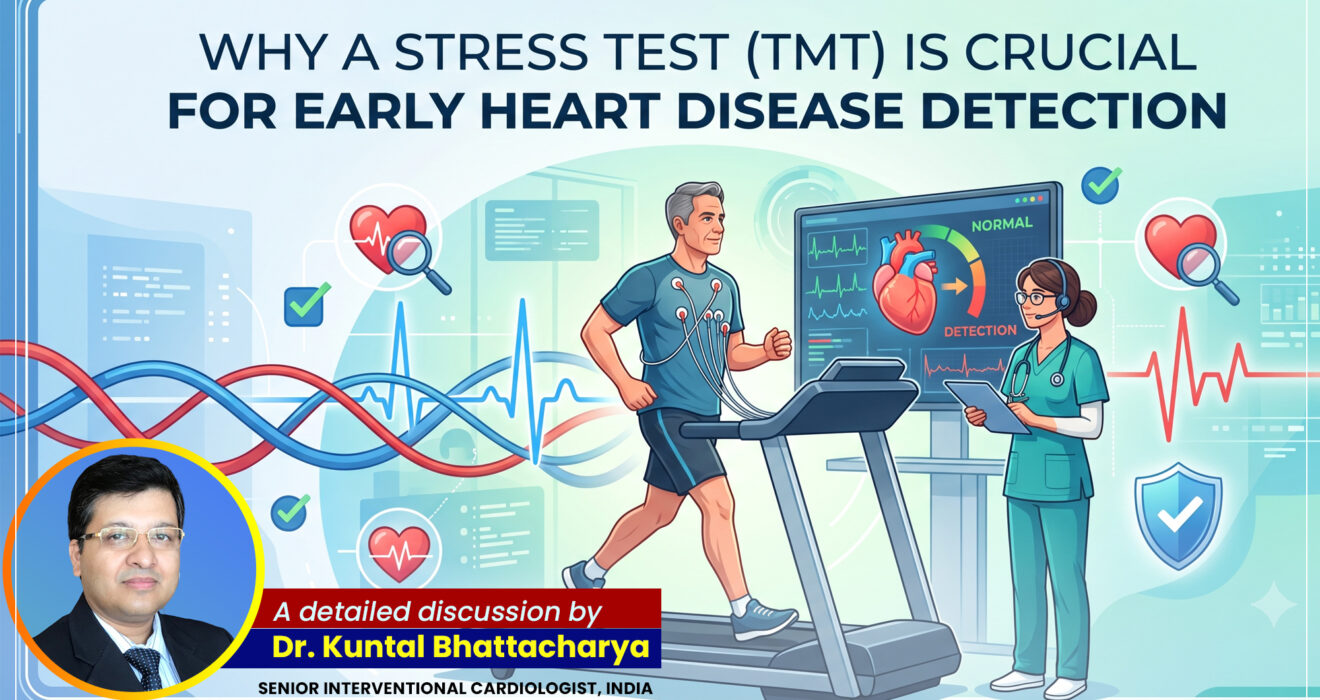
During the procedure, you will walk on a treadmill while your heart rhythm, blood pressure, and breathing are closely monitored. The ECG stress test is an invaluable tool in the arsenal of any Adult Cardiologist in Kolkata because it provides dynamic, real-time data about the electrical activity of the heart when it is under physical stress.
The goal is to push the cardiovascular system to a specific threshold safely. By doing so, doctors can detect abnormal heart rhythms, evaluate the effectiveness of cardiac medications, and most importantly, identify ischemia (lack of blood flow) that only occurs under exertion.
How is a treadmill stress test done: Step-by-Step Guide
Many patients feel anxious before their first stress test. Understanding the procedure can significantly alleviate this anxiety. Let us break down exactly How is a treadmill stress test done in our clinical setting at Narayana Hospital.
1. Preparation and Baseline Measurements
When you arrive for the test, you will be asked to wear comfortable clothing and walking shoes. A technician will clean small areas of your chest and attach several sticky patches called electrodes. These electrodes are connected to an electrocardiogram (ECG) monitor that records the electrical signals that trigger your heartbeats. A blood pressure cuff will also be placed on your arm. Before you start exercising, we take baseline readings of your heart rate and blood pressure while you are seated or lying down.
2. The Exercise Phase
You will step onto the treadmill, which will start at a very slow pace and a flat incline. The protocol we use (often the Bruce Protocol) is standardized: every three minutes, the speed and the incline of the treadmill will increase slightly. It starts as a slow walk, transitions into a brisk walk, and for some patients, may reach a light jog on an uphill gradient.
3. Monitoring for Inducible Ischemia and Target Heart Rate
As you walk, the medical team is constantly watching the ECG monitor. We are looking for something called inducible ischemia—changes in the electrical waveform (specifically ST-segment depression) that indicate a part of the heart is not getting enough blood.
We aim to push your heart rate to a specific goal known as the target heart rate, which is calculated based on your age (usually 85% of your maximum predicted heart rate: 220 minus your age). Reaching this target ensures the test is diagnostically accurate.
4. The Recovery Phase
The test stops when you reach your target heart rate, if you develop significant symptoms (like severe chest pain, extreme breathlessness, or dizziness), if your blood pressure drops, or if the ECG shows dangerous changes. Once the treadmill stops, you will be asked to sit or lie down, and we will continue to monitor your ECG and blood pressure for another 5 to 10 minutes until your heart rate returns to normal. This recovery phase is just as critical as the exercise phase, as some cardiac abnormalities only show up during the cool-down period.
What Does a Positive TMT Test Mean for Your Heart?
If you undergo this procedure and your doctor informs you that the result is positive, it is natural to feel alarmed. But What does a positive TMT test mean exactly?
A “positive” result in medical testing means that the test has found what it was looking for. In the case of a stress test, a positive result indicates that the ECG showed signs of inducible ischemia during exercise, or you developed significant angina symptoms that correlate with blockages. It strongly suggests that there is a significant narrowing (stenosis) in one or more of your coronary arteries restricting blood flow when your heart is stressed.
However, a positive TMT is not the final step; it is a screening tool. It does not tell us exactly which artery is blocked or how severe the blockage is. Therefore, a positive TMT is usually followed by a definitive diagnostic procedure called a Coronary Angiogram. An angiogram involves inserting a thin catheter into your wrist or groin, guiding it to your heart, and injecting a special dye to take X-ray images. This will map out the exact location and severity of the blockages.
If the blockages are significant, your Adult Heart Doctor in Kolkata will discuss treatment options. This could range from optimal medical therapy (medicines to thin the blood and lower cholesterol) to an angioplasty (inserting a stent to open the artery) or, in severe multi-vessel disease, bypass surgery. The beauty of early heart disease detection is that it allows us to intervene before a heart attack causes permanent damage to the heart muscle.
Guide: Navigating Treatment for Heart Disease in Kolkata
When faced with a positive stress test or a diagnosis of a cardiac condition, knowing what to do next is critical. Navigating the healthcare system can be daunting, but Kolkata has emerged as a premier hub for advanced cardiac care in Eastern India.
Seeking an Adult Cardiologist in Kolkata: Where to Go and Who to Consult
If you require a specialized Interventional Cardiologist in Kolkata, you should seek out centers of excellence equipped with advanced Cath Labs, round-the-clock emergency support, and comprehensive cardiovascular units.
For my patients, outpatient consultations are seamlessly managed at RxVital Healthcare on Purbachal Main Road, where we conduct initial evaluations, ECGs, and non-invasive screenings. When advanced procedures, such as complex angioplasties or angiograms, are required, I perform them at Narayana Hospital RN Tagore Hospital in Mukundapur. This hospital is a flagship institution equipped with cutting-edge technology for both adult and pediatric cardiac sciences.
When you need an Adult Cardiologist in Kolkata, look for a doctor who:
-
Has extensive clinical experience and specialized training (such as DM in Cardiology or international fellowships like FSCAI).
-
Follows an evidence-based approach, balancing non-invasive medical management with interventional procedures only when absolutely necessary.
-
Takes the time to explain your condition, your test results, and all available treatment pathways transparently.
Advanced Coronary Artery Disease treatments in Kolkata and TAVI Treatment in Kolkata
Cardiology in 2026 is highly advanced, and the Coronary Artery Disease treatments in Kolkata reflect global standards. If your TMT test leads to an angiogram that reveals severe blockages, the treatments today are remarkably minimally invasive. We utilize advanced intravascular imaging (like IVUS and OCT) to deploy stents with pinpoint precision. For heavily calcified blockages, we employ technologies like Rotablation and Intravascular Lithotripsy (IVL) to crack the calcium safely from inside the artery before placing a stent.
Beyond blockages, another major advancement is in structural heart disease, particularly for elderly patients with narrowed heart valves (Aortic Stenosis). Previously, this required open-heart surgery. Today, as a specialized interventionalist, I routinely perform TAVI Treatment in Kolkata (Transcatheter Aortic Valve Implantation). TAVI allows us to replace a failing heart valve entirely through a small puncture in the groin, avoiding open-heart surgery entirely, ensuring a faster recovery, and vastly improving the quality of life for senior citizens.
Frequently Asked Questions (FAQs) by Cardiac Patients in Kolkata
As a senior Doctor in Heart Disease in Kolkata, I encounter numerous questions from anxious patients and their families on a daily basis. Below are detailed answers to some of the most frequently searched queries on Google regarding cardiac care in our city.
What should I expect from Treatment for Heart Disease in Kolkata?
When seeking Treatment for Heart Disease in Kolkata, you can expect comprehensive, end-to-end care. The journey typically begins with a detailed clinical evaluation and diagnostic tests like the ECG, Echocardiogram, and the TMT test. Based on the findings, your treatment plan will be personalized. Kolkata’s top-tier hospitals are equipped for everything from advanced medical management and cardiac rehabilitation to complex high-risk angioplasties and structural interventions like TAVI. Expect a multidisciplinary approach where cardiologists, cardiac surgeons, dietitians, and physiotherapists work together to ensure your full recovery.
How to find a reliable Doctor in Heart Disease in Kolkata?
Finding the right specialist involves a bit of research. Look for a cardiologist who is affiliated with a reputed tertiary care hospital (such as Narayana Health, RN Tagore Hospital). Check their credentials, years of experience, and areas of sub-specialization. A reliable Doctor in Heart Disease in Kolkata will have a track record of performing high volumes of complex procedures safely and will emphasize preventive care just as much as interventional treatments. Patient reviews and peer recommendations are also excellent indicators of a doctor’s reliability and bedside manner.
Who is the best doctor for Women Heart Disease Treatment in Kolkata?
Women often experience heart disease differently than men. Their symptoms can be atypical (e.g., overwhelming fatigue, back pain, or nausea instead of standard chest pain), which sadly leads to frequent misdiagnoses. The best doctor for Women Heart Disease Treatment in Kolkata is an experienced cardiologist who is acutely aware of these gender-specific physiological differences. Such a doctor will not dismiss atypical symptoms and will utilize precise diagnostic tools, like stress tests or specialized imaging, to detect microvascular disease or subtle blockages that standard tests might miss. Look for a specialist who advocates for women’s heart health and takes a thorough, empathetic approach to diagnosis.
How to select the best doctor for Heart Disease Treatment in Kolkata?
To choose the best doctor for Heart Disease Treatment in Kolkata, you should prioritize a physician who aligns with your specific medical needs. If you require a device like a pacemaker or ICD, look for an expert in cardiac electrophysiology and device therapy. If you have complex blockages, seek out an Interventional Cardiologist renowned for using advanced imaging (IVUS/OCT) during angioplasties. The best doctor is one who provides a balanced opinion, giving equal importance to lifestyle modifications, non-invasive therapies, and necessary surgical or percutaneous interventions, ensuring you are treated holistically.
Conclusion: A Message from Your Adult Heart Doctor in Kolkata
Understanding your heart’s health is the first and most vital step toward a long, vibrant life. The treadmill stress test is not just a medical procedure; it is a window into the dynamic function of your cardiovascular system. It allows us to catch disease in its infancy, offering a critical opportunity for early heart disease detection and timely intervention.
If you have a family history of cardiac issues, are a diabetic, a smoker, or if you have experienced unexplained breathlessness or chest discomfort during exertion, do not wait for the symptoms to worsen. Speak to your doctor about whether a cardiac stress test is right for you.
As a dedicated Interventional Cardiologist in Kolkata, my goal is not only to treat heart disease when it strikes but to empower my patients to prevent it. Whether through advanced Coronary Artery Disease treatments in Kolkata, cutting-edge device implants, or simple lifestyle modifications, modern cardiology offers solutions that can save lives and restore well-being.
Your heart works tirelessly for you every single second. Make sure you are taking the time to listen to what it is telling you. If you need guidance, a second opinion, or a comprehensive cardiac evaluation, my team at RxVital Healthcare and Narayana RN Tagore Hospital is here to support you every step of the way.
Stay active, eat healthy, manage your stress, and never ignore the early warning signs of your heart.
To book a consultation or for more clinical information:
You can reach out directly to the cardiology department at Narayana Hospital, RN Tagore Hospital (Mukundapur, Kolkata) to schedule a thorough, professional clinical evaluation. Let us work together to discover the safest and best pathway for your heart’s long-term health.