
Managing Complex Coronary Artery Disease in 2026: A Cardiologist’s Guide
Table of Contents
ToggleA comprehensive guide on ‘Managing Complex Coronary Artery Disease in 2026: A Cardiologist’s Guide’ – by Dr. Kuntal Bhattacharya Senior Interventional Cardiologist, Narayana Health – RN Tagore Hospital, Kolkata
As a cardiologist serving the community in Kolkata and the wider Eastern Indian region for many years, I have witnessed a significant shift in the landscape of heart disease. We are no longer just dealing with simple blockages that can be fixed with a basic procedure. Today, we are increasingly seeing patients with what we term Complex Coronary Artery Disease.
When a patient is told their condition is “complex,” it often brings a sense of fear and uncertainty. They wonder if surgery is the only option or if their heart is too far gone for treatment. This guide is written to provide clarity, hope, and a roadmap for patients and their families. From the busy streets of North Kolkata to the quiet neighborhoods of the South, heart health is a common concern that connects us all. My goal today is to explain the nuances of this condition and highlight the world-class Coronary Artery Disease treatments in Kolkata that are now available right at your doorstep.
The Foundation: Understanding Coronary Artery Disease
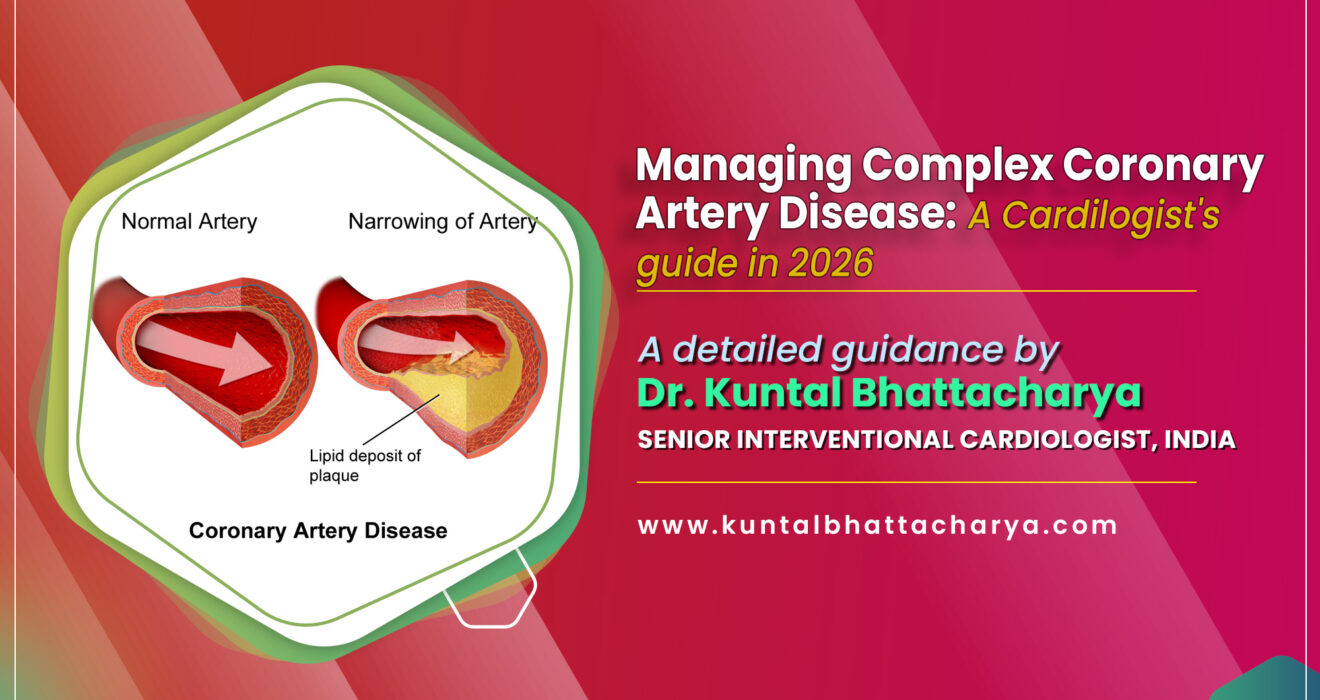
Before we address the complexities, we must understand the baseline. Coronary Artery Disease (CAD) is a condition where the coronary arteries—the vital pipelines that supply oxygen-rich blood to the heart muscle—become narrowed or blocked. This narrowing is caused by the buildup of plaque, a waxy substance made of cholesterol, fatty molecules, and calcium.
When we examine Coronary Artery Disease causes, we see a combination of “non-modifiable” and “modifiable” factors. In our specific demographic in West Bengal, certain factors are particularly prevalent:
- Genetic Predisposition: South Asians are genetically more prone to developing heart disease at a younger age and with more aggressive progression compared to other ethnicities.
- Diabetes Mellitus: Often called the “Diabetes Capital,” India, and specifically our urban centers, sees a high volume of patients where high blood sugar directly damages the arterial walls.
- Hypertension (High Blood Pressure): Chronic high pressure wears down the elasticity of the arteries, making it easier for plaque to take hold.
- Dyslipidemia: High levels of “bad” cholesterol (LDL) and triglycerides, often fueled by a diet rich in saturated fats and refined carbohydrates.
- The Lifestyle Factor: The sedentary nature of modern desk jobs, combined with high stress and the consumption of processed foods, creates a “perfect storm” for heart disease.
- Tobacco Use: Whether through smoking or chewing, tobacco is a primary driver of arterial inflammation and sudden heart attacks.
What Exactly is “Complex” Coronary Artery Disease?
In medical terms, a “simple” case of CAD involves a single, short blockage in a large, easy-to-reach artery. However, Complex Coronary Artery Disease involves scenarios where the technical difficulty of restoring blood flow is significantly higher.
As an Interventional Cardiologist in Kolkata, I categorize complexity based on several anatomical factors:
1. Multi-vessel Disease (MVD)
This occurs when all three of the heart’s major arteries have significant blockages. In the past, this was almost always an automatic referral for bypass surgery (CABG). Today, with advanced stenting techniques, we can often treat all three vessels using minimally invasive methods.
2. Left Main Coronary Artery Disease
The Left Main artery is the “trunk” of the tree. It supplies blood to the entire left side of the heart. If this artery shuts down, the results are usually catastrophic. Treating the Left Main requires extreme precision and the use of advanced imaging to ensure the stent is perfectly placed.
3. Chronic Total Occlusions (CTO)
A CTO is a blockage that has been 100% closed for more than three months. These are “hard” blockages. They are often bypassed by the body through tiny “collateral” vessels, but these collaterals are rarely enough to support the heart during exertion. Opening a CTO is one of the most advanced skills an Adult Heart Doctor in Kolkata can possess, involving specialized wires and retrograde (backward) approaches through other arteries.
4. Bifurcation Lesions
Imagine a road that splits into two. If the blockage happens exactly at that fork, it is a bifurcation lesion. We must ensure that while we fix one branch, we don’t accidentally “pinch” or close the other branch. This requires complex “two-stent” strategies.
5. Heavily Calcified Lesions
In many elderly patients or those with long-standing diabetes, the plaque becomes “calcified.” This means it turns into a hard, bone-like substance. Standard balloons cannot expand this rock-hard material. If we try to force a stent into a calcified artery without preparing it first, the stent won’t expand fully, leading to future complications.
Advanced Diagnostic Tools: Looking Beyond the Angiogram
The standard “coronary angiogram” is a 2D X-ray picture. While useful, it doesn’t tell us everything about the “complexity” inside. To provide the best Coronary Artery Disease treatments in Kolkata, we now use “Intravascular Imaging.”
- IVUS (Intravascular Ultrasound): We use a tiny ultrasound probe inside the artery to see a 360-degree view of the vessel wall. It tells us how much calcium is there and exactly what size stent is needed.
- OCT (Optical Coherence Tomography): This uses light waves to create high-definition images of the artery. It is so precise that we can see microscopic tears or the exact way a stent is sitting against the wall.
Using these tools is the difference between “guessing” and “knowing.” At RN Tagore Hospital, we believe that every complex case deserves this level of precision.
Modern Treatments for Complex CAD in Kolkata
If you are diagnosed with complex disease, the treatment path is no longer “one size fits all.” We use a “Heart Team” approach, where cardiologists and surgeons discuss your case to find the safest route.
1. High-Risk Percutaneous Coronary Intervention (PCI)
This is the process of stenting. For complex cases, we use “Drug-Eluting Stents” (DES) of the latest generation. These stents release medicine over time to prevent the artery from scarring and closing again.
2. Rotablation (The Diamond Drill)
When we encounter the “rock-hard” calcium mentioned earlier, we use Rotablation. This involves a tiny, diamond-coated burr that spins at incredible speeds (up to 160,000 RPM). It acts like a drill to sand away the calcium while leaving the soft, healthy tissue of the artery untouched.
3. Intravascular Lithotripsy (IVL) – The “Shockwave”
One of the newest additions to our toolkit is IVL. Inspired by how doctors break kidney stones, this technology uses sonic pressure waves to crack the calcium inside the artery wall. This makes the artery “compliant” again, allowing us to place a stent safely and effectively.
4. Robotic-Assisted Cardiology
Some centers in Kolkata are now exploring robotic assistance to place stents with sub-millimeter precision, reducing radiation exposure for the staff and increasing accuracy for the patient.
Choosing the Right Care: Where to Go in Kolkata
When you or a family member needs an Adult Heart Doctor in Kolkata for complex issues, the choice of hospital is critical. Complex CAD cannot be treated in a “clinic” setting; it requires a comprehensive ecosystem.
What to Look For:
- Experience of the Interventionalist: Does the doctor have a track record with CTOs, Rotablation, and Left Main disease?
- Infrastructure: Does the hospital have multiple Cath Labs, 24/7 emergency support, and on-site Cardiac Surgery?
- Imaging Technology: Ensure the facility offers IVUS or OCT.
- Post-Operative Care: A dedicated Cardiac ICU (CCU) with trained nursing staff is vital for recovery.
Leading Hospitals for Heart Care in Kolkata:
- Narayana Health – Rabindranath Tagore International Institute of Cardiac Sciences (RN Tagore): Located in Mukundapur, this is a flagship center for cardiac care. We handle some of the highest volumes of complex heart cases in the country.
- BM Birla Heart Research Centre: A historic institution dedicated solely to heart health.
- Apollo Multispecialty Hospitals: Known for high-end technology and international protocols.
- Medica Superspecialty Hospital: Offers advanced interventional and surgical options.
- AMRI Hospitals: Multiple branches across the city offering reliable cardiac services.
What Should You Do When You Need an Interventional Cardiologist?
If you have symptoms like chest pain (especially on exertion), shortness of breath, or unexplained fatigue, or if a routine check-up has shown an abnormality, follow these steps:
- Consult Early: Don’t wait for a heart attack to see an Interventional Cardiologist in Kolkata. Prevention and early intervention are always safer.
- Ask for a Comprehensive Evaluation: If you are told you have “blockages,” ask about the complexity. Is there calcium? Is it a bifurcation? This helps you understand the plan.
- Verify the Plan: If a doctor suggests a stent for a complex case, ask if they will use IVUS or OCT. In modern cardiology, imaging-guided stenting is the gold standard.
- Second Opinions: For complex cases, getting a second opinion from a senior specialist is common and often helpful to confirm the best course of action (Stent vs. Bypass).
- Emergency Protocol: Always keep the emergency number of your preferred hospital (like RN Tagore) saved. If you suspect a heart attack, go to the Emergency Room (ER) immediately. Do not drive yourself; call an ambulance or have someone take you.
Frequently Asked Questions (FAQs) on Aortic Valve Stenosis
While many patients come to me for Complex Coronary Artery Disease, I frequently receive questions about valve issues, specifically Aortic Valve Stenosis. Often, a patient may have both a blocked artery and a narrowed valve.
What makes Coronary Artery Disease "Complex"?
CAD is considered "complex" when blockages are difficult to treat using standard methods. This includes Chronic Total Occlusions (CTO)—where an artery has been 100% blocked for months—heavily calcified (hardened) plaque, or "bifurcation" blockages located where an artery branches into two.
What is a CHIP procedure?
CHIP stands for Complex Higher-Risk (and Indicated) Patients. These are procedures designed for patients who have severe blockages and other health issues (like kidney disease or weak heart pump function) that make them high-risk for traditional open-heart surgery. It often involves using advanced support devices like the Impella heart pump during the procedure.
How do you treat arteries that are hardened by calcium?
For heavily calcified arteries, standard balloons may not work. We use specialized "plaque-busting" technologies:
- Atherectomy: A tiny rotating blade or diamond-tipped drill that shaves away the hard calcium.
- Intravascular Lithotripsy (IVL): Using sonic pressure waves (similar to breaking kidney stones) to crack the calcium within the artery wall.
Can a 100% blocked artery (CTO) be opened without surgery?
Yes. Specialized interventional cardiologists use CTO-PCI techniques. This involves using advanced micro-catheters and guide wires to navigate through or around the total blockage to restore blood flow, often avoiding the need for a bypass operation.
What is Hybrid Revascularization?
Hybrid treatment combines the best of both worlds: a minimally invasive robotic bypass for the main artery and stenting (PCI) for the other blockages. This approach reduces recovery time compared to traditional "cracked-chest" open-heart surgery.
What happens if my stents fail or get blocked again?
If a previous stent narrows (In-Stent Restenosis), we can use drug-coated balloons, specialized laser therapy, or Brachytherapy (localized radiation) to prevent the tissue from growing back and blocking the stent again.
The Path to Recovery: Life After Treatment
Successful treatment of Complex Coronary Artery Disease is just the first step. The “maintenance” of your heart is a lifelong journey. In Kolkata, we face unique challenges—our love for rich food, the humidity that makes outdoor exercise difficult, and the stress of a crowded city.
1. The “Kolkata Heart” Diet
You don’t have to give up your favorite food, but you must modify it.
- Switch the Oil: Use minimal oil, preferably rice bran or mustard oil in moderation. Avoid deep-frying.
- The Fish Advantage: Our local fish is a great source of lean protein. Opt for grilled or lightly curried versions rather than fried.
- Reduce the Sweets: Sugar is a major driver of inflammation and diabetes. Reserve the “Sandesh” and “Rosogolla” for very rare occasions.
- Salt Control: High salt leads to high blood pressure. Avoid pickles (achaar) and salty snacks (chanachur).
2. Physical Activity
In our climate, timing is everything. Aim for a 30-minute brisk walk early in the morning or late in the evening when the temperature is lower. If you’ve had a complex procedure, talk to your doctor about “Cardiac Rehabilitation”—a supervised exercise program that helps you regain strength safely.
3. Medication Compliance
This is the most critical point. After receiving a stent for Complex Coronary Artery Disease, you will be on blood thinners (anti-platelet therapy). Stopping these medications without your doctor’s permission can lead to a sudden, life-threatening blockage in the stent.
4. Stress Management
Stress is a physical poison for the heart. Whether it is through yoga, meditation, or spending time at the Maidan, find a way to disconnect. Mental health and heart health are two sides of the same coin.
A Final Word of Encouragement
As a Senior Interventional Cardiologist, I have seen patients who were once unable to walk ten steps without pain go on to live full, active lives after receiving the right Coronary Artery Disease treatments in Kolkata.
Complexity is a challenge for the doctor, but for the patient, it should be a reason to seek specialized care—not a reason to give up. We have the technology, the expertise, and the dedication right here at Narayana RN Tagore Hospital to handle the most difficult heart conditions.
If you are worried about your heart or have been told your case is “complex,” I invite you to reach out. Knowledge is power, and taking that first step toward a consultation can change the course of your life.
Stay heart-healthy, stay informed, and remember that your heart is in capable hands in our city of Kolkata.
Summary of Key Actions for Patients:
- Identify Symptoms: Watch for chest pain, breathlessness, or unusual fatigue.
- Consult a Specialist: Seek out an Interventional Cardiologist in Kolkata for an accurate diagnosis.
- Demand Precision: Ask about the use of IVUS/OCT imaging for complex stenting.
- Know Your Options: Discuss both stenting and bypass options with a “Heart Team.”
- Commit to Change: Embrace a heart-healthy diet and strict medication adherence post-treatment.
This guide is intended for educational purposes and should not replace professional medical advice. Always consult with a qualified heart specialist for your specific condition.
Follow Dr. Kuntal Bhattacharya on Facebook & Youtube for regular updates.
Read Also:
- Aortic valve stenosis – Symptoms, causes and treatments in Kolkata, India
- Leadless Pacemakers vs. Traditional Pacemakers: Pros and Cons for 2026
- How IVUS and OCT Technology Revolutionized Angioplasty Success in Kolkata
- Choosing the Right Coronary Angioplasty Doctor in Kolkata 2026: A Patient’s Guide
- Life After TAVI/TAVR Treatment: Patient Advice from a Cardiologist in Kolkata
- Why Choose TAVI/TAVR Over Open Heart Surgery in 2025?
- TAVI and TAVR Procedures in Kolkata in 2025
- Understanding TAVI / TAVR: The Future of Heart Valve Treatment
- Early Signs of Heart Valve Problems and When to Seek a TAVI Doctor
- Angioplasty vs. Bypass Surgery in 2025: What Should You Choose?
- Modern Technology in Cardiac Devices in 2025
- How to Find the Best TAVI and TAVR Doctor in Kolkata in 2025?
Stay Healthy. Stay Informed