
Leadless Pacemaker: Safe, Small, and Reliable Heart Solution
Introduction
‘Leadless Pacemaker: Safe, Small, and Reliable Heart Solution’ – A Simple Guide by Dr. Kuntal Bhattacharya, best cardiac device doctor in Kolkata, India
When it comes to heart health, modern technology has given us several life-saving options. One of the most remarkable innovations in recent years is the leadless pacemaker. This small device is changing the way doctors manage irregular heartbeats and giving patients a safer, more comfortable solution.
In this blog, we will explain what a leadless pacemaker is, how it works, its benefits, risks, and why many patients are choosing this device over traditional pacemakers. We will also discuss how to find the best doctor for leadless pacemaker in Kolkata and guide you to the right heart specialist doctor in Kolkata for your treatment.
What is a Leadless Pacemaker?
A pacemaker is a device that helps regulate abnormal heart rhythms. Traditional pacemakers are placed under the skin near the chest, with wires (leads) connecting the device to the heart. These leads send electrical signals to keep the heart beating steadily.
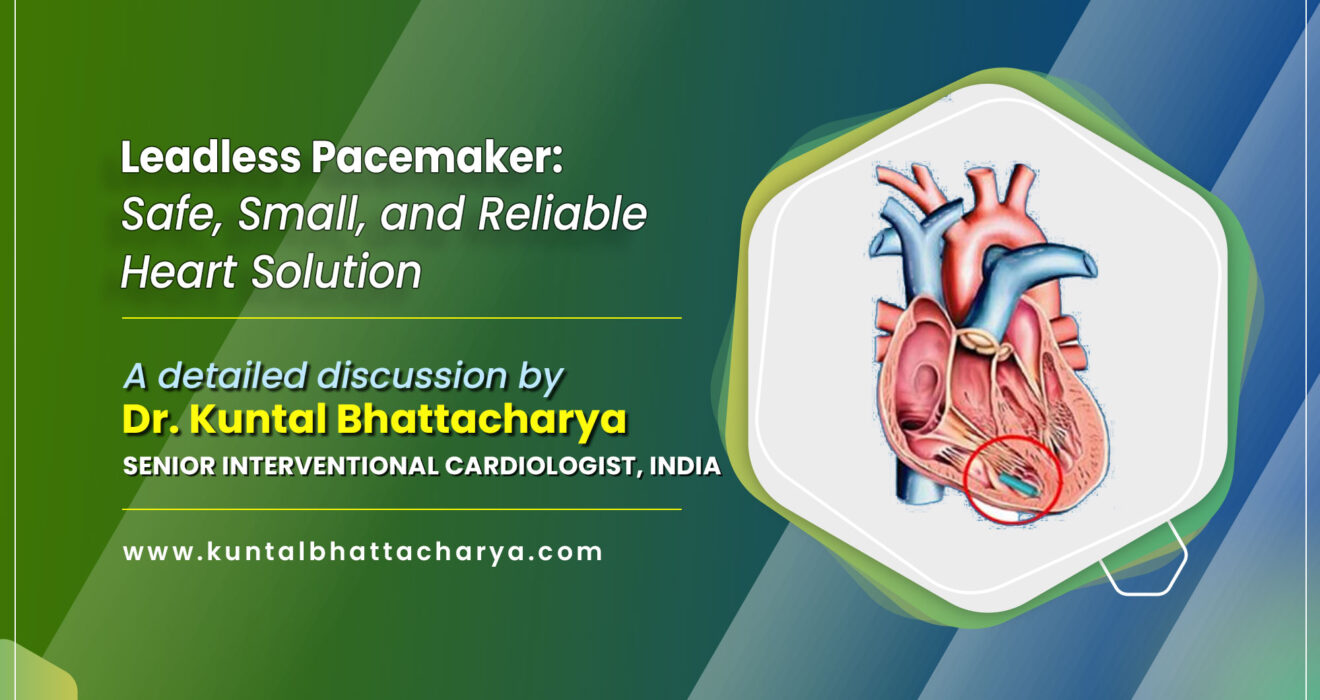
A leadless pacemaker works in a similar way, but with one big difference — it has no wires or leads. Instead, the entire device is a small capsule that is implanted directly inside the heart through a vein in the leg. This tiny device delivers electrical impulses to keep the heartbeat regular, without the need for wires or a chest pocket.
Read Also:
- Leadless Pacemakers vs. Traditional Pacemakers: Pros and Cons for 2026
- Pacemaker Implantation: Choosing the Best Doctor in Kolkata
Why is the Leadless Pacemaker Special?
The leadless pacemaker has gained popularity because of its size, safety, and long-lasting performance. Patients who are not comfortable with larger devices or who have had complications from traditional pacemakers are finding this to be a reliable solution.
Here are the main reasons why it is considered special:
- No leads, fewer complications: Leads in traditional pacemakers can sometimes break, get infected, or shift. The leadless pacemaker eliminates this risk.
- Smaller and less visible: Since the device is placed directly in the heart, there is no lump under the chest or scar from surgery.
- Quick recovery: Implanting a leadless pacemaker usually requires a simple procedure with a shorter hospital stay.
- Long battery life: Most leadless pacemakers last 10–12 years, depending on the patient’s needs.
- Comfort and freedom: Patients feel more at ease as there are no wires or visible signs of a device.
How is a Leadless Pacemaker Implanted?
The implantation procedure is less invasive than traditional methods. Here is a simple explanation:
- The patient is given local anaesthesia or mild sedation.
- The doctor makes a small puncture in the vein of the leg (femoral vein).
- Using a special catheter (tube), the leadless pacemaker is guided into the right chamber of the heart.
- The device is placed securely on the heart wall and tested to ensure it is working properly.
- The catheter is removed, and the tiny puncture is closed.
The entire process usually takes less than an hour, and most patients can return home within a day or two.
Who Needs a Leadless Pacemaker?
Not everyone with heart rhythm problems will need a leadless pacemaker. Doctors carefully assess each case before recommending it. Generally, it is suitable for:
- Patients with slow heart rhythms (bradycardia).
- Those who only need single-chamber pacing.
- Patients who had infections or complications with traditional pacemakers.
- People looking for a smaller and less invasive device.
Your cardiologist in Kolkata will examine your condition, medical history, and future health needs before deciding if this is the right option for you.
Benefits of a Leadless Pacemaker
Many patients and doctors prefer the leadless pacemaker because of its proven advantages:
- Lower risk of infection: No chest incision or pocket reduces infection chances.
- Less pain and scarring: No visible scar on the chest.
- Reduced hospital stay: Patients recover quickly.
- Safe for long-term use: Reliable performance over years.
- Better lifestyle: More comfort in daily activities, including exercise, without worrying about wires.
Risks and Considerations
Like any medical device, a leadless pacemaker is not without risks. Though rare, some possible issues include:
- Bleeding or bruising at the insertion site.
- Dislodgement of the device (though this is uncommon).
- Need for replacement if the battery runs out after many years.
- Not suitable for patients who need pacing in both heart chambers.
That is why it is important to choose the best cardiac device doctor in Kolkata who has expertise in implanting leadless pacemakers safely.
Leadless Pacemaker vs Traditional Pacemaker
| Feature | Traditional Pacemaker | Leadless Pacemaker |
| Size | Larger, visible under the chest | Small, invisible inside the heart |
| Leads | Yes (wires connected to heart) | No leads |
| Surgery | Requires chest incision | Inserted via vein in the leg |
| Recovery | Longer hospital stay | Shorter stay |
| Risk of infection | Higher due to chest pocket | Lower |
| Visibility | Noticeable lump | No lump |
This comparison shows why patients today are more inclined towards leadless devices if they qualify medically.
Why Choose a Leadless Pacemaker in Kolkata?
Kolkata is now one of the leading cities in India offering advanced heart treatments, including leadless pacemaker implantation. Several hospitals have highly trained cardiologists and state-of-the-art facilities to ensure patient safety and success.
Choosing the best doctor for a leadless pacemaker in Kolkata is important because the procedure requires precision and expertise. A skilled doctor will not only implant the device safely but also provide long-term care and monitoring.
Finding the Right Heart Specialist in Kolkata
If someone needs a pacemaker, it is natural to feel anxious about the decision. Here are some tips to help you find the right heart specialist doctor in Kolkata:
- Experience: Look for a cardiologist who has successfully performed leadless pacemaker implantations.
- Hospital facilities: Ensure the hospital is equipped with advanced cardiac labs and emergency support.
- Patient reviews: Read patient feedback to understand the doctor’s approach and care.
- Follow-up care: Choose a doctor who offers regular monitoring and support after implantation.
The best cardiac device doctor in Kolkata will guide you step by step, explaining the procedure, risks, and benefits in simple terms.
Life After a Leadless Pacemaker
Patients with a leadless pacemaker can enjoy a good quality of life. Most can return to normal activities, including work, light exercise, and social life, within a short time.
Here are some lifestyle tips:
- Attend regular follow-up appointments with your cardiologist in Kolkata.
- Avoid strong magnetic fields or devices that may interfere with the pacemaker.
- Inform airport security about the device during scans.
- Maintain a healthy lifestyle with proper diet and exercise as advised by your doctor.
Conclusion
The leadless pacemaker is a breakthrough in heart care — safe, small, and reliable. For patients in Kolkata, this device offers hope for a healthier, more comfortable life. Whether you are considering this treatment for yourself or someone, always consult the best doctor for leadless pacemaker in Kolkata to ensure safe and effective results.
With experienced specialists, advanced hospitals, and dedicated care, Kolkata has some of the finest options for patients in need of modern cardiac devices. A trusted cardiologist in Kolkata can guide you to make the right choice and support you throughout your journey.
Taking care of your heart is one of the most important decisions in life. With the right guidance and the right device, you can live with confidence and peace of mind.
Frequently Asked Questions
- How long does a leadless pacemaker last?
On average, it lasts 10–12 years, depending on how much pacing the heart requires. - Is the implantation painful?
The procedure is usually done under anaesthesia or sedation, so patients feel minimal discomfort. - Can a leadless pacemaker be removed or replaced?
Yes, when the battery runs out or if there is any problem, it can be replaced with another device. - Can elderly patients get a leadless pacemaker?
Yes, it is often a safe and reliable option for elderly patients with slow heart rhythms.
Follow Dr. Kuntal Bhattacharya on Facebook & Youtube for regular updates.
Read Also: