
Why do doctors implant AICD? A Simple Guide
Why do doctors implant AICD – A Simple Guide by Dr. Kuntal Bhattacharya, best doctor in AICD implantation procedure in Kolkata
Understanding the Basics of AICD
What Does AICD Stand For?
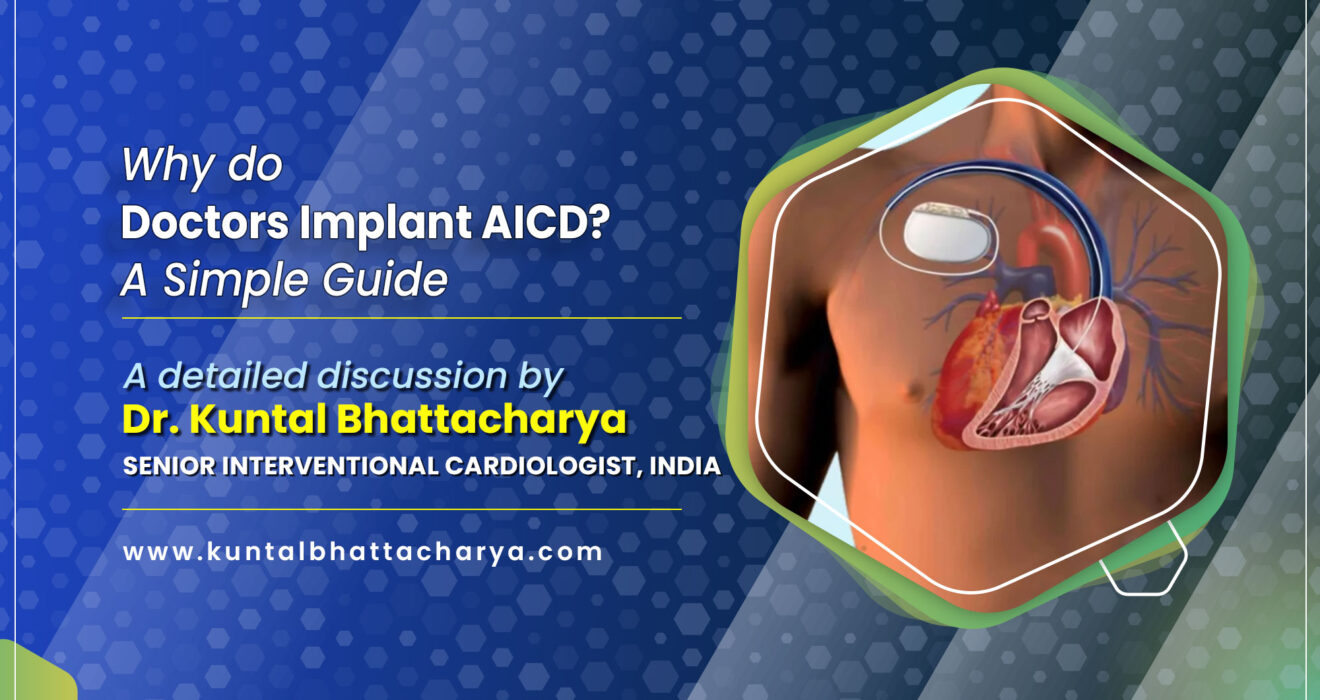
AICD stands for Automated Implantable Cardioverter Defibrillator. It’s a small device placed inside your chest to help monitor and control dangerous heart rhythms. Think of it as a mini heart guardian—it’s always alert and ready to act if your heart goes into a dangerously fast rhythm.
How Does an AICD Work?
The AICD continuously watches your heart rhythm. If it detects a life-threatening arrhythmia (like ventricular tachycardia or fibrillation), it sends an electric shock to reset the rhythm back to normal. This shock can feel strong, but it saves lives—like a paramedic living inside your chest.
Difference Between AICD and Pacemaker
While both are implantable devices, a pacemaker helps regulate slow heartbeats, and an AICD is designed to stop dangerously fast heartbeats. Some devices combine both functions.
Why AICD is Implanted?
Sudden Cardiac Arrest Prevention
Sudden Cardiac Arrest (SCA) can happen without warning. AICD is implanted in patients at high risk of SCA due to their heart condition. It acts fast to restore normal rhythm, potentially saving the person from death.
Managing Ventricular Arrhythmias
AICD is a standard treatment for those suffering from ventricular arrhythmias—fast, irregular heartbeats that start in the lower chambers of the heart.
High-Risk Heart Conditions
Doctors recommend AICDs to patients with conditions like:
- Severe coronary artery disease
- Heart failure
- Previous history of cardiac arrest
- Genetic conditions like Long QT syndrome
Who Needs an AICD?
Post-Heart Attack Patients
Patients who had a major heart attack may have weak heart muscles and irregular rhythms. An AICD can protect them from sudden cardiac events.
Patients with Heart Failure
Those with reduced ejection fraction (less than 35%) may be recommended AICD to prevent fatal arrhythmias.
People with Congenital Heart Problems
Some are born with abnormal heart structures or electrical systems. An AICD gives these individuals a much safer future.
AICD Procedure Explained
How is AICD Implanted?
The AICD implantation is a minor surgical procedure. It usually takes 1-2 hours. The device is placed under the skin near the collarbone, and leads (wires) are threaded through veins to the heart.
Hospital Stay and Recovery
Most patients stay in the hospital for a day or two. You may experience slight discomfort at the site, but recovery is quick. Within a week or two, many return to normal routines.
Life After AICD Implantation
You will need regular checkups. Your doctor will ensure the device is working properly. Most AICDs can now be checked remotely using smart technology.
AICD vs CRT-P/D Devices
What is CRT-P/D?
CRT-P (Cardiac Resynchronization Therapy – Pacemaker) and CRT-D (with defibrillator) are used to treat heart failure patients. They help coordinate the heart’s pumping action and may include defibrillation.
Key Differences Between AICD and CRT Devices
| Feature | AICD | CRT-P | CRT-D |
| Purpose | Prevent sudden death | Synchronize heartbeats | Synchronize & shock |
| Suitable for | Arrhythmia patients | Heart failure with delayed heartbeat | Heart failure with arrhythmia |
Choosing the Right Device
Only your cardiologist can decide the best fit based on ECG, echo, and heart condition. Always consult an AICD doctor in Kolkata for detailed evaluation.
Role of a Cardiologist in AICD Implantation
Importance of Consulting a Cardiologist in Kolkata
If you’re from Kolkata or nearby, finding an expert Cardiologist in Kolkata is essential. They will assess your heart health, conduct tests, and decide whether an AICD or CRT device is necessary.
How to Find the Best Cardiac Device Doctor in Kolkata
Look for doctors with:
- Years of implantation experience
- Patient reviews and testimonials
- Association with reputed hospitals
- Facilities for post-implant monitoring
Risks and Complications
Common Side Effects
- Swelling or bruising at the site
- Mild pain for a few days
- Skin irritation
Rare but Serious Risks
- Infection
- Lead displacement
- Device malfunction
How to Minimize Complications
Follow your doctor’s instructions carefully. Keep the site clean, attend follow-ups, and report unusual symptoms early.
Benefits of AICD
Saving Lives
Its main job is to prevent sudden death—something no pill can do alone.
Peace of Mind
Patients and families feel more secure knowing there’s 24/7 protection.
Improved Quality of Life
Once implanted, many patients resume normal routines without fear.
Lifestyle After AICD
Activities You Can Do
Most daily tasks are fine:
- Walking
- Driving (after medical clearance)
- Mild exercises
What to Avoid
- Heavy lifting during recovery
- Strong magnetic fields (like MRI)
- Security screening machines at airports
Regular Check-ups and Monitoring
Visit your doctor every 3-6 months. Many AICDs now send health data remotely.
Renowned AICD Doctors in Kolkata
What to Look for in an AICD Doctor in Kolkata
Choose a doctor with expertise in:
- Complex cardiac rhythm management
- CRT-P/D – Implantation
- Handling complications if any arise
Top Hospitals for AICD Implantation in Kolkata
You can find top doctors at leading hospitals like:
- Fortis Hospital
- Apollo Gleneagles
- BM Birla Heart Research Centre
Search online for the Best Cardiac Device Doctor in Kolkata and read reviews carefully.
Technology and AICD Devices
Advancements in Cardiac Devices
Modern AICDs are:
- Smaller in size
- Longer battery life (up to 7–10 years)
- Wireless check-up ready
Smart AICDs and Remote Monitoring
You can now pair your AICD with a home monitor. This helps your doctor track your heart 24/7—even from far away.
Conclusion
AICD is a life-saving device for people at risk of sudden cardiac death. It works silently in the background, ready to act when your heart misbehaves. Whether you’re living with heart failure, have a past of cardiac arrest, or suffer from abnormal rhythms, an AICD could be your best shield.
If you’re in or around Kolkata, don’t wait. Visit a Cardiologist in Kolkata or consult the Best Cardiac Device Doctor in Kolkata today. Life is precious—let technology help protect it.
FAQs
- Is AICD surgery painful?
The procedure is usually done under local anesthesia with sedation. There may be mild discomfort post-surgery, which is manageable. - How long does an AICD last?
AICDs generally last between 7 to 10 years depending on how often they are used. - Can I travel with an AICD?
Yes, but inform security personnel at airports. Avoid walking through metal detectors. - Will I feel the shock?
Yes, if the device delivers a shock, it feels like a kick in the chest. It’s quick and life-saving. - Do I need to replace the AICD?
Only the battery or leads might need replacement after several years. Your doctor will guide you.
Follow Dr. Kuntal Bhattacharya on Facebook & Youtube for regular updates.
Read Also: