

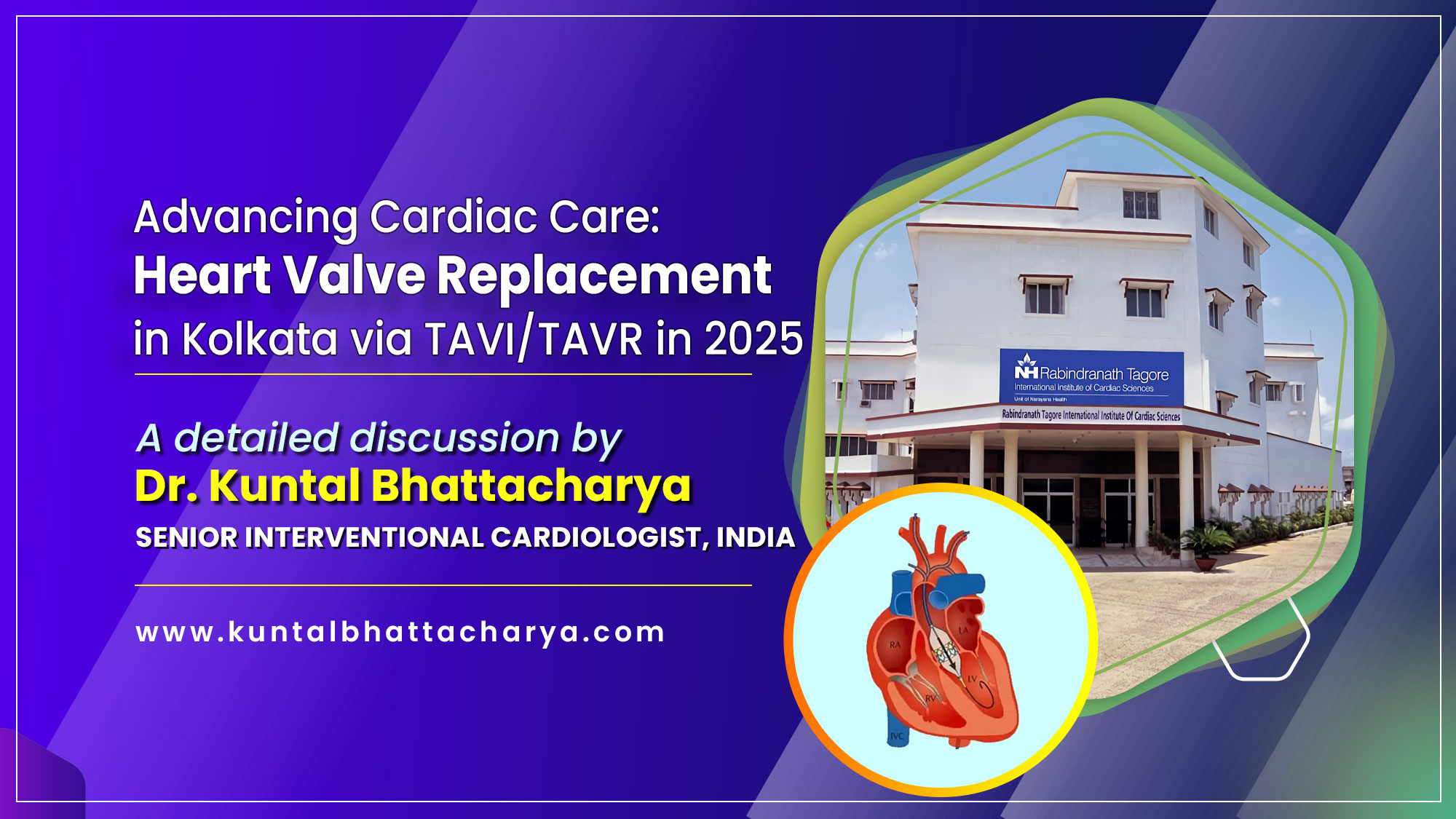
Advancing Cardiac Care: Heart Valve Replacement in Kolkata via TAVI/TAVR in 2025
Introduction
A Comprehensive Guide on “Advancing Cardiac Care: Heart Valve Replacement in Kolkata via TAVI/TAVR in 2025 ” by Dr. Kuntal Bhattacharya, Sr. Consultant Interventional Cardiologist, Kolkata
As we navigate through 2025, the landscape of cardiac care in Eastern India has transformed significantly. For years, the thought of a “heart valve replacement” meant major surgery, a long stay in the ICU, and months of recovery. Today, I am proud to share that we are routinely performing Heart Valve Replacement in Kolkata using a revolutionary, minimally invasive technique called TAVI/TAVR.
If you or a loved one has been diagnosed with Aortic Stenosis (a narrowing of the heart’s aortic valve), this guide is for you.
What is TAVI/TAVR?
TAVI (Transcatheter Aortic Valve Implantation) and TAVR (Transcatheter Aortic Valve Replacement) are two names for the same life-saving procedure. Unlike traditional open-heart surgery, where the chest is opened, TAVI allows us to replace a diseased valve through a small “keyhole” incision—usually in the groin (femoral artery).
Think of it like placing a stent, but for a valve. We slide a thin tube (catheter) up to the heart, and once in place, we expand a new, functional valve inside the old one.
Why Patients Choose TAVI/TAVR in Kolkata
- No Large Incisions: No need to cut through the breastbone.
- Faster Recovery: Most patients are back on their feet within 2–3 days.
- Lower Risk: It is the preferred choice for elderly patients or those with other health issues (like kidney or lung disease) who might not survive traditional surgery.
- Local Expertise: As a Heart Specialist Doctor in Kolkata, I have seen our city become a premier hub for this technology, rivaling the best centers globally.
The Line of Treatment: What to Expect
If you are considering TAVI/TAVR in Kolkata, the journey typically follows these steps:
- Initial Consultation: We review your symptoms—usually breathlessness, chest pain, or fainting spells.
- Diagnostic Screening: Essential tests include a 2D Echo and a specialized TAVI Protocol CT Scan to measure your valve size and check your arterial pathways.
- The Procedure: Performed in a “Cath Lab,” it usually takes about 60 to 90 minutes under local anesthesia or light sedation.
- Recovery: You will likely spend one night in the CCU and 3–4 days in the hospital before heading home.
Where to Go & Choosing the Right Specialist
Kolkata is home to world-class facilities. I currently serve as a Senior Consultant at NH Rabindranath Tagore International Institute of Cardiac Sciences (RNTICS) in Mukundapur, which is one of the leading centers for structural heart interventions. Other reputable institutions include Apollo Multispeciality, Fortis, and Manipal Hospitals.
When choosing a Heart Specialist Doctor in Kolkata, ensure they have:
- Specific training in Interventional Cardiology and structural heart disease.
- A dedicated “Heart Team” (a group of cardiologists and surgeons working together).
- Access to a high-end Hybrid Cath Lab.
Costs Involved in 2025
Cost is a natural concern. In 2025, the cost of Heart Valve Replacement in Kolkata via TAVI is largely determined by the type of valve used:
- Indian-made Valves: These have made the procedure much more affordable, typically ranging from ₹15 Lakhs to ₹18 Lakhs.
- Imported Valves (US/Europe): Advanced, self-expanding valves from global leaders like Medtronic or Edwards generally cost between ₹22 Lakhs to ₹32 Lakhs.
Note: Many private insurance providers now cover TAVI/TAVR. Additionally, government schemes and hospital EMIs are making this treatment accessible to more families than ever before.
Frequently Asked Questions (FAQs)
Is TAVI safer than open-heart surgery?
How long does the new valve last?
Will I be awake during the procedure?
Can I walk after the procedure?
Disclaimer: This blog post is for informational and educational purposes only and should not be considered a substitute for professional medical advice, diagnosis, or treatment. Always seek the advice of a qualified and experienced cardiologist in your area with any questions you may have regarding a medical condition.
Follow Dr. Kuntal Bhattacharya on Facebook & Youtube for regular updates.
Read Also:
- Understanding the Cost of TAVI/TAVR Treatment in Kolkata in 2025: A Comprehensive Guide
- Why Choose TAVI/TAVR Over Open Heart Surgery in 2025?
- TAVI and TAVR Procedures in Kolkata in 2025
- Understanding TAVI / TAVR: The Future of Heart Valve Treatment
- Angioplasty vs. Bypass Surgery in 2025: What Should You Choose?
- Treatment Areas for Advanced Cardiac Treatments in 2025
- Modern Technology in Cardiac Devices in 2025