
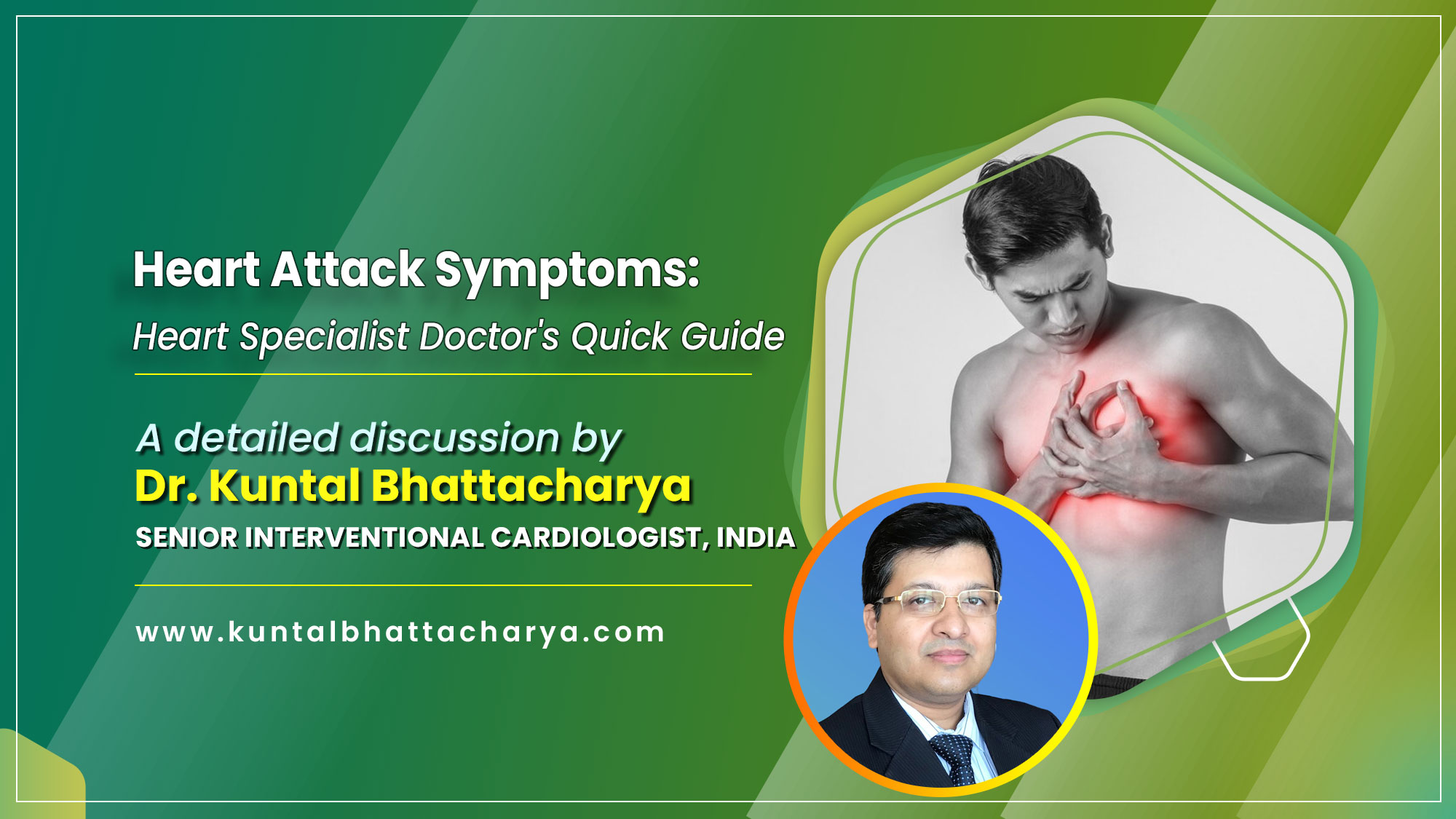
Heart Attack Symptoms: Heart Specialist Doctor’s Quick Guide
A Comprehensive Guide on “Heart Attack Symptoms: Heart Specialist Doctor’s Quick Guide?” by Dr. Kuntal Bhattacharya, Sr. Consultant Interventional Cardiologist, Kolkata
In the bustling streets of Kolkata, where life moves at a fast pace and our love for rich food is legendary, your heart often takes the brunt of your lifestyle. As a Heart Specialist Doctor in Kolkata, I have seen countless patients who ignore the early warning signs, often dismissing them as simple “acidity” or “gastritis.”
Today, I want to speak directly to you from my desk. In cardiology, we say, “Time is Muscle.” Every minute you delay seeking help during a heart attack, more heart tissue is at risk. This guide is designed to help you recognize the signs and act decisively.
Recognizing Heart Attack Symptoms
A heart attack doesn’t always look like the dramatic clutching of the chest you see in movies. Heart Attack Symptoms can be subtle, especially in women, the elderly, and those with diabetes.
- Chest Discomfort: This is the most common sign. It may feel like a heavy weight, tight squeezing, or a dull ache in the center of the chest. It often lasts more than a few minutes.
- Radiating Pain: The pain may spread beyond your chest to your left arm, shoulders, neck, jaw, or even your back.
- Shortness of Breath: Feeling breathless while resting or doing minimal activity is a major red flag.
- Cold Sweats and Nausea: If you suddenly break out in a “cold sweat” without any physical exertion, or feel a sudden wave of nausea and dizziness, take it seriously.
- The “Gas” Mimic: In Kolkata, many of us are prone to acidity. However, if your “gas” pain feels heavy and doesn’t go away with an antacid, it might not be your stomach—it could be your heart.
What to Do When Symptoms Arise
If you or someone near you experiences these symptoms, do not wait for the pain to “pass.” Follow these steps immediately:
- Stop All Activity: Sit or lie down. Do not try to walk or drive yourself to the hospital.
- Call for Emergency Help: Dial 112 or your nearest hospital’s emergency number (e.g., NH Rabindranath Tagore Hospital Emergency: 9903335544).
- Chew an Aspirin (300mg): If you are not allergic and have no history of bleeding disorders, chewing a standard aspirin can help break down the clot and buy you precious time.
- Stay Calm: Panic increases the heart rate and puts more strain on the heart. Breathe slowly and deeply.
Precautions for a Healthy Heart
Prevention is always better than an emergency intervention. Here is how you can protect your heart:
- Monitor Your Numbers: Regularly check your blood pressure, blood sugar, and cholesterol levels.
- Salt & Oil Control: Reduce your intake of salt and fried foods. Our traditional Kolkata “Telebhaja” is delicious but should be a rare treat, not a daily habit.
- Walk More: Aim for at least 30 minutes of brisk walking every day.
- Quit Smoking: Smoking is the leading cause of heart attacks in young Bengalis today. Quitting is the single best gift you can give your heart.
- Regular Check-ups: If you have a family history of heart disease, visit a Heart Specialist Doctor in Kolkata for a routine screening.
Read more: How to Choose Heart Specialist Doctor in Kolkata, India in 2025
Frequently Asked Questions (FAQs)
How can I tell if it’s heart-related or just acidity?
What is the "Golden Hour"?
Can a heart attack happen without any chest pain?
Is it safe to take Sorbitrate (Nitroglycerin) during a heart attack?
Your heart is your life’s engine. Listening to its signals isn’t being paranoid—it’s being responsible. If you feel even a slight suspicion that something is wrong, reach out for professional help.
Disclaimer: This blog post is for informational and educational purposes only and should not be considered a substitute for professional medical advice, diagnosis, or treatment. Always seek the advice of a qualified and experienced cardiologist in your area with any questions you may have regarding a medical condition.
Follow Dr. Kuntal Bhattacharya on Facebook & Youtube for regular updates.
Read Also:
- Understanding the Cost of TAVI/TAVR Treatment in Kolkata in 2025: A Comprehensive Guide
- Why Choose TAVI/TAVR Over Open Heart Surgery in 2025?
- TAVI and TAVR Procedures in Kolkata in 2025
- Understanding TAVI / TAVR: The Future of Heart Valve Treatment
- Angioplasty vs. Bypass Surgery in 2025: What Should You Choose?
- Treatment Areas for Advanced Cardiac Treatments in 2025
- Modern Technology in Cardiac Devices in 2025
- How to Find the Best TAVI and TAVR Doctor in Kolkata in 2025?