
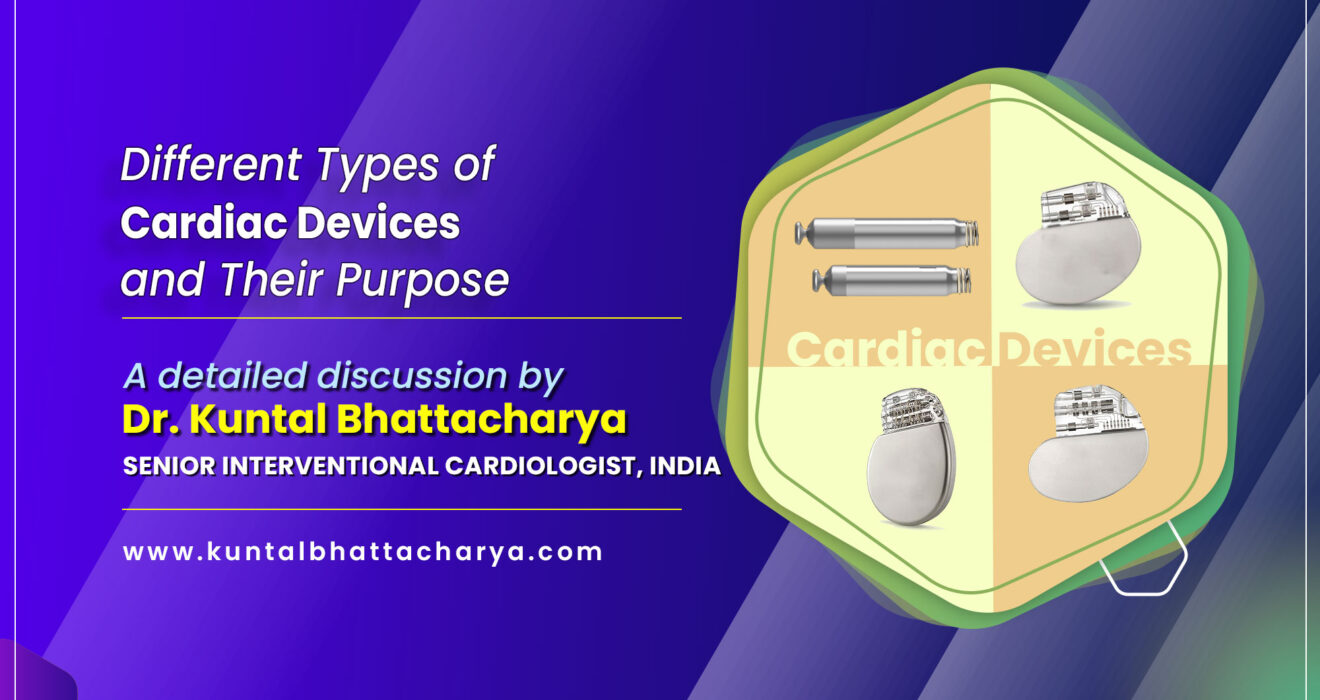
Different Types of Cardiac Devices and Their Purpose: A Comprehensive Guide in 2025
Introduction: The Heart – Our Lifeline, Our Focus
Different Types of Cardiac Devices and Their Purpose: A Comprehensive Guide in 2025 by Dr. Kuntal Bhattacharya, Sr. Consultant Interventional Cardiologist, Kolkata
Hello, I am Dr. Kuntal Bhattacharya, Sr. Consultant Interventional Cardiologist at NH Rabindranath Tagore International Institute of Cardiac Sciences, Kolkata. I often see the look of hesitation when the topic of “cardiac devices” arises. It is a completely natural reaction. The heart is our lifeline, beating tirelessly to sustain us, and the idea of introducing technology to such a vital organ can feel overwhelming. You might picture complex machinery or lifestyle restrictions, but the reality of modern cardiology is quite different.
My goal today is to demystify these innovations. These devices are not designed to limit you; they are engineered to restore your heart’s natural rhythm and function. Whether your heart beats too slowly, too fast, or lacks coordination, there is a specialized solution available to help you reclaim a vibrant life.
Let’s explore these life-changing technologies in detail.
Consider this blog post your friendly, comprehensive guide. We’ll explore these life-changing technologies in simple, human terms, helping you understand how each device serves as a specialized ally in your journey towards a healthier, more vibrant heart.
Section 1: The Foundations – Understanding Electrical and Pumping Problems of the Heart
Before we dive into the devices themselves, it’s essential to grasp the fundamental problems they are designed to address. The heart, while a pump, is also an electrical organ. Its ability to pump effectively relies entirely on precise electrical signals.
Think of your heart as a house with a plumbing system (blood vessels) and an electrical system (the heart’s natural pacemaker and conduction pathways).
Common Heart Problems Addressed by Devices:
-
Electrical Rhythm Problems (Arrhythmias):
- Bradycardia (Slow Heart Rate): The heart’s natural pacemaker (the SA node) or its electrical pathways might be faulty, causing the heart to beat too slowly. This can lead to symptoms like dizziness, fainting, extreme fatigue, and shortness of breath because not enough blood reaches the brain and other organs.
- Tachycardia (Fast or Irregular Heart Rate): Conversely, the heart can sometimes beat too fast or chaotically. This could be due to short circuits in the electrical system, leading to conditions like Ventricular Tachycardia (VT) or Ventricular Fibrillation (VF), which are life-threatening.
-
Pumping Problems (Heart Failure):
- Weakened Heart Muscle: The heart muscle becomes too weak to pump blood efficiently, leading to symptoms like fatigue, swelling in the legs, and shortness of breath. This is often called Heart Failure.
- Ventricular Dyssynchrony: In some heart failure patients, the electrical signals to the heart’s main pumping chambers (ventricles) become uncoordinated. The left and right sides don’t contract at the same time, leading to inefficient pumping, like two oars of a boat rowing out of sync.
Cardiac devices are ingenious solutions engineered to correct these specific electrical and mechanical flaws, ensuring the heart performs its vital job effectively.
Section 2: The Maestro of Rhythm – Pacemakers
The pacemaker is perhaps the most well-known cardiac device, and for good reason. It’s often the first line of defense against a heart that beats too slowly.
What is a Pacemaker?
A pacemaker is a small, battery-powered device, typically weighing about 20-30 grams (the size of a small matchbox), that is implanted just under the skin, usually near the collarbone. It consists of:
- A Pulse Generator: This contains the battery and the computer circuitry that monitors the heart’s rhythm and generates electrical impulses.
- Leads (Wires): One or more thin, insulated wires extend from the pulse generator, through a vein, and are carefully placed into the heart chambers (typically the right atrium and/or right ventricle).
How Does a Pacemaker Work?
The pacemaker’s leads constantly monitor your heart’s natural electrical activity. If your heart rate drops below a preset minimum (a slow rhythm, or bradycardia), the pulse generator sends tiny, imperceptible electrical signals through the leads to stimulate the heart muscle. This causes the heart to contract, ensuring a healthy and consistent heart rate.
Modern pacemakers are “on-demand” devices. They only step in when needed, allowing your heart to beat naturally when its rhythm is adequate.
Who Needs a Pacemaker?
Pacemakers are primarily indicated for patients experiencing bradycardia due to:
- Sick Sinus Syndrome: The heart’s natural pacemaker (sinoatrial node) isn’t firing correctly, leading to slow or erratic heartbeats.
- Heart Block: The electrical signals are delayed or completely blocked as they travel from the upper to the lower chambers of the heart.
- Certain Arrhythmias: Sometimes used to manage fast rhythms that are subsequently followed by slow rhythms after medication.
The Impact on Life
A pacemaker can dramatically improve symptoms like dizziness, fainting spells, and fatigue, allowing patients to regain their energy and participate in activities they once enjoyed. It effectively normalizes a life previously hampered by a slow, unreliable heartbeat.
Section 3: The Guardian Angel – Implantable Cardioverter-Defibrillators (ICDs)
While pacemakers address slow rhythms, Implantable Cardioverter-Defibrillators (ICDs) are designed to protect against life-threateningly fast and chaotic heart rhythms.
What is an ICD?
An ICD is similar in size and appearance to a pacemaker, but it has a crucial additional capability: it can deliver a powerful electrical shock to reset a dangerously fast heart rhythm. Like a pacemaker, it has:
- A Pulse Generator: This houses the battery, sophisticated computer circuitry, and most importantly, a high-voltage capacitor capable of storing and delivering a strong electrical charge.
- Leads: Typically one or two leads are placed in the heart chambers, often in the right ventricle and sometimes the right atrium. These leads not only monitor the heart but can also deliver pacing pulses and the life-saving high-energy shock.
How Does an ICD Work?
The ICD continuously monitors your heart’s electrical activity. If it detects a very fast, abnormal rhythm, specifically Ventricular Tachycardia (VT) or Ventricular Fibrillation (VF), it performs a life-saving sequence:
- Anti-Tachycardia Pacing (ATP): For VT, the ICD may first try to painlessly interrupt the rhythm with a series of rapid pacing pulses (ATP). This often corrects the rhythm without the need for a shock.
- Defibrillation (The Shock): If ATP fails or if the rhythm is immediate VF (a chaotic, quivering state where the heart cannot pump blood), the ICD quickly charges its capacitor and delivers a precisely timed, high-energy electrical shock directly to the heart muscle. This shock effectively “resets” the heart, allowing its natural pacemaker to take over and restore a normal rhythm.
Who Needs an ICD?
ICDs are primarily indicated for patients at high risk of Sudden Cardiac Death (SCD), which is often caused by VT or VF. These include:
- Survivors of SCD: Patients who have already experienced and survived VT or VF (secondary prevention).
- High-Risk Heart Failure Patients: Individuals with very weak heart muscles (low Ejection Fraction, typically 35% or less), even if they haven’t had a life-threatening arrhythmia yet (primary prevention).
- Genetic Heart Conditions: Patients with inherited conditions that predispose them to dangerous arrhythmias (e.g., Long QT Syndrome, Brugada Syndrome).
The Impact on Life
An ICD acts as an internal paramedic, constantly guarding against cardiac arrest. While the shock can be startling and uncomfortable, it is a life-saving intervention. Patients with ICDs can live active, fulfilling lives, knowing they have a powerful safeguard against a potentially fatal event. This device offers profound peace of mind, not just for the patient, but also for their families.
Section 4: The Resynchronizer – Cardiac Resynchronization Therapy (CRT) Devices
As discussed in my previous blog, CRT devices are a specialized form of pacing aimed at improving the pumping efficiency of a weakened, desynchronized heart.
What is CRT?
CRT devices, often called biventricular pacemakers, are more complex than standard pacemakers. They are designed to correct ventricular dyssynchrony, a condition where the left and right ventricles (the main pumping chambers) do not contract in a coordinated fashion in heart failure patients.
A CRT device has:
- A Pulse Generator: Similar to a pacemaker, containing the battery and circuitry.
- Three Leads: This is the distinguishing feature. One lead in the right atrium, one in the right ventricle, and a crucial third lead carefully placed via the coronary sinus to pace the left ventricle.
How Does CRT Work?
By simultaneously pacing both the right and left ventricles, the CRT device ensures that these two chambers contract in a synchronized, efficient manner. This coordinated squeeze significantly improves the heart’s ability to pump blood.
Who Needs CRT?
CRT is indicated for carefully selected heart failure patients who:
- Have moderate to severe heart failure symptoms (NYHA Class II-IV).
- Have a significantly weakened heart (low Ejection Fraction, typically ≤ 35%).
- Show evidence of electrical dyssynchrony on an ECG (e.g., a wide QRS complex, often indicative of Left Bundle Branch Block).
- Are on optimal medical therapy but continue to have symptoms.
The Impact on Life
CRT can lead to remarkable improvements: reduced symptoms, increased exercise tolerance, better quality of life, fewer hospitalizations for heart failure, and in some cases, a phenomenon called “reverse remodeling” where the heart muscle actually becomes stronger over time.
Subtypes of CRT Devices (Revisited):
This is where we differentiate between the “P” and “D” in CRT, as discussed previously:
- CRT-P (Cardiac Resynchronization Therapy – Pacemaker): Provides only the resynchronization pacing. Chosen for patients who need improved pumping but are not at high risk for sudden cardiac death.
- CRT-D (Cardiac Resynchronization Therapy – Defibrillator): Provides both resynchronization pacing and the life-saving defibrillation function. Chosen for heart failure patients who need resynchronization AND are at a high risk for sudden cardiac death due to very weak heart muscle. This is often the more common choice due to the dual benefit for high-risk patients.
Section 5: Advanced Monitoring and Specialized Devices
Beyond the primary devices, cardiology offers other innovative technologies for diagnosis, monitoring, and specific conditions.
1. Implantable Loop Recorders (ILRs)
- What it is: A tiny, coin-sized device implanted just under the skin in the chest.
- Purpose: It continuously monitors and records the heart’s electrical activity for up to 3-5 years. It’s used to diagnose infrequent or unexplained fainting spells, palpitations, or cryptogenic stroke (stroke of unknown cause) where a transient arrhythmia might be suspected.
- How it works: It records abnormal rhythms automatically or when activated by the patient using a remote activator during symptoms.
2. Wireless Pacemakers (Leadless Pacemakers)
- What it is: A revolutionary, miniature pacemaker, about the size of a large vitamin capsule, that is implanted directly into the heart’s right ventricle without the need for traditional leads or a surgical pocket under the skin.
- Purpose: Primarily for single-chamber pacing in patients with bradycardia. It eliminates lead-related complications and pocket infections.
- How it works: It attaches directly to the heart wall and delivers electrical pulses. Communication and battery status are monitored wirelessly.
3. Subcutaneous ICDs (S-ICDs)
- What it is: An ICD system where the lead and device are implanted entirely under the skin, outside the heart and blood vessels. The device sits on the side of the chest, and the lead runs just under the skin along the sternum.
- Purpose: To provide defibrillation therapy for high-risk patients who need protection from sudden cardiac death but wish to avoid traditional transvenous leads (wires inside the heart and blood vessels) due to infection risk, vascular issues, or anatomical considerations.
- How it works: It monitors heart rhythm and delivers shocks to the chest wall (not directly to the heart) to stop dangerous arrhythmias.
4. Heart Failure Monitoring Devices (e.g., Pulmonary Artery Pressure Monitors)
- What it is: Tiny sensors implanted in the pulmonary artery (an artery leading from the heart to the lungs).
- Purpose: To remotely monitor changes in pulmonary artery pressure, which is an early indicator of worsening heart failure.
- How it works: The patient takes daily readings at home, which are wirelessly transmitted to their cardiologist. This allows for proactive adjustments to medication, potentially preventing hospitalizations.
Section 6: The Journey of Implantation and Living with a Device
Understanding the devices is one thing; understanding the patient journey is another.
The Implantation Procedure
Most cardiac device implantations (pacemakers, ICDs, CRTs, ILRs) are minimally invasive procedures performed under local anesthesia and conscious sedation.
- Preparation: The patient is prepared in a sterile environment.
- Incision: A small incision (typically 2-3 inches) is made, usually under the collarbone, to create a “pocket” for the device.
- Lead Placement: Using X-ray guidance (fluoroscopy), leads are carefully guided through a vein into the appropriate heart chambers.
- Connection and Testing: The leads are connected to the pulse generator, and the device is thoroughly tested to ensure it’s functioning correctly.
- Closure: The device is secured in the pocket, and the incision is closed.
Patients typically stay in the hospital for a day or two for monitoring and then go home. Recovery usually involves limiting arm movement on the side of the implant for a few weeks.
Living with a Cardiac Device
Life with a cardiac device is usually very normal and active.
- Follow-Up Care: Regular follow-up appointments with your cardiologist (Dr. Bhattacharya, in Kolkata) are crucial. Devices are wirelessly interrogated to check battery life, lead integrity, and stored rhythm events.
- Electromagnetic Interference: While rare, strong electromagnetic fields can sometimes interfere with devices. Patients are usually advised to avoid standing too close to high-tension wires, large magnets, or certain industrial equipment. Everyday electronics like mobile phones, microwaves, and computers are generally safe.
- Security Scanners: Airport security scanners are generally safe, but it’s advisable to inform security personnel about your device.
- Driving: Restrictions on driving may apply immediately after implantation, and for ICD patients, after a shock, to ensure safety.
The vast majority of patients integrate their device into their lives seamlessly, often forgetting it’s even there, as they enjoy improved health and renewed energy.
Conclusion: Empowering Your Heart, Empowering Your Life
The field of interventional cardiology has truly revolutionized how we manage complex heart conditions. Cardiac devices, from the simple pacemaker to the sophisticated CRT-D, are not just pieces of technology; they are instruments of hope, designed to restore vital functions, prevent life-threatening events, and significantly improve the quality of life for countless individuals.
If you or a loved one are exploring options for heart care, or if a cardiac device has been recommended, remember that knowledge is empowerment. Understanding the different types of devices and their purposes is the first step towards making an informed decision about your health.
As a Sr. Consultant Interventional Cardiologist in Kolkata, my commitment is to provide personalized, state-of-the-art care. I am here to discuss your specific needs, answer your questions, and guide you through every step of this journey, ensuring that your heart receives the best possible support to beat strongly for years to come.
Your heart deserves the finest care, and with these incredible innovations, a vibrant future is well within reach.
Ready to Discuss Your Heart’s Health?
Consult Dr. Kuntal Bhattacharya to understand which cardiac device is the safest and most effective choice for your specific health needs.
Disclaimer: This blog post provides general health information and is not a substitute for professional medical advice, diagnosis, or treatment. Always seek the advice of a qualified healthcare provider like Dr. Kuntal Bhattacharya with any questions you may have regarding a medical condition.
Follow Dr. Kuntal Bhattacharya on Facebook & Youtube for regular updates.
Read Also:
- Angioplasty vs. Bypass Surgery in 2025: What Should You Choose?
- CRT-P vs CRT-D: A Detailed Guide to Understanding the Difference
- Exclusive Guide to Coronary Angioplasty: An essential Insight from Interventional Cardiologist (PCI)
- Treatment Areas for Advanced Cardiac Treatments in 2025
- How to Book an Appointment for Heart Specialist Doctor Dr. Kuntal Bhattacharya in Kolkata in 2025
- Modern Technology in Cardiac Devices in 2025
- Recovery and Care After CRT-P/D Implantation in 2025
- Leadless Pacemaker: Safe, Small, and Reliable Heart Solution
- How to Find the Best TAVI and TAVR Doctor in Kolkata in 2025?